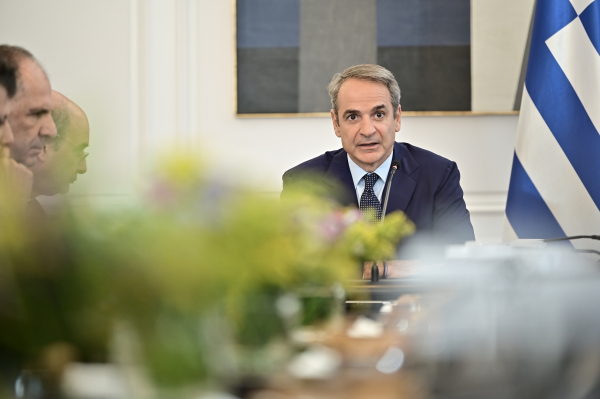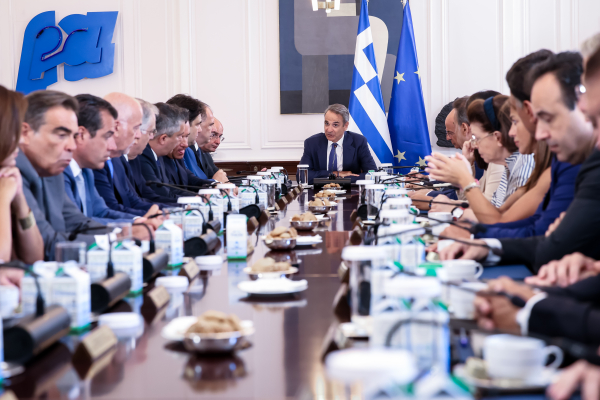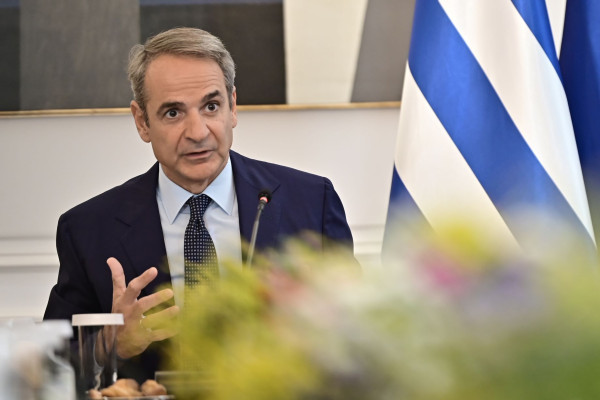
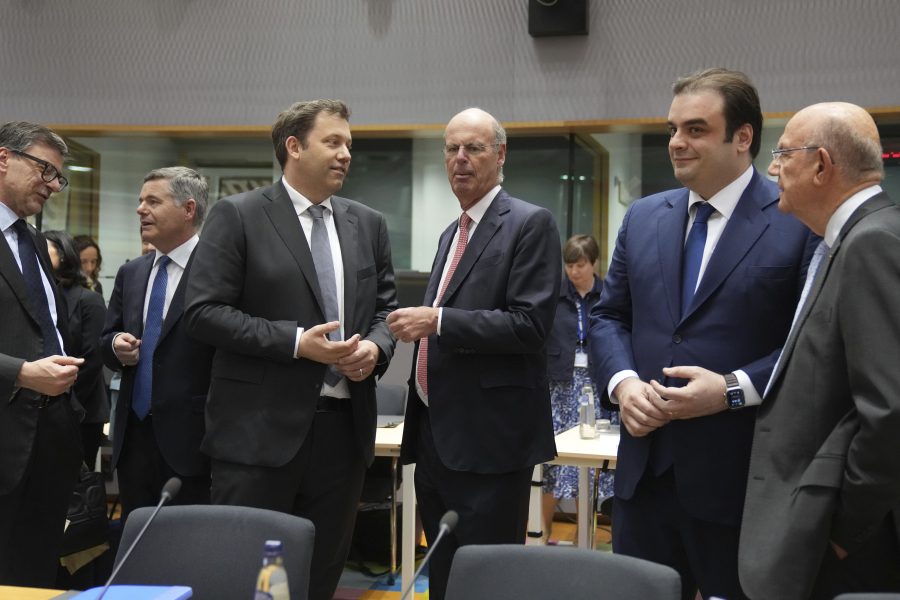

Eurozone finance ministers will meet on Monday, March 9, 2026, in the Eurogroup, with discussions expected to center on the crisis in the Middle East and the economic impact of surging energy prices across the euro area. The meeting will be chaired by Kyriakos Pierrakakis.
The talks are set to focus on the uncertainty created by geopolitical instability in global energy markets and the implications for economic growth, inflation, and the competitiveness of the European economy. Ministers are expected to exchange views on the trajectory of energy prices and their effects on the eurozone economy at a time of heightened volatility in global energy markets.
The discussion will also feature contributions from Christian Zinglersen, former director of the European Union Agency for the Cooperation of Energy Regulators, and Damian Cortinas, chair of the board of the European Network of Transmission System Operators for Electricity. Both are expected to present their assessments of how current energy market conditions are affecting the competitiveness of the European economy.
ΔΙΑΒΑΣΤΕ ΕΠΙΣΗΣ

In parallel, ministers will examine broader macroeconomic developments and the outlook for the eurozone economy, drawing on the latest analyses by the European Commission and the European Central Bank.
According to models used in the Eurosystem’s macroeconomic projections, a permanent increase of 40 percent in oil prices could reduce the eurozone’s potential output by about 0.8 percent over a four-year horizon. In practical terms, the European Central Bank estimates that a 1 percent rise in oil prices leads, in the medium term, to a decline of roughly 0.02 percent in potential output.