
Greece has identified lawyers, real estate agents and money transfer services as among the sectors most vulnerable to money laundering, according to a new national risk assessment approved by the government as it seeks to strengthen its framework for tackling financial crime.
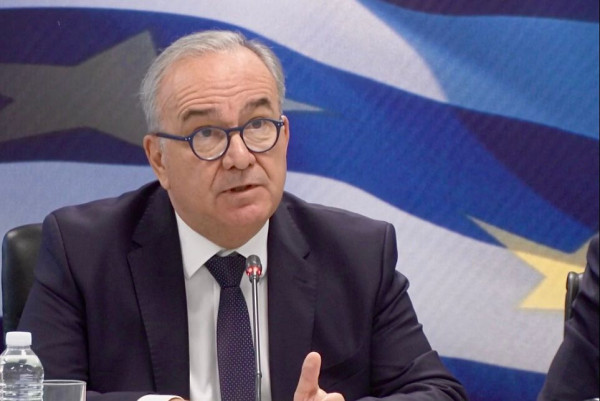
The findings were discussed on March 6 at a meeting of the Strategic Committee for Combating Money Laundering, Terrorism Financing and the Financing of the Proliferation of Weapons of Mass Destruction, held at the Ministry of National Economy and Finance and chaired by Apostolos Kasapis, the country’s secretary-general for economic policy and strategy.
The committee approved several strategic reports forming part of Greece’s national risk assessment process, including the National Risk Assessment on Money Laundering and Terrorism Financing, a study mapping non-profit organisations and their potential exposure to terrorist financing risks, and an assessment of the risks associated with legal entities.
The reports are intended to guide policy decisions and strengthen preventive measures against financial crime.
According to the assessment, the most significant vulnerabilities lie outside the traditional financial sector. Lawyers and real estate agents are classified as carrying the highest risk because of their involvement in transactions that can potentially be used to obscure the origin of illicit funds. Money transfer providers are also considered particularly exposed, as the speed and cross-border nature of such transactions can facilitate the movement of illicit proceeds.
Credit institutions, gambling operators and certain professional services - including accountants, notaries and dealers in high-value goods - fall into a medium-to-high risk category. The large volumes of financial transactions handled by these sectors increase the likelihood that they could be exploited for laundering criminal proceeds. By contrast, certain segments of Greece’s capital markets, such as portfolio investment companies and firms that receive and transmit trading orders, are assessed as carrying relatively lower risk. Leasing companies and factoring firms are also considered less vulnerable.
The report also highlights a steady increase in suspicious transaction reports submitted to Greece’s Anti-Money Laundering Authority in recent years. Total reports rose from 6,450 in 2018 to 6,737 in 2019 and 7,377 in 2020, before surging to 10,723 in 2021. In 2022 they climbed further to 11,159, the highest level recorded in the five-year period.
Banks remain the primary source of such reports, reflecting their central role in monitoring financial flows linked to tax evasion and other forms of serious criminal activity. Financial institutions submitted 1,842 reports in 2018, rising to 2,685 in 2022. Public authorities and law-enforcement bodies also play a significant role, submitting between roughly 1,800 and 2,800 reports annually over the same period.
Other sectors have shown notable increases in reporting activity. Insurance companies nearly doubled their reports between 2020 and 2022, while foreign exchange offices and payment institutions recorded the sharpest rise, with reports increasing from 1,410 in 2018 to more than 4,000 in 2022. Reports are also submitted by foreign financial intelligence units, brokerage firms and, increasingly, entities in the non-financial sector.
Data included in the assessment also show that Greece’s Anti-Money Laundering Authority examined 575 cases between 2018 and 2022 and identified criminal proceeds in 486 of them. In total, 653 asset-freezing orders were issued during the period.
The value of frozen assets reached approximately €342.5mn over the five-year period, including about €64.6mn in real estate. The amounts fluctuated significantly year by year.
Authorities froze assets worth about €121.9mn in 2018 and €22mn in 2019, before reaching a peak of roughly €172.3mn in 2020. The totals declined to about €12.2mn in 2021 and €14mn in 2022.
Nonetheless, the report did not point out any fundamental flaws in Greece’s legal framework for asset freezes related to financial crime investigations. According to regulations established in 2019, asset freezing orders remain in effect for an initial nine months and may be extended for an additional nine months if preliminary investigations are still ongoing.
In practice, however, preliminary investigations into complex financial crime and money-laundering cases often take significantly longer. As a result, frozen assets in major cases may be automatically released once the legal time limits expire, allowing individuals under investigation to regain control of them.
While the report provides detailed data on asset freezes, it does not include figures on how often such measures are lifted. The absence of this information makes it difficult to assess the effectiveness of the system and is identified as a key gap in the report, limiting transparency about how often frozen assets ultimately return to their owners.