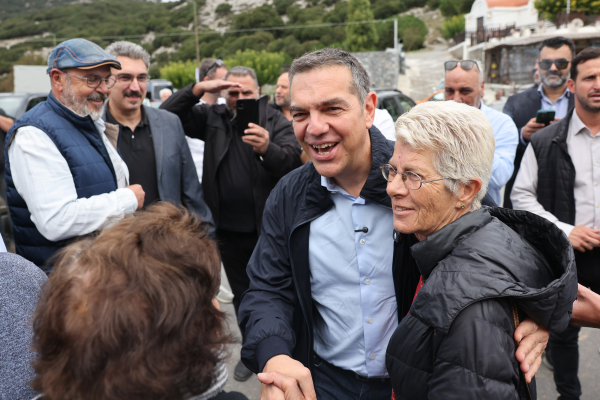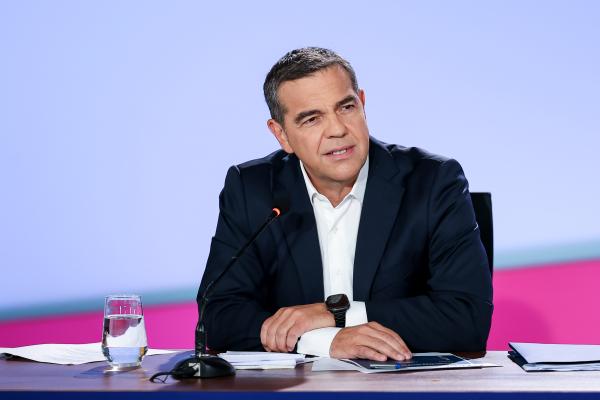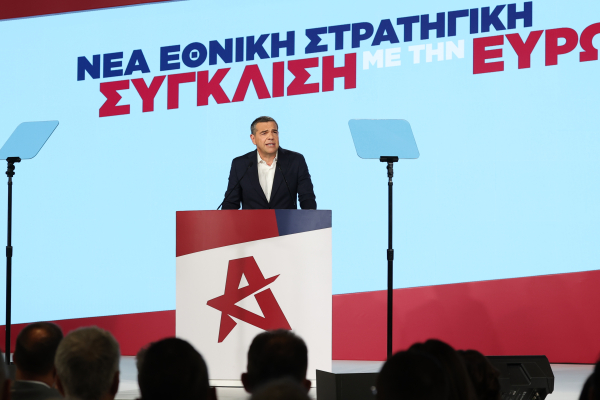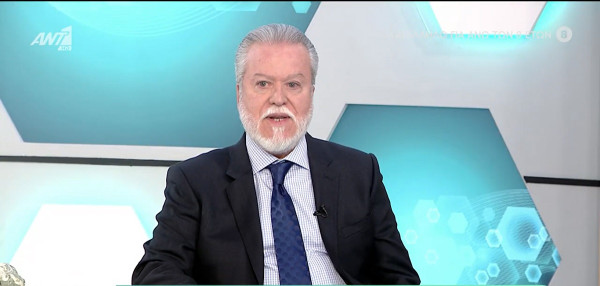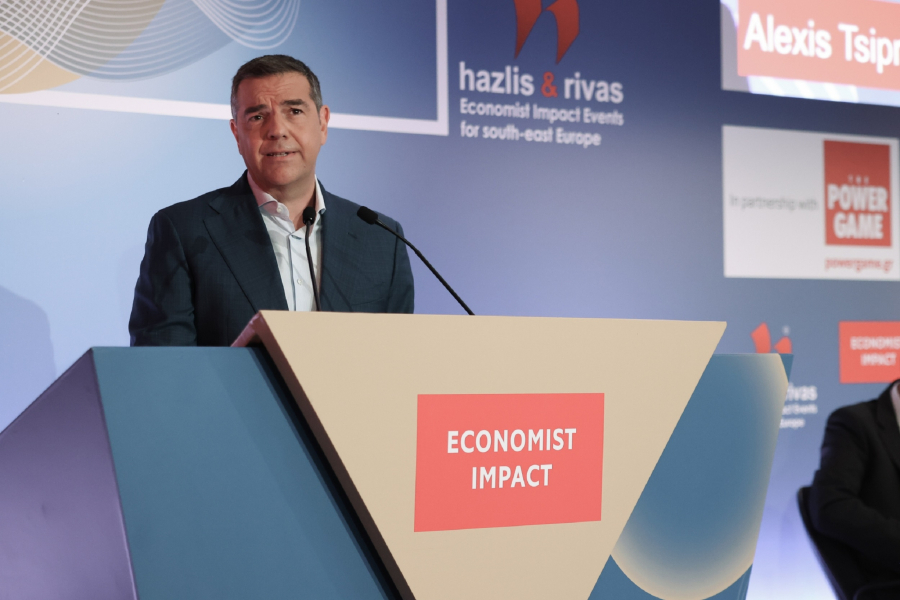
«Is anyone at the Maximos Mansion hearing the alarm bells?» former Greek Prime Minister Alexis Tsipras asked on Friday, addressing the 5th annual Economist conference in Thessaloniki. In a speech that mixed sharp criticism with policy proposals, Tsipras called for a «national compass» to guide the country through the coming decade, warning of the risk of another existential crisis if structural changes are not made. He argued for a national recovery plan stretching to 2030, built on decisions that would reshape Greece’s economic model and adapt it to new realities.
Among his proposals was the establishment of a national convergence fund to channel investment into sectors of strategic importance, inspired by similar initiatives in the United Kingdom and Germany. He also suggested introducing a «patriotic levy» on very high incomes, with the revenues directed toward a fund for younger generations, supporting education, research, innovation, and affordable housing. As he put it, «you cannot call yourself wealthy and patriotic while being indifferent to the future of this country».
Tsipras reserved some of his harshest words for the government, which he accused of corruption and cronyism. He claimed that such practices erode public trust in the state, pointing to the OPEKEPE scandal and charging that «party officials are driving around in Porsches». He warned that without radical reforms, Greece risks sliding into what he described as a Balkan version of backwardness, not only in its economy but also in its institutions and political system. To counter this, he advocated a reduction in working hours combined with higher pay, calling for the introduction of a 35-hour workweek with improved wages.
The former prime minister also lamented what he called the toxic nature of political debate in Greece, saying that it damages democratic dialogue and must be replaced with a calm exchange of ideas. He argued that despite the more favorable fiscal environment after the bailout years, social inequalities have widened instead of narrowing.
Looking ahead to the Thessaloniki International Fair, where Prime Minister Kyriakos Mitsotakis is expected to unveil new economic measures, Tsipras predicted that the government would simply return part of what he described as a «monstrous» primary budget surplus. He insisted that this surplus was not the result of robust growth but of heavy taxation that falls disproportionately on middle- and low-income households. The government’s true motive, he argued, is not fiscal stability but electoral clientelism and vote-chasing. «No handout», he concluded, «will alter the bleak and discouraging bigger picture».