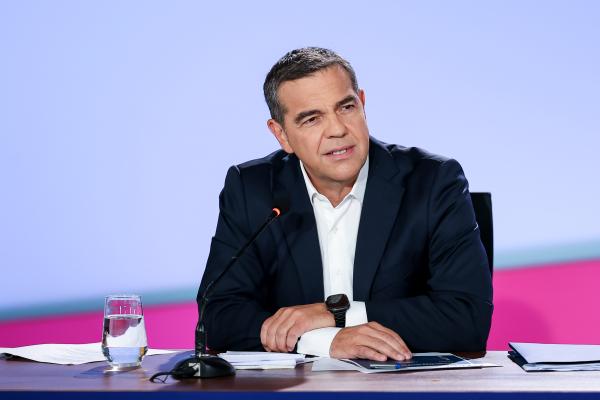
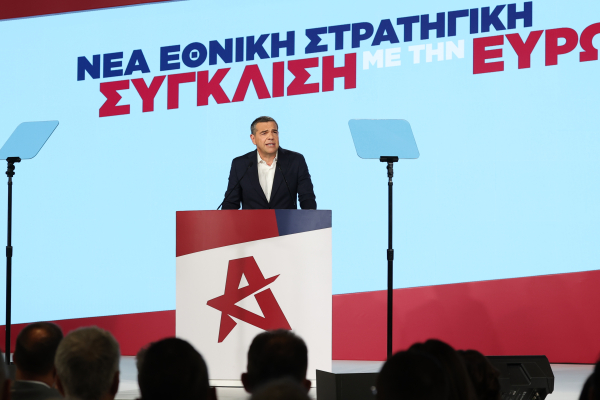
Greece’s former prime minister Alexis Tsipras defends his government’s handling of the 2015 bailout crisis in a newly published excerpt from his forthcoming book Ithaca, set for release on November 24 by Gutenberg Publishers.
In the chapter titled “Myths and Truths,” Tsipras pushes back against long-standing claims that SYRIZA’s confrontational stance with Greece’s creditors inflicted tens of billions of euros in economic damage during the height of the country’s debt crisis. Political opponents in Greece and Europe have often cited figures ranging from €20 billion to €100 billion, with many drawing on estimates by Klaus Regling, head of the European Stability Mechanism (ESM), which financed Greece’s third bailout programme.
Tsipras argues that such calculations misrepresent the situation Greece faced in early 2015, when his left-wing government took office. He says the country was already deep in crisis, with depleted state finances, no market access and an unfinished second bailout programme. Any government, he claims, would have been forced to borrow heavily to meet debt repayments, and doing so outside a formal programme would have required far higher borrowing costs than those secured through the ESM.
The former prime minister rejects the suggestion that Greece could have avoided a third rescue package by taking a more conciliatory approach. At the time, he notes, Greece had yet to complete major structural reforms, had failed to conclude key reviews of its existing programme, and faced a towering debt load of around 180% of GDP. With large repayments looming and borrowing rates at prohibitive levels, regaining access to financial markets was considered impossible by most economists.
Tsipras also addresses criticism that the 2015 turmoil worsened the banking crisis. Greek banks, he writes, were already under severe strain, with nearly half of their loan portfolios considered non-performing prior to his government’s election. The European Central Bank’s decision to withdraw a waiver on Greek bonds shortly after the election deepened the liquidity crunch, but he argues that recapitalisation would have been unavoidable regardless. Much of the capital injected into the banks, he notes, came from private investors, limiting the fiscal cost.
The 2015 standoff with creditors—often portrayed by critics as reckless—ultimately produced what Tsipras describes as a qualitatively different agreement from Greece’s earlier bailout deals. While the Third Memorandum included austerity measures his government opposed, he highlights concessions won from European lenders. For the first time, he says, eurozone institutions formally acknowledged the need for Greek debt relief and initiated a process to deliver it. Fiscal targets were eased, providing Greece with an estimated €22 billion in breathing space over four years, which he argues helped limit the depth of recession.
The agreement also introduced longer-term institutional reforms, including the creation of an independent tax authority aimed at reducing political interference, and a new public asset agency focused on professional management rather than rapid privatisation. Social protection measures were added as well, such as the country’s first national minimum-income scheme and temporary safeguards for primary residences.
Tsipras contrasts the final July 2015 agreement with the proposal rejected by Greek voters in the referendum held earlier that month. The earlier plan, he says, centred on pension cuts and tax increases without offering any credible path to debt restructuring. The final deal, by contrast, included access to €35 billion in EU-backed investment funding intended to boost liquidity and support the economy’s recovery.
Looking back on the turbulent months of negotiation, Tsipras acknowledges criticism that he never fully embraced the bailout programme he eventually signed. He argues that while the agreement was a painful compromise, it paved the way for Greece’s exit from its bailout era in 2018, the implementation of significant debt relief measures and the gradual restoration of the country’s fiscal autonomy. The sacrifices made by Greek citizens, he says, were not in vain.