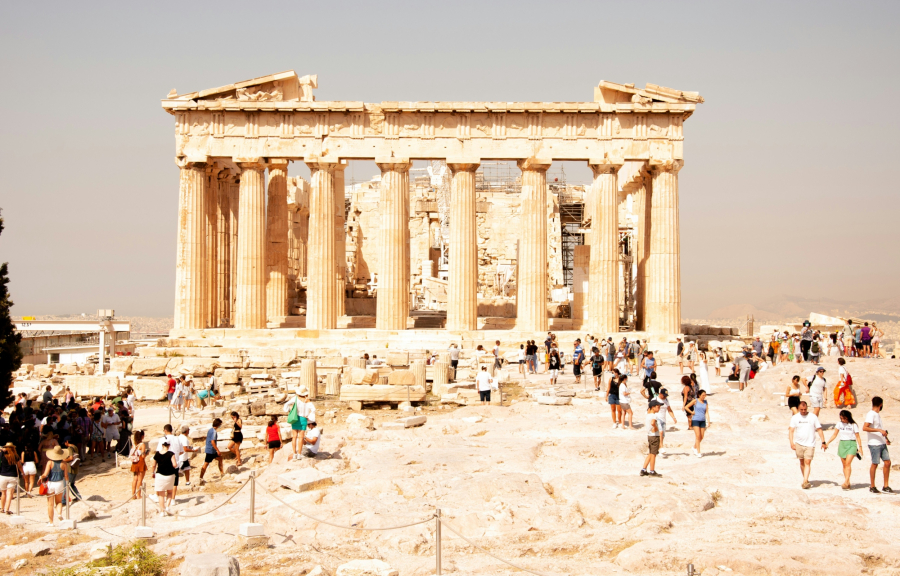

As Greece’s summer tourism season draws to a close, the picture that emerges is one of sharp contrasts. Visitor arrivals are climbing once again, underscoring the country’s enduring allure as a global travel destination. Yet revenues are not keeping pace, with average spending per visitor remaining stubbornly low. Industry experts point to a central cause: the absence of a dedicated National Spatial Framework for tourism, a long-term plan that would define clear priorities, set boundaries, and regulate development across the country.
In the vacuum left by such a framework, tourism has been allowed to expand in a haphazard and often uncontrolled way. Rather than targeting high-value travelers, growth has focused largely on sheer numbers. Popular destinations are becoming saturated, infrastructure is under pressure, and the environment is showing signs of strain. At the same time, short-term rentals are proliferating at breakneck speed, off-plan construction is spreading into sensitive areas, and local communities are seeing their quality of life diminish.
Instead of encouraging targeted investments that could improve services and attract visitors with greater purchasing power, the prevailing approach seems to follow a philosophy of “everyone fits”. The consequences are visible: overloaded infrastructure, transport bottlenecks, and the erosion of the cultural and natural character that once defined many destinations, particularly on the islands.
In some areas, the capacity to accommodate tourists has been exceeded for years, yet new developments continue to appear, often in regions of high environmental value or on small islands without adequate water supply, sewage networks, or waste management facilities. Urban planning, where it exists, is applied inconsistently, with decisions made on a case-by-case basis at both local and national levels. This ad hoc approach frequently leads to conflicts of interest, environmental degradation, and legal disputes.
The troubled history of the tourism spatial plan illustrates the government’s inertia. Work on it began in 2018 with the aim of completion within eighteen months, but it was not finished until 2021. A further two years passed before it entered a closed consultation process, by which time it was already outdated. Based on old data, the plan does not account for the rapid rise in short-term rentals and divides the country into categories that fragment rather than unify planning efforts. Even areas already suffering from overcrowding are designated as “controlled zones,” still open to large-scale resort development.
This lack of clear, enforceable rules has created fertile ground for a development model driven more by speculation than by sustainability. Major tourism projects are being promoted even on uninhabited islets, while small and less-developed destinations face the threat of being overwhelmed without having the tools to protect themselves. The surge in short-term rentals has reshaped the property market, spurred building in off-plan areas, and altered the character of traditional villages.
Against this backdrop, the conversation about the future of Greek tourism has become more urgent than ever. Experts warn that an unrelenting focus on boosting arrival numbers, without equal regard for quality and the carrying capacity of destinations, carries serious risks. Without a modern, comprehensive, and binding spatial plan, Greece risks eroding both its competitive advantage and the natural and cultural assets that form the foundation of its tourism industry.