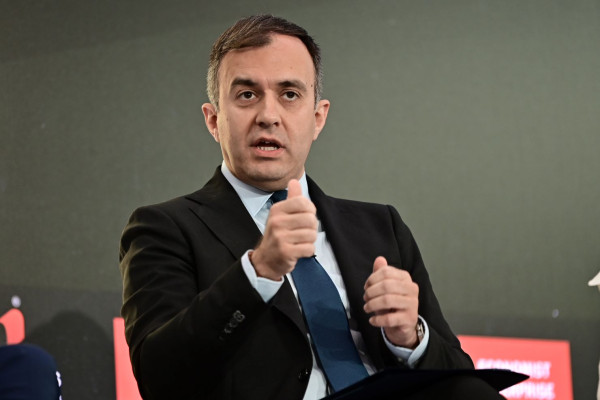

In an exclusive interview with Dnews, Iran’s ambassador to Athens, Malek Hossein Givzad, addressed the intensifying conflict between Iran and Israel, calling on the Greek government to publicly condemn the recent Israeli attack. He emphasized Iran's firm stance against capitulation, declaring that Tehran intends to continue its confrontation with Israel until the latter is forced to retreat. According to the ambassador, Israel lacks the capability to win on the battlefield and instead relies on spreading false information.
Ambassador Givzad also reiterated Iran’s position that its nuclear program is entirely peaceful and expressed Tehran’s readiness to engage in negotiations. He stated that Iran remains a committed member of the Treaty on the Non-Proliferation of Nuclear Weapons and that inspectors from the International Atomic Energy Agency have consistently verified the peaceful nature of its program. Even U.S. intelligence agencies, he noted, have acknowledged this. In contrast, he accused Israel of operating an undeclared military nuclear program without oversight, having never signed the non-proliferation treaty and refusing any inspections.
Addressing reports that Iran had sought third-party mediation to begin peace talks, Givzad said he could not confirm such claims, but emphasized that Iran calls on the international community to condemn Israeli aggression and prevent further escalation.
He strongly rejected a recent IAEA statement alleging that Iran is not complying with its nuclear obligations, calling it a politically motivated decision influenced by the United States, the United Kingdom, France, and Germany. He claimed the accusation was based on long-standing contamination from alleged Israeli sabotage and insisted that the 2015 nuclear agreement (JCPOA) had settled this issue. Even in the IAEA's latest resolution, he argued, there is no claim that Iran’s program is non-civilian—only that trace materials were detected.
When asked whether Iran would be willing to make concessions on its nuclear program to end the conflict, such as lowering uranium enrichment levels or involving Gulf nations in a joint framework, Givzad responded that these ideas had already been proposed in past talks with the United States. He confirmed that if the Israeli attacks stop, Iran would be open to resuming negotiations.
On the role of Europe, he accused EU member states of sharing military intelligence with Israel through their bases in the region and urged them to condemn Israel's violation of international law. As for Greece, currently serving on the UN Security Council, he called for a clear stance: to denounce the Israeli offensive and support a resolution demanding a ceasefire.
Commenting on the successful Israeli operations inside Iran, including assassinations of military and nuclear figures, Givzad acknowledged security challenges. He attributed them to Iran’s open approach to immigration, noting that the country hosts around 8 million migrants without restricting them to camps, which has made them targets for foreign intelligence recruitment. He also pointed out that Iran is confronting not only Mossad but the entire Western intelligence network.
Responding to Israeli claims of having destroyed a third of Iran’s missile launchers and major military sites, Givzad dismissed such statements as part of a broader propaganda campaign aimed at undermining Iranian morale. He insisted that the Israeli and Western narrative is filled with disinformation, designed to claim victory in the media because they cannot achieve it on the battlefield. Iran, he concluded, will not surrender and remains committed to making Israel and its allies retreat—while always being ready to negotiate, provided its peaceful nuclear stance is acknowledged.