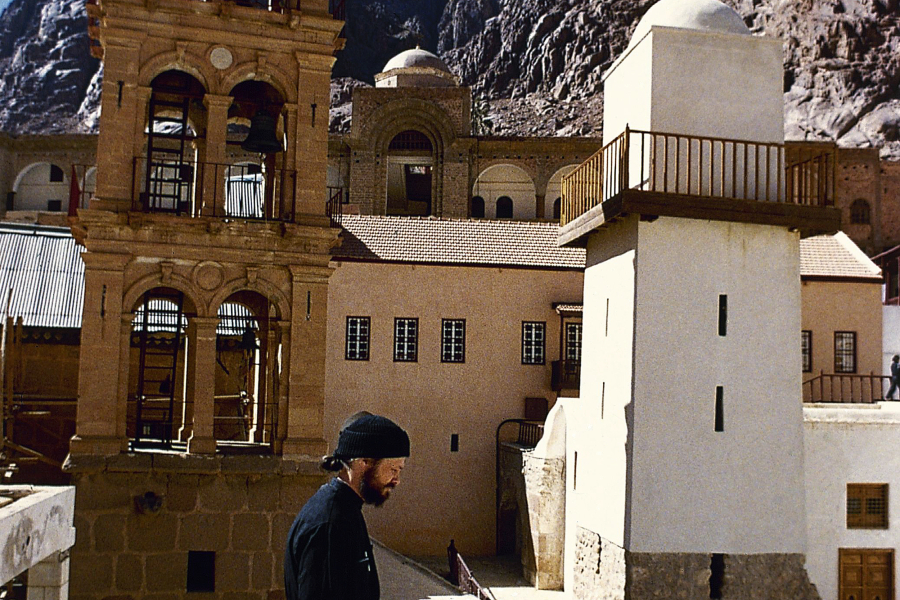

A historic and deeply symbolic Christian site is at the center of a growing international controversy, as Egypt moves to seize the Monastery of Saint Catherine on Mount Sinai - one of the world’s oldest Christian institutions still in operation.
The abrupt court ruling transferring the monastery’s property and assets to the Egyptian state has ignited intense backlash from religious leaders, human rights advocates, and governments, especially in Greece, which holds deep historical and spiritual ties to the site.
Founded in the 6th century by the Byzantine Emperor Justinian I, Saint Catherine’s Monastery has stood for nearly 1,500 years as a beacon of Orthodox Christianity. Nestled at the foot of the biblical Mount Sinai, the monastery is not only a center of worship and spiritual retreat but also a UNESCO World Heritage Site known for its priceless manuscripts, icons, and enduring interfaith significance.
Despite assurances from Egypt’s president Abdel Fattah el-Sisi during a recent diplomatic visit to Athens that the monastery’s religious character would be protected, a ruling by an Egyptian court this week has transferred ownership of the monastery and all associated properties to the Egyptian state. The decision follows years of legal wrangling dating back to the rule of the Muslim Brotherhood, but its finalization has stunned both the monastic community and the Greek government, which believed the matter had been diplomatically resolved.
Monks are now reportedly being forced to vacate certain monastery buildings, and continued access to the site is contingent on state-issued permits. Critics argue that this represents not only a breach of earlier bilateral agreements but a fundamental violation of religious freedom. The Greek Foreign Ministry expressed its concern immediately after the ruling was announced. A spokesperson confirmed that Foreign Minister Giorgos Gerapetritis contacted his Egyptian counterpart, insisting that the decision contradicts previous commitments made at the highest political level. Greece now awaits the official text of the ruling but has warned that it considers any deviation from the agreed understanding unacceptable.
For the monastic community, however, the issue is far more than legal or diplomatic - it is existential. In a sharply worded response, Archbishop Ieronymos of Athens and All Greece condemned the court decision as a “violent confiscation” and likened it to “erasing the very existence” of the monastery. «The Egyptian government, despite its promises, has dismantled the rule of law and effectively attempted to abolish the Monastery’s religious, spiritual, and cultural role» he said. The Archbishop called on international authorities to act swiftly in defense of religious freedoms.
The fallout has also exposed political fault lines in Greece. Opposition parties, including SYRIZA and PASOK, have accused the government of naivety and diplomatic failure. Former Prime Minister Antonis Samaras called the decision “unbelievable” and warned of Greece’s growing marginalization on the international stage. Other critics pointed to the government's broader struggles in managing cultural and religious diplomacy, citing Turkey’s 2020 reconversion of Hagia Sophia into a mosque as another example of international inertia.
Egyptian officials have justified the decision as part of broader efforts to protect the country’s antiquities and cultural heritage. Dr. Abdel Rahim Rihan, a prominent Egyptian archaeologist, stated that the transfer serves to preserve and develop the site for tourism. He claimed the move would benefit both the monastery and the wider public. However, this narrative has been forcefully rejected by the monks and Orthodox leaders, who fear the sacred site will be reduced to a museum-like attraction, stripped of its living religious essence.
The Monastery of Saint Catherine is not merely a Greek or Orthodox concern. Its significance spans cultures and religions - it is revered by Christians, Jews, and Muslims alike, and has historically represented a model of interfaith coexistence. Its potential transformation into a state-run tourist site raises broader questions about the preservation of religious heritage in an increasingly politicized Middle East.