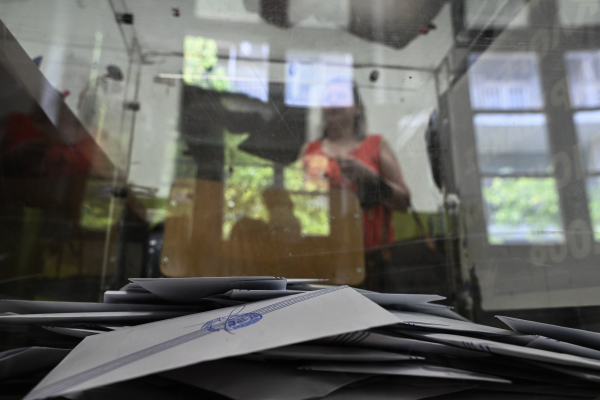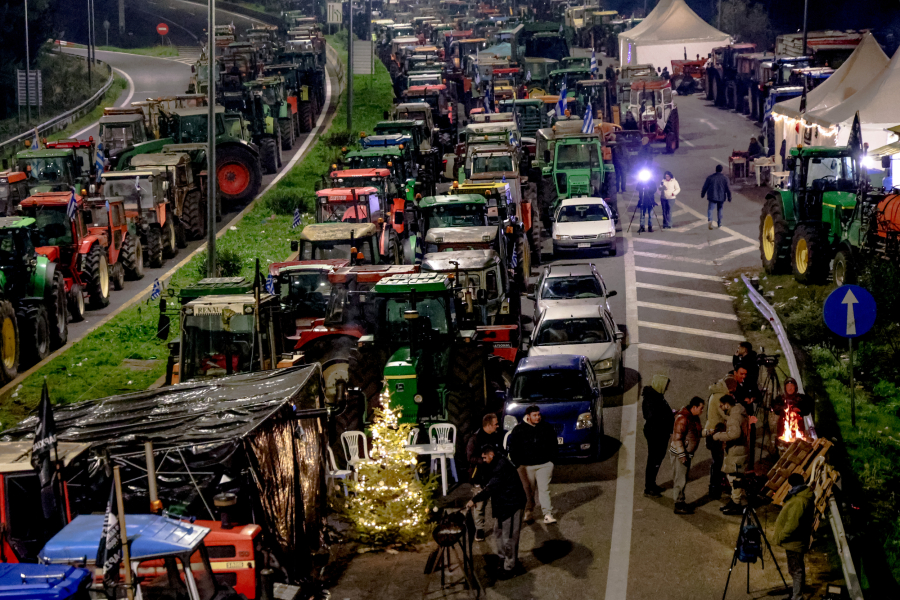
Three opinion polls released on Wednesday suggest that Greece’s political landscape is entering a period of flux, with the governing party losing momentum, smaller parties gaining ground and voter attitudes shifting amid sustained farmers’ protests and broader economic unease. Conducted by major polling firms and published almost simultaneously, the surveys point to a gradual erosion of support for the centre-right New Democracy government and highlight growing uncertainty ahead of the country’s next national elections.
One of the most closely watched surveys, carried out by Pulse and presented on the main evening news bulletin of SKAI television, captures the political impact of the farmers’ mobilisations, both in terms of voting intention and wider public sentiment. New Democracy remains clearly ahead, but its support slips by one percentage point compared with the previous Pulse poll. Among opposition parties, the centre-left PASOK continues to stagnate, while Freedom Sail (Plefsi Eleftherias), led by former parliamentary speaker Zoe Konstantopoulou, is the only party to register a notable rise, gaining two points, consolidating third place and narrowing the gap with PASOK in second.
Beyond party standings, the Pulse poll reveals two trends that could prove decisive in the months ahead. The first concerns the criteria voters say will guide their choices at the ballot box. For half of respondents, the dominant factor is “hope” and a sense of perspective for their everyday lives. By contrast, just over one in five cite “certainty” as their main consideration, while only 11 per cent say they are motivated by a desire to punish the political system. This marks a clear departure from the bailout years of the previous decade, when anger and protest voting were widespread, and suggests that many voters are now looking for realistic programmes and credible plans rather than symbolic gestures.
The second trend relates to the possible emergence of new political formations. While the Pulse survey does not yet measure a potential party linked to Maria Karystianou, a prominent figure associated with civic mobilisation, it does test public attitudes towards two widely discussed scenarios: a new party led by former prime minister Alexis Tsipras and another possibly spearheaded by former prime minister Antonis Samaras. Despite a slight decline compared with earlier measurements, a Tsipras-led party continues to attract interest, with 21 per cent of respondents viewing its creation positively or with curiosity and another 12 per cent expressing a neutral stance. A Samaras-led initiative appears to have more limited appeal overall, but analysts note that its real significance would lie in whether it could siphon voters away from New Democracy, thereby weakening the ruling party from within its traditional base.
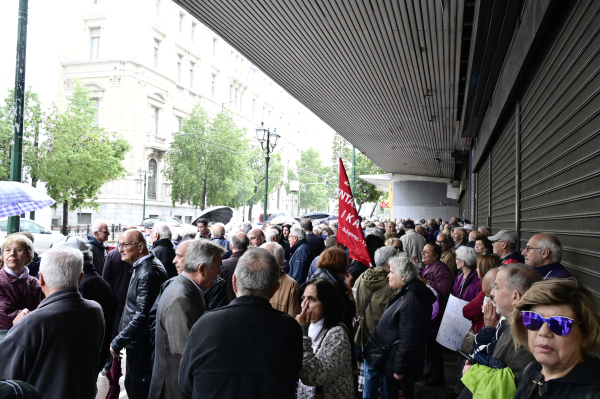
The surveys also shed light on public attitudes towards the farmers’ protests, which have dominated the news agenda for weeks. A clear majority of citizens agree with the substance of the farmers’ demands, reflecting widespread concern over rising costs and pressures on rural livelihoods. Opinion becomes far more divided, however, when it comes to the tactics used, such as blocking roads, ports and airports, with support and opposition almost evenly split.
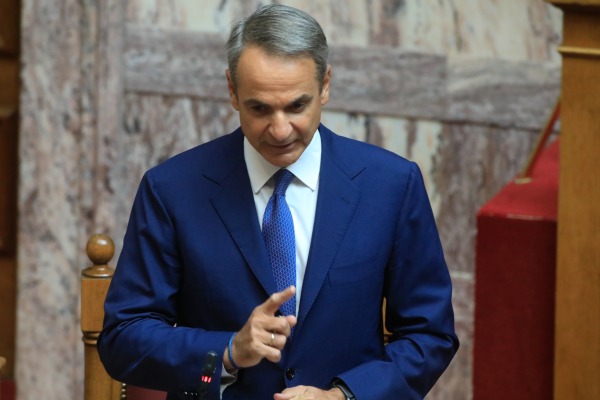
Additional polling data from Opinion Poll reinforce the picture of a government under pressure but still dominant. New Democracy is estimated at 29.7 per cent of the vote, half a point lower than in November, yet it retains a commanding lead of more than 16 points over PASOK. The main opposition party remains stuck in place, and its leader, Nikos Androulakis, ranks only fourth in perceived suitability for the premiership. Prime Minister Kyriakos Mitsotakis continues to lead comfortably on this measure, well ahead of Zoe Konstantopoulou, whose profile has risen in recent weeks through her involvement in parliamentary scrutiny of the OPEKEPE agricultural payments scandal.
Smaller parties are benefiting from voter volatility. Greek Solution, led by Kyriakos Velopoulos, climbs to third place with nearly 12 per cent, while Freedom Sail also posts gains in a political climate shaped by anxiety over persistently high prices. Around one in five voters now describe themselves as undecided. At the same time, tentative support for a future Tsipras-led party edges up to 9 per cent, while backing for a hypothetical Samaras party stands at a more modest 3.6 per cent.
Greek society itself appears divided not only politically but socially. Polling shows sharply differing views on the legitimacy of disruptive protest actions by farmers, even among those who broadly support their demands. Looking ahead, public sentiment remains mixed: while a significant minority say they feel optimistic about the outlook for 2026, a larger share express pessimism, underlining the uncertainty that continues to weigh on households.
A separate survey by MRB, broadcast on Open TV, broadly confirms these trends while highlighting some differences. New Democracy slips to 29.2 per cent, PASOK remains virtually unchanged at just over 14 per cent, and Greek Solution emerges as the clear third force. In contrast to other polls, Freedom Sail records a sharp decline in this measurement. The MRB data point to a fragmented parliament with eight parties clearing the threshold, while several smaller formations fall short.
Public criticism of the government is particularly strong over its handling of the OPEKEPE affair, with fewer than one in five respondents approving of its approach. By contrast, more than seven in ten describe the farmers’ protests as justified, and nearly eight in ten characterise their demands as fair.
The MRB survey also ranks government ministers by popularity, identifying Defence Minister Nikos Dendias and Finance Minister Kyriakos Pierrakakis as the most positively viewed, though the gap between them has narrowed since Pierrakakis’ recent election to a senior European post. Finally, the poll explores attitudes towards new political actors, finding that while interest in a Tsipras-led party remains substantial, it has declined since the summer, and enthusiasm for a Samaras-led initiative is limited. At the same time, a hypothetical party led by Maria Karystianou attracts a broad perimeter of interest, although pollsters caution that such support has historically tended to fade over time.
Taken together, the polls suggest a political environment in Greece that is no longer dominated by anger or protest alone, but by uncertainty, shifting alliances and a search for credible answers to everyday economic pressures - conditions that could yet reshape the country’s electoral map.