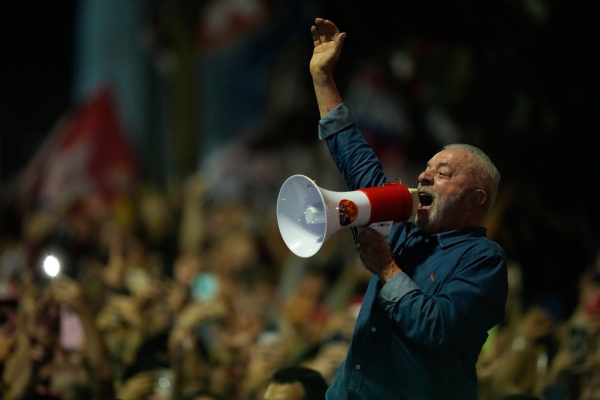
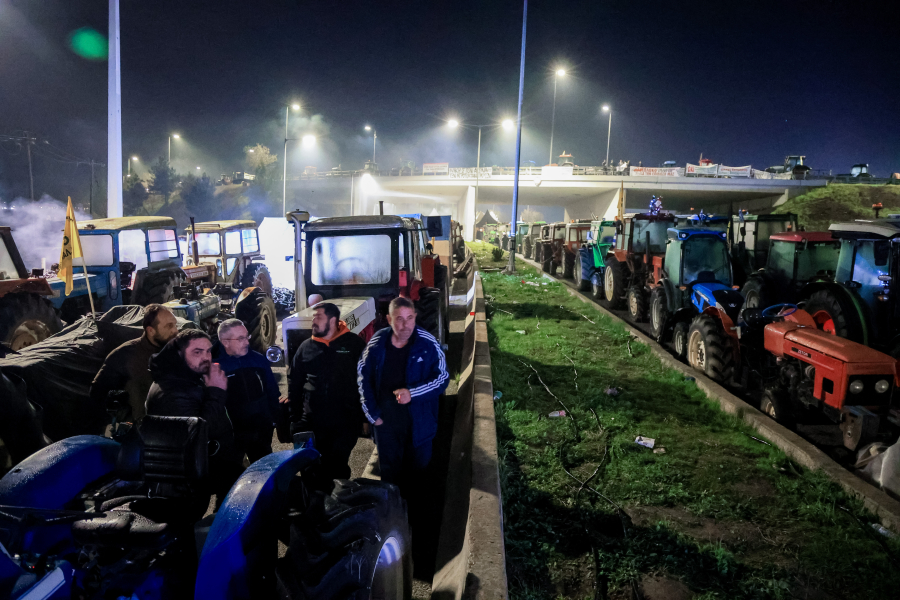
Greek farmers on Sunday released the full list of demands they had submitted earlier in the day to Prime Minister Kyriakos Mitsotakis and his office at the Maximos Mansion, amid escalating tensions over rising costs, livestock disease outbreaks, and the management of European Union farm subsidies.
Central to the farmers’ demands is the handling of sheep and goat pox, a contagious disease that has hit livestock herds in several regions, and the future of OPEKEPE, the state body responsible for distributing EU agricultural payments in Greece. Farmers are calling for a thorough overhaul of the agency and stronger oversight, opposing government plans to place it under the country’s independent tax authority. They argue that reform should focus on transparency and accountability rather than institutional absorption.
The farmers also point to the mounting cost of production as a critical threat to the sector, highlighting high electricity prices and fuel costs. They are demanding guaranteed minimum prices for agricultural products that would cover production expenses and ensure a sustainable income, as well as the immediate payment of all outstanding sums owed by the state. Their broader objective, they say, is to improve living standards in rural areas that have been under sustained economic pressure.
Among their key requests are measures to reduce costs, including tax-free diesel fuel, a cap on agricultural electricity prices, subsidies for farming inputs, and the removal of value-added tax on essential supplies. They are also calling for compensation for lost income in 2025 for products whose market prices have fallen below production costs. Long-delayed public investment in agricultural infrastructure, such as irrigation systems, flood protection, fire prevention, and rural road networks, is another major demand.
Farmers are also seeking changes to Greece’s agricultural insurance framework so that crops and livestock are fully insured and compensated for all natural disasters and diseases at every stage of production, with sufficient state funding. They want EU subsidies to be directly linked to actual production and livestock numbers and paid only to active farmers and breeders, with legal safeguards to prevent seizure of these payments.
The statement also addresses deeper structural problems in Greek agriculture, including fragmented land ownership, delayed or blocked subsidy payments, and weaknesses in monitoring systems for EU-funded programs. Farmers are urging the government to curb large-scale imports and to stop the mislabeling of imported products as Greek, a practice they say is facilitated by EU trade agreements such as Mercosur.
On the financial side, farmers are calling for a freeze on debts to tax authorities, social security funds, banks, and public utilities, with repayment through interest-free installments. They are also opposing any cuts to EU Common Agricultural Policy funding to finance military spending and are demanding the abolition of new digital shipment documentation requirements, which they say increase bureaucracy without improving oversight. Social demands include an immediate doubling of agricultural pensions.
Two issues are highlighted as particularly urgent. The first concerns sheep and goat pox, with demands for widespread vaccination, full compensation for animals that are culled, replacement of lost income, free restocking of herds, and compensation for bluetongue disease. The second involves what farmers describe as a scandal at OPEKEPE, calling for misappropriated funds to be returned to legitimate beneficiaries, for political and criminal responsibility to be assigned, and for those responsible to be publicly named. Farmers insist they should not bear the cost of any penalties imposed.
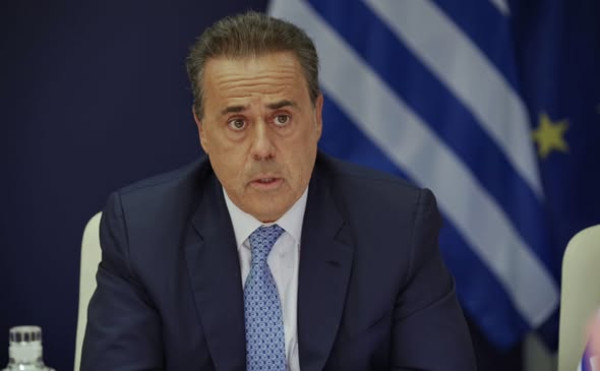
Responding to the farmers’ position, Greece’s Minister of Rural Development and Food, Kostas Tsiaras, said that refusing dialogue unless demands are met does not constitute a genuine effort to resolve problems. Speaking to private broadcaster MEGA, he stressed that solutions can only be found through dialogue and renewed the government’s invitation for farmers to engage in talks with the prime minister.
Tsiaras acknowledged that reforming OPEKEPE is a difficult process but said it would continue, describing the government’s decision as non-negotiable. He rejected calls to keep the agency outside the tax authority, while admitting that the transition has led to payment delays. Political responsibility, he said, has been taken, but attempting to block what he described as a necessary reform amounts to contradiction and hypocrisy.
On energy costs, the minister said that under the GAIA program agricultural electricity prices are fixed at €0.092 per kilowatt-hour for up to ten years, and that the government is examining whether the scheme can be extended.
On diesel fuel, he recalled that the government has legislated refunds of the special consumption tax, while acknowledging ongoing problems with invoice processing and outdated calculations of fuel use per hectare and per crop.
According to Tsiaras, total refunds to farmers could reach up to €150 million once the remaining installments are paid and recent increases in refund limits are taken into account. Finally, on sheep and goat pox, he said effective containment requires close coordination between the agriculture ministry, regional authorities, and livestock breeders themselves, particularly during the winter months when the disease is typically in remission.