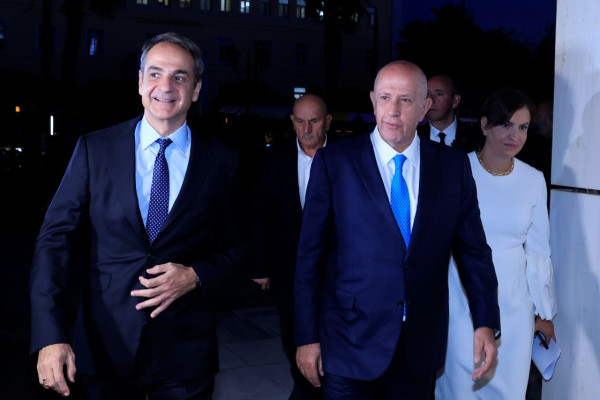

A political storm has erupted in Greece after Nikos Pappas, a Member of the European Parliament representing the left-wing opposition party SYRIZA, was expelled from the party following an alleged physical assault on a journalist in Strasbourg.
SYRIZA’s leader, Sokratis Famellos, announced that Pappas was immediately removed from the party’s delegation in the European Parliament, describing his conduct as unacceptable. He also referred the case to the party’s ethics committee, formally requesting Pappas’s expulsion from SYRIZA. The head of SYRIZA’s group in the European Parliament was informed of the decision without delay.
The incident reportedly took place late on Tuesday night at a bar in Strasbourg, where Greek journalists covering EU affairs had gathered after official engagements. According to a complaint filed with French police, journalist Nikos Giannopoulos of the news outlet News24/7 was leaving the venue with a colleague at around 11:30 p.m. local time when Pappas, who was also present with associates, allegedly tripped him without any prior exchange. When the journalist protested and asked not to be touched again, Pappas is said to have challenged him to go outside and “settle it.”
As Giannopoulos continued toward the exit, he claims that Pappas struck him from behind with two punches to the head, causing him to fall in a corridor between the bar and a neighboring restaurant. The journalist reportedly shouted that Pappas was an active Member of the European Parliament, to which Pappas allegedly responded, “How could I not hit you, the way you are?”
The journalist then returned to the bar visibly injured and informed colleagues of the alleged attack. According to accounts, those present later moved outside the venue, where Pappas is said to have made further disparaging remarks toward the journalist. Giannopoulos subsequently left the scene and returned to his hotel.
After midnight, the journalist reportedly received multiple phone calls and WhatsApp messages from Pappas, which he did not answer. The following day, he filed a formal complaint with police authorities in the Alsace region, based in Strasbourg, providing a detailed account of the incident. The case involves allegations of violence by an elected official, a matter that under French law is not covered by parliamentary immunity when committed outside official duties.
The alleged assault has prompted strong reactions across Greece’s political spectrum. The government accused SYRIZA of having previously ignored or downplayed aggressive behavior by the MEP and said the party acted only once the incident escalated into physical violence. Other opposition parties condemned the alleged attack, emphasizing that violence against journalists constitutes a serious threat to press freedom and democratic norms.
In a brief public message, Giannopoulos said he was physically well and thanked colleagues and the public for their support, adding that he did not intend to make further statements and that the facts were clear.
Pappas, in his own statement, acknowledged that his reaction was wrong but claimed he had been provoked. He said he would not publicly detail the events out of respect for the journalist’s family and maintained that witnesses would clarify what had happened. He conceded that he should have acted differently and said the matter would now be addressed by the authorities.
The investigation by French police is ongoing, while the incident continues to reverberate politically in Greece, raising broader questions about political conduct, accountability and the protection of journalists