
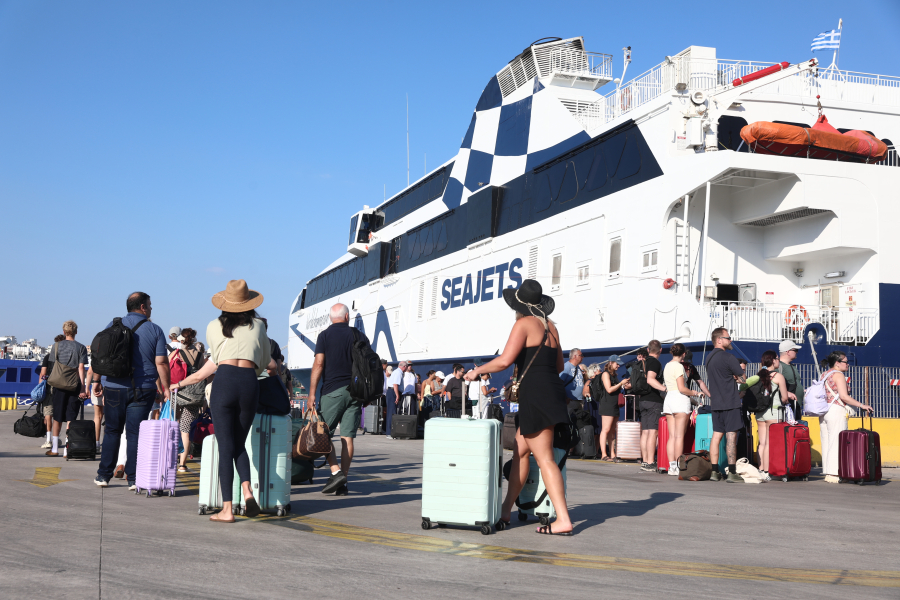

Greece’s ferry industry is hampered by market concentration, steep barriers to entry and an aging fleet, according to the country’s competition watchdog, which is calling for an overhaul of the regulatory framework and port infrastructure underpinning a transport network critical to the island-heavy economy.
The Hellenic Competition Commission identified significant concentration in key parts of the passenger-shipping market in the final report of its first comprehensive sector inquiry into coastal ferry services. The investigation, launched in April 2025, examined competition, connectivity and the long-term viability of a sector that serves both residents and one of the world’s biggest tourism markets.
Entering that market isn’t easy. High investment and operating costs, limited availability of suitable vessels and difficulties securing financing constrain the ability of new or smaller operators to establish themselves or expand, the commission said.
ΔΙΑΒΑΣΤΕ ΕΠΙΣΗΣ


Those pressures are compounded by Greece’s unusually seasonal demand. Ferries have to accommodate year-round transportation needs for island residents and freight while also absorbing a sharp increase in passenger traffic during the summer tourism season. That makes the economics of some routes particularly challenging outside peak periods.
The condition of Greece’s ferry fleet is another concern. The commission said aging vessels, combined with increasingly stringent environmental requirements, mean operators face substantial spending on fleet renewal and technological upgrades. Financing that transition will be a central challenge, though the shift toward cleaner shipping could also create openings for new competitors and technologies.
Ports are part of the equation. Greece’s hundreds of inhabited islands make maritime transport essential rather than optional for many communities, but the quality, capacity and management of port infrastructure can affect both service standards and the ability of operators to enter individual routes. The commission called for upgrades to ports and improvements in their governance.
Regulation also needs attention, according to the report. Fragmented responsibilities and repeated changes to oversight arrangements have reduced institutional coherence and created a need for greater transparency, stability and long-term planning.
Among its policy recommendations, the commission proposed modernizing the regulatory and supervisory system, renewing and decarbonizing the fleet, improving port infrastructure and reconsidering the design of the ferry network.
It also urged authorities to review public-service contracts used to maintain connections that might not otherwise be commercially viable. Such contracts are especially important for smaller and more remote islands. The goal, the commission said, should be to use public money more efficiently while ensuring dependable links for island communities.