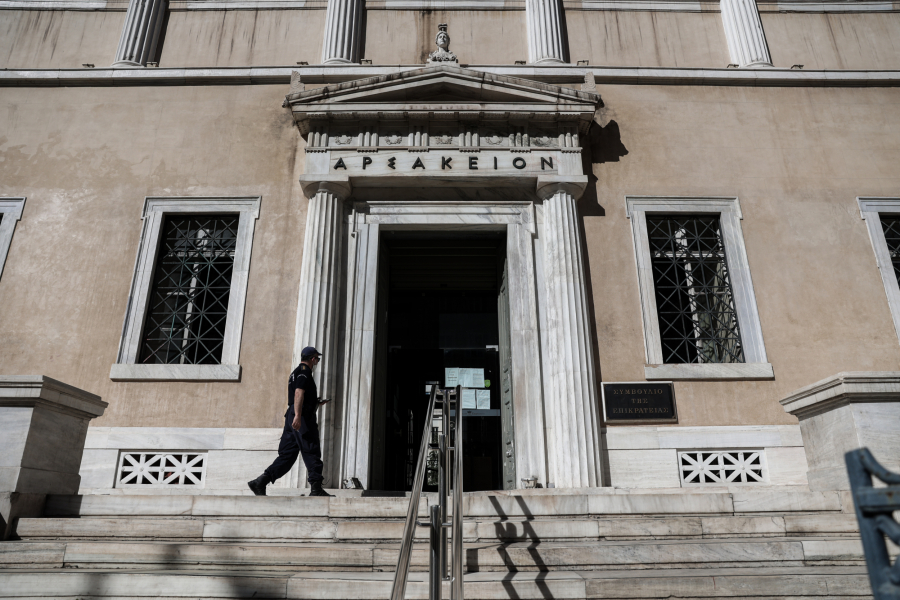

Greece’s highest administrative court has rejected an attempt to restore holiday bonuses and vacation allowances for public-sector workers, closing off a potentially costly claim on the state budget more than a decade after the payments were abolished during the country’s debt crisis.
In a plenary ruling, Greece’s Council of State said lawmakers didn’t violate either the Greek Constitution or European Union law by declining to reinstate the payments, which were eliminated in 2012 as part of the austerity measures adopted during the country’s financial rescue programs. The decision, No. 1201/2026, is significant for Greece’s roughly decade-long effort to move beyond the fiscal legacy of the sovereign-debt crisis. Restoring the benefits across the public sector would effectively have meant paying government employees two additional basic monthly salaries each year, creating a substantial and recurring expense for the state.
The case was brought by a public employee who sought the equivalent of two additional basic salaries annually for the period from Jan. 1, 2023, through Dec. 31, 2024. Greece’s civil-servants’ union federation, known by its Greek acronym ADEDY, intervened in support of the employee. The dispute was referred to the Council of State under Greece’s “pilot trial” procedure, which allows the country’s top administrative court to resolve legal questions with broader implications rather than leaving similar cases to work their way separately through lower courts.
ΔΙΑΒΑΣΤΕ ΕΠΙΣΗΣ

The case
At the center of the case was whether an EU directive on adequate minimum wages could provide a legal basis for restoring the payments. The employee argued, among other things, that Greece had failed to implement, or had inadequately implemented, Directive 2022/2041. The Council of State rejected that argument. It said the directive could in any event be invoked only for the period after Nov. 15, 2024, the deadline for incorporating it into national law.
More broadly, the Greek court relied on a November 2025 judgment by the Court of Justice of the European Union concerning the minimum-wage directive. The EU court held that setting pay, including minimum wages, remains an area in which national governments retain substantial authority. On that basis, the Council of State concluded that the directive didn’t give individual workers a sufficiently specific right to the additional payments they were seeking. It also rejected an attempt to use the EU Charter of Fundamental Rights to extend European law into an area of wage policy falling outside the EU’s powers. The ruling also turned heavily on Greece’s fiscal position.
The Council of State examined the country’s public finances since 2018, Greece’s obligations under the EU’s revised economic-governance framework and data on poverty thresholds, as well as changes to public-sector compensation introduced since the country’s current salary framework was established in 2015.
The judges found that decisions on civil-service compensation form part of a broader set of fiscal priorities over which lawmakers retain considerable discretion. The court said maintaining the abolition of the bonuses could be justified by the public interest in safeguarding the country’s fiscal stability, particularly given the scale of the permanent annual expenditure that would result from awarding two additional basic salaries to public employees across the board.
That reasoning underscores how deeply the experience of Greece’s debt crisis continues to shape judicial scrutiny of government spending, even as the economy has recovered and Athens has regained investment-grade credit ratings.
For decades, Greek workers traditionally received salaries spread across 14 payments rather than 12, with additional amounts associated with Christmas, Easter and summer leave. The system remains an important feature of private-sector compensation, but the equivalent payments for public employees were eliminated under Law 4093/2012, enacted at the height of Greece’s fiscal adjustment.
The Council of State said there was no evidence that the continued absence of those payments threatened public employees’ ability to maintain a decent standard of living. Combined with the broad latitude afforded to lawmakers in fiscal policy, the court found no unconstitutional failure by Parliament to restore them.
The judges also rejected the employee’s argument that the different treatment of public- and private-sector workers violated constitutional equality protections or EU rules against discrimination. Public employees, the court said, don’t work under the same or sufficiently comparable conditions as private-sector employees. The structure and level of government salaries can have direct and potentially significant consequences for the finances of Greece’s general government and, ultimately, for the fiscal stability of the state.
That distinction was enough for the majority to conclude that maintaining holiday bonuses in the private sector while withholding them from government employees didn’t breach the principle of equality.
The issue wasn’t unanimous. Six members of the court dissented from the majority’s reasoning on the equality question, signaling that the legal distinction between public- and private-sector workers remains contested even though the broader claim was rejected.
The court ultimately retained the case, decided it on the merits and dismissed the employee’s lawsuit.