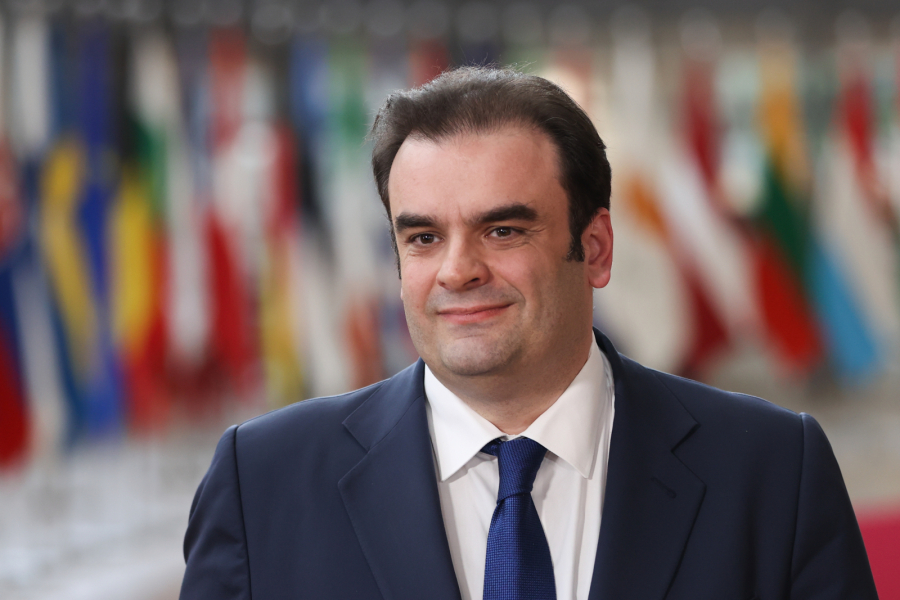

Europe’s radio spectrum, long treated as a national asset and a source of government revenue, could become the foundation of a new European investment strategy under a proposal put forward by Greek Finance Minister and Eurogroup President Kyriakos Pierrakakis.
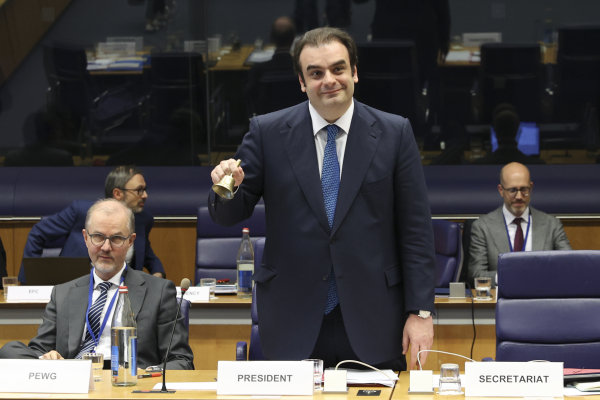
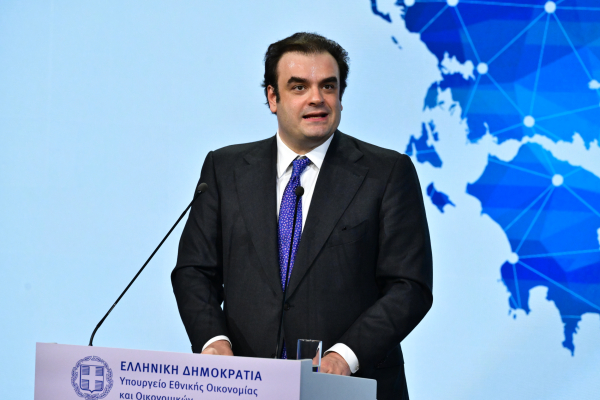
Speaking in Brussels on Thursday, Mr. Pierrakakis proposed the creation of a centralized European mechanism for auctioning telecommunications frequencies, arguing that the bloc’s airwaves should be viewed not simply as a fiscal resource but as a strategic asset capable of financing Europe’s technological ambitions. The proposal comes as the European Union searches for new ways to fund its strategic priorities and reduce its dependence on the U.S. and China in critical technologies. According to Mr. Pierrakakis, spectrum is one of Europe’s most valuable assets because it underpins artificial intelligence, advanced manufacturing, autonomous mobility, satellite communications, secure networks and next-generation defense technologies.
Europe currently manages spectrum through 27 separate national auction systems, each with different licensing terms, timetables and investment incentives. Mr. Pierrakakis argues that this fragmentation imposes a significant opportunity cost by preventing the emergence of larger European telecommunications and technology champions and limiting the development of continent-wide digital ecosystems. The proposal seeks to address that fragmentation through synchronized, pan-European spectrum auctions that would serve three purposes simultaneously: creating a new source of revenue for the EU budget, fostering greater integration of the telecommunications market and generating funding for future technologies.
At the center of the initiative is the development of 6G networks, which are expected to provide the infrastructure for the next generation of AI applications, industrial networks, autonomous systems and advanced defense capabilities.
The financing model draws on Greece’s own experience. In 2020, Athens allocated a quarter of the proceeds from its 5G spectrum auction to establish the Phaistos Investment Fund, designed to support companies developing 5G applications. Under the new proposal, a portion of revenues from European-wide auctions could be directed to a dedicated EU fund aimed at financing 6G technologies and other next-generation applications.
The remaining proceeds could be deployed through the European Investment Bank, whose high credit rating and ability to mobilize both public and private capital could transform auction revenues into a much larger investment program for digital infrastructure across the bloc. Supporters of the idea argue that it goes beyond creating another revenue stream for Brussels. Instead, it attempts to convert a common strategic asset into a new engine for growth, innovation and technological sovereignty. The approach reflects a broader European debate over how to create new sources of investment capacity rather than simply redistribute existing resources among member states.
Any such initiative would face considerable political and legal hurdles. Telecommunications spectrum remains a national competence, and auction proceeds are an important source of revenue for governments across the EU. Implementing a centralized system would therefore require an unusually high degree of political coordination and likely significant institutional and legislative changes.
Still, the proposal underscores a broader shift in European thinking. As the bloc seeks new sources of competitiveness and strategic autonomy, policymakers are increasingly looking at shared European assets not merely as resources to be managed, but as instruments that could help finance the continent’s next phase of technological and economic development.