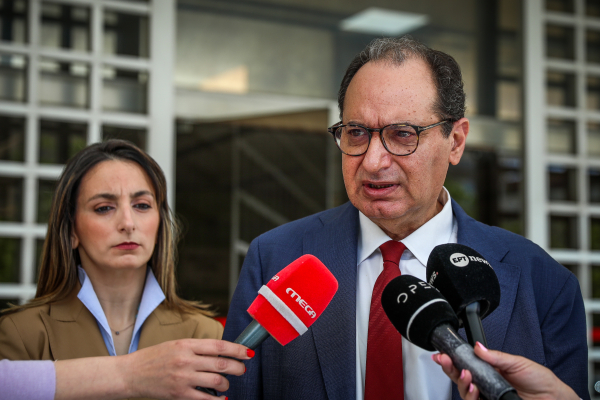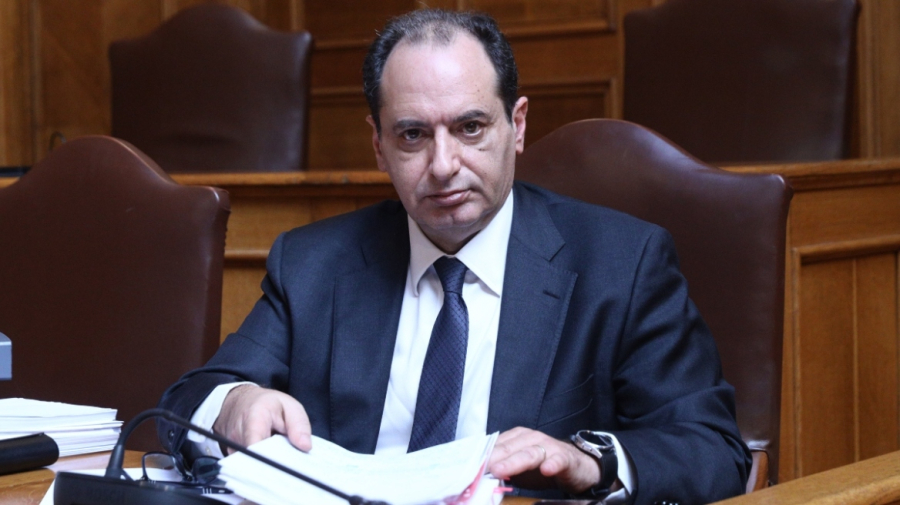
Former Greek minister Christos Spirtzis has publicly challenged the handling of new evidence tied to Greece’s long-running wiretapping scandal, raising fresh questions about judicial oversight and prosecutorial independence in one of the country’s most politically sensitive cases. In a statement released Thursday, Spirtzis said he had filed two formal requests with Greece’s Supreme Court prosecutor on May 7 concerning the so-called surveillance affair that has dogged Prime Minister Kyriakos Mitsotakis’s government for years and triggered scrutiny from European institutions over rule-of-law concerns.
The first request sought the reopening of an archived investigation into alleged illegal surveillance, with Spirtzis claiming he had submitted new evidence related to possible espionage offenses. The second asked for the recusal of Supreme Court prosecutor Konstantinos Tzavellas from examining the case, arguing that Tzavellas faced a conflict of interest because of his previous role as deputy supervisory prosecutor for Greece’s intelligence service, the EYP. According to Spirtzis, his legal team was informed that both requests had been assigned to deputy Supreme Court prosecutor Evangelos Bakelas, prompting the former minister to question the procedural handling of the matter.
Spirtzis argued that if the Supreme Court prosecutor had delegated his request to reopen the case to a deputy prosecutor, the same approach should have been followed earlier when separate evidence had been transmitted by a lower court. Instead, he said, Tzavellas personally handled that process and “swiftly” issued a decision rejecting the reopening of the investigation.
The former minister also questioned why his recusal request had been assigned to the deputy prosecutor at all. He argued that if Tzavellas had already stepped aside from the case voluntarily, there would no longer be grounds to examine the recusal request. Alternatively, Spirtzis maintained that under Greek criminal procedure rules, only a judicial council — not a deputy prosecutor — has jurisdiction to rule on such matters.
At the center of the dispute is what Spirtzis describes as newly submitted evidence, including screenshots from his mobile phone allegedly containing classified emails marked “Confidential.” According to the former minister, the material undermines the legal reasoning previously used to keep the surveillance case archived.
The latest intervention threatens to revive political tensions around Greece’s wiretapping scandal, which erupted after revelations that politicians, journalists and business figures had been targeted through state surveillance operations and spyware monitoring. The controversy sparked domestic political backlash and drew criticism from the European Parliament and international watchdogs concerned about media freedom and institutional transparency in Greece.
Spirtzis, a senior figure in the opposition and a former minister under ex-prime minister Alexis Tsipras, framed his latest move as a test of judicial independence. In his statement, he said he hoped the deputy prosecutor would act “in accordance with the Constitution and the law,” avoid substituting the authority of the judicial council and fully examine the new evidence submitted.
The Greek government has repeatedly denied accusations of unlawful surveillance via Predator spyware and has argued that reforms introduced after the scandal strengthened oversight mechanisms surrounding the intelligence services. Critics, however, continue to argue that key aspects of the affair remain unresolved, particularly regarding accountability and the extent of state monitoring operations.