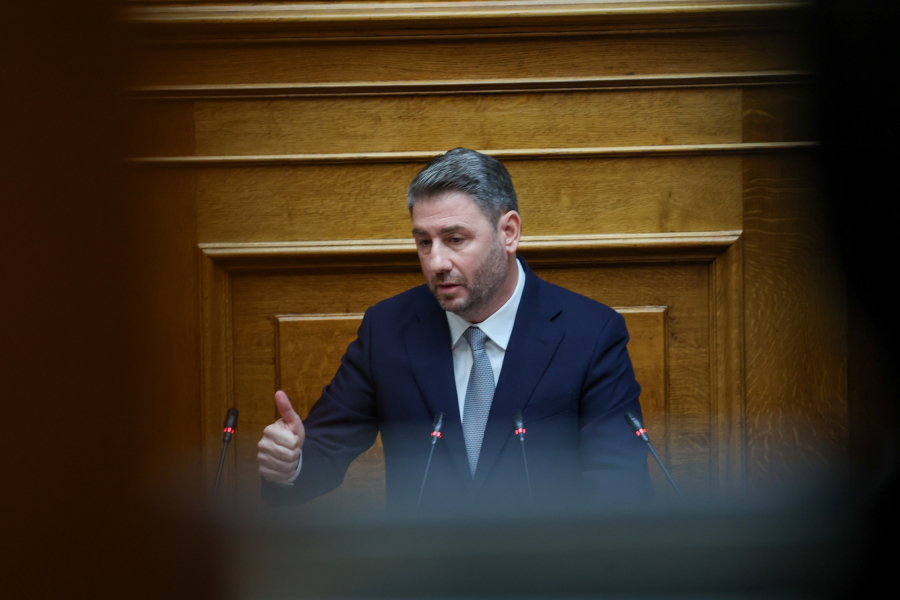

Nikos Androulakis, leader of Greece’s socialist PASOK party, has issued an open letter to ministers, lawmakers, military officials and senior state figures who were allegedly targeted by illegal surveillance and the Predator spyware, urging them to speak out and help reveal the full extent of the wiretapping scandal that has dominated Greek political life in recent years. The letter was addressed to a wide range of political and state officials who were reportedly included on the list of surveillance targets compiled by Greece’s data protection authority. Among those named were former prime minister Antonis Samaras, former Foreign Minister Nikos Dendias, former Labour Minister Kostis Hatzidakis and several other senior government officials, military officers and state administrators.
In his letter, Androulakis argues that defending democratic institutions requires “virtue and courage,” warning that silence in the face of such a scandal amounts to tolerance and ultimately complicity. He stresses that public officials, particularly those who have served in government, parliament, the judiciary and the armed forces, have a democratic duty to stand up for transparency and accountability.
He refers to the recent court ruling in Athens that imposed heavy sentences on four individuals linked to the illegal surveillance network, noting that the court also forwarded trial records to prosecutors to investigate whether additional crimes, including espionage, may have been committed by other individuals involved in the case. According to Androulakis, the ruling represents a major development that challenges earlier conclusions suggesting the operation had been carried out only by private individuals.
The opposition leader also pointed to a public statement by Tal Dilian, owner of spyware company Intellexa, who said in a television interview that his company sold the Predator software exclusively to governments and law enforcement agencies. Androulakis argues that this statement directly links the use of the spyware to state authorities in Greece, raising further political questions about who may have been behind the surveillance.
He claims that evidence presented during the trial indicates that some individuals targeted by Predator were also under official surveillance by Greece’s intelligence service during the same period, suggesting a possible overlap between the two monitoring systems. He rejects the government’s long-standing position that the scandal was merely a private affair involving individuals acting independently, arguing instead that the case points to a broader surveillance mechanism that undermined democratic institutions, the rule of law and fundamental rights.
Androulakis also raises concerns about national security, warning that confidential state, military and diplomatic information may have fallen into the hands of foreign nationals through the spyware network, without clarity over who authorized the surveillance, how the information was used or where it may now be.
He concludes by calling on all public officials who were allegedly targeted to join efforts to fully uncover the truth behind the scandal and ensure that all those responsible are held accountable, regardless of how high their position may be, repeating his central message that silence, in such a case, amounts to complicity.