

The report, titled Subnational Business Ready in the European Union 2025: Greece, presents a sobering assessment of the country’s business climate at a time when Athens has been seeking to position itself as an attractive destination for foreign investment following its recovery from the eurozone debt crisis.
While successive governments have promoted digital reforms and streamlined parts of the public administration, the World Bank found that businesses across Greece still face severe delays, inconsistent public services and major regional disparities that continue to undermine competitiveness.
Among the most serious concerns is the pace of the Greek judicial system. According to the report, commercial disputes can take between 905 and 1,410 days to reach a final ruling — nearly four years in the worst cases. The delays are particularly acute in Athens, where courts are burdened by heavy caseloads and limited digital capabilities.
The World Bank said Greek courts continue to operate without many of the basic technological tools now standard elsewhere in Europe, including electronic case management systems, automated case allocation and virtual hearings. The lack of modernization has become a major obstacle for businesses seeking legal certainty and timely dispute resolution.
Corporate insolvency proceedings also remain painfully slow. Although Greece has adopted a modern legal framework for bankruptcies and restructurings, implementation remains uneven. In some cities, including Heraklion on the island of Crete, liquidation procedures can last more than four years. The report attributes the delays to inefficient court operations, technical problems with digital platforms and limited use of restructuring mechanisms intended to keep businesses afloat.
Property transactions and construction permits continue to expose the depth of Greece’s administrative bottlenecks. Transferring property can take anywhere from two months to more than seven months, with Thessaloniki recording some of the longest delays in the country.
Although Greece has digitized parts of its land registry system, much of the process still relies on paper records, manual verification and in-person visits to government offices. Construction permits face similar obstacles. Approval times range from roughly two and a half to four months, with staffing shortages and weak coordination among public agencies contributing to delays.
The report notes that even the government’s electronic permitting platform, known as e-adeies, remains only partially integrated across departments, limiting its effectiveness for developers and investors.
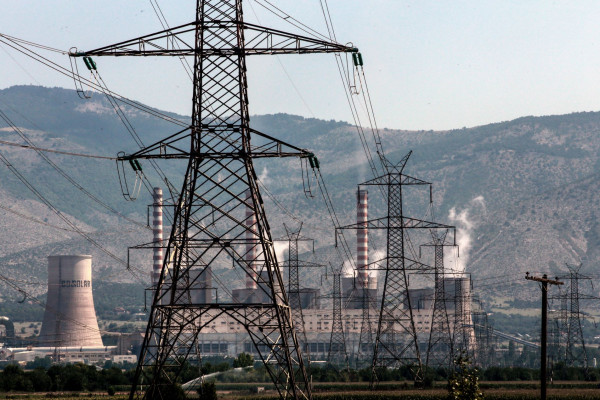
Infrastructure shortcomings were also identified as a major concern, particularly outside the capital. Connecting a new business to the electricity grid can take up to four months, while water supply connections may take more than three months in some regions.
In the northern city of Alexandroupoli, businesses reported an average of 19 power outages per year, with nearly three-quarters of companies saying they rely on backup generators to maintain operations. The World Bank warned that unreliable infrastructure is directly increasing operating costs and reducing productivity, especially for companies based outside Greece’s major urban centers.
Digital infrastructure remains another weak point. Businesses cited slow internet speeds, high costs and uneven access to digital services depending on location. Despite European Union regulatory standards, many internet connection procedures still require manual processing, phone calls and technician visits.
The report also underscores mounting concerns from the private sector over taxation and labor shortages. More than a quarter of businesses surveyed identified high tax rates as the single biggest obstacle to growth, while 26% pointed to a lack of skilled workers. Electricity supply was also cited as a major issue, reflecting broader concerns about infrastructure reliability.
The findings highlight the gap that continues to exist between legislative reform and practical implementation in Greece. Although the country has made visible progress in digitizing parts of the state and improving its regulatory framework, the World Bank concluded that operational inefficiency, fragmented administration and uneven service quality remain deeply entrenched.