
Washington-linked investors and political operatives are quietly expanding their footprint in the Western Balkans through a series of energy and infrastructure projects that are beginning to reshape the region’s geopolitical balance, testing Europe’s influence in an area long viewed as strategically fragile.
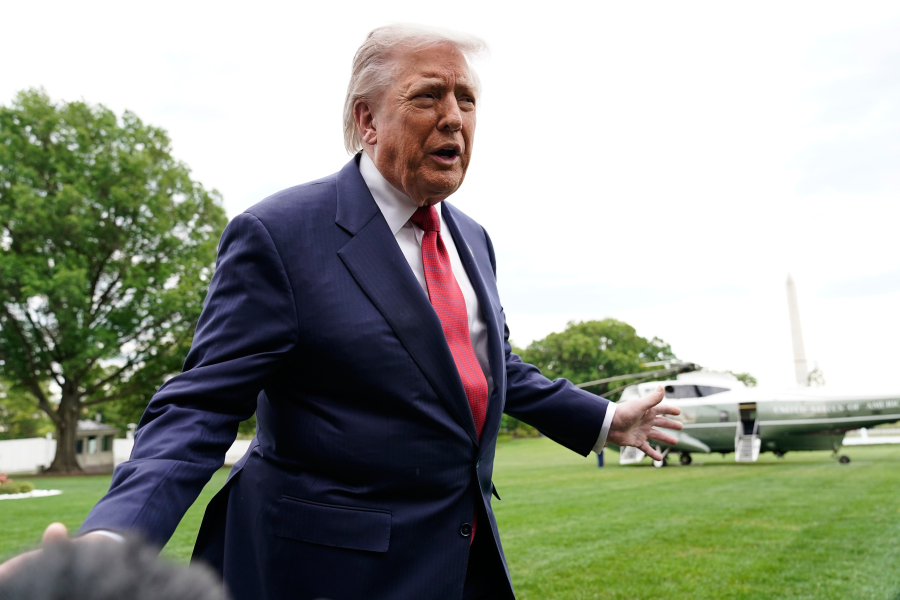
The push is centered on liquefied natural gas infrastructure and broader investments tied to American business interests, many of them connected to allies of President Donald Trump. While the effort stops short of a formal U.S. government strategy, European diplomats and regional officials increasingly see it as an attempt by Trump-aligned networks to gain economic and political leverage in a part of Europe struggling with weak institutions, chronic energy dependence and stalled European integration.
At the heart of the emerging strategy is a €1.5 billion natural gas pipeline agreement between Bosnia and Herzegovina and Croatia. The project would transport American LNG from Croatia’s Krk Island terminal into Bosnia, reducing the country’s reliance on Russian gas supplies and integrating it more closely into Western-backed energy networks.
The project is being developed by AAFS Infrastructure and Energy LLC, an American company led by figures with close ties to Trump’s political orbit. Among them are Jesse Binnall, a former attorney for
Trump, and Joseph Flynn, brother of former National Security Adviser Michael Flynn. Their involvement has fueled concerns in Brussels that commercial investments in the Balkans are becoming intertwined with broader geopolitical ambitions linked to Trump-era political networks.
European officials say the initiative reflects less a coordinated policy from Washington than a convergence of private capital, political relationships and strategic opportunity. The Balkans’ transition away from Russian energy has created a lucrative opening at a moment when the European Union is racing to eliminate Russian natural gas imports by 2027.
Yet the growing American role is also exposing divisions within Europe over how the region’s energy future should be shaped. While Brussels supports diversification away from Russian supplies, EU officials argue that replacing one external dependency with another does little to advance Europe’s long-term energy autonomy.
Concerns have also emerged over how some agreements are being structured. Bosnia recently amended its legal framework to allow a direct award of the pipeline project to the American developer, bypassing competitive procedures typically required under European rules. The move triggered sharp criticism from the European Commission, which warned that such practices could jeopardize Bosnia’s
access to the EU’s single energy market and future funding tied to the bloc’s Western Balkans development programs.
The economic realities are equally challenging. American LNG remains significantly more expensive than pipeline gas from Russia, while the infrastructure required to support LNG imports—from interconnectors to storage facilities—demands billions of dollars in additional investment. Political instability across the region further complicates the outlook.The Western Balkans remain vulnerable to
internal tensions, weak governance and entrenched Russian influence in key sectors of political and economic life. Moscow continues to wield substantial leverage through existing energy relationships, particularly in Serbia and parts of Bosnia.
Still, the American-backed push is extending beyond energy. In Croatia, investors tied to U.S. interests are advancing a major artificial intelligence and data-center project, while Albania has signed a long-term agreement to import American LNG beginning in 2030. Together, the investments point to a broader effort to establish durable economic influence across southeastern Europe using private investment platforms rather than traditional state-led diplomacy.
For Europe, the developments underscore a deeper concern: the possibility that the Balkans could once again become an arena where competing external powers pursue overlapping strategic agendas while the EU struggles to assert a coherent policy of its own.
Whether the current wave of investment evolves into a lasting American strategic presence—or remains tied to a narrower network of Trump-linked political and business interests—remains unclear. But for now, the Western Balkans are increasingly becoming a testing ground for a new form of geopolitical competition, one driven as much by private capital and political connections as by formal statecraft.