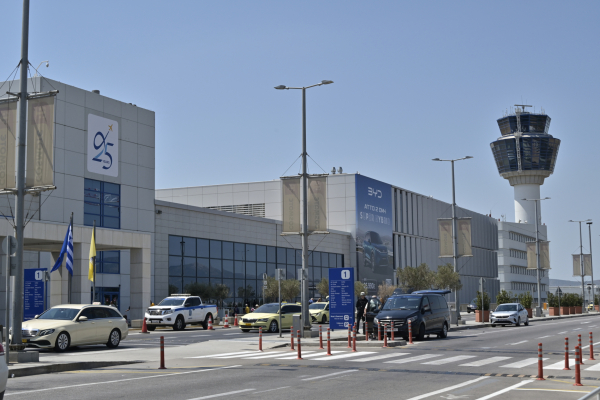

The incident, which occurred on January 4, caused significant disruption at Greek airports and led to cascading delays across several European air traffic networks, highlighting the vulnerability of interconnected aviation systems.
According to the report, the outage was caused by “digital noise” and the desynchronisation of telecommunications systems based on legacy technology. The committee ruled out any cyberattack or external malicious interference and concluded that the incident did not pose a threat to aviation safety. Nonetheless, it stressed the need for urgent upgrades to critical infrastructure to prevent a recurrence.
Investigators found that the Civil Aviation Authority’s voice communications system, a core component supporting air traffic control operations, relies on outdated Synchronous Digital Hierarchy (SDH) technology that is no longer supported by its manufacturer. As a result, the system cannot provide reliable operational guarantees. This technological obsolescence was identified as a key underlying factorin the blackout.
The committee was chaired by the head of the Hellenic Civil Aviation Authority and included representatives from Greece’s National Cybersecurity Authority, the armed forces, the national telecommunications regulator, and EUROCONTROL, with the European Union Aviation Safety Agency participating as an observer. The Civil Aviation Authority and the national telecommunications provider were identified as the main stakeholders involved and submitted official reports on their actions during the incident. Additional information was gathered through interviews with senior staff from both organisations.
The report explains that the disruption was triggered by desynchronisation across multiple heterogeneous systems converging at air traffic control telecommunications facilities. This resulted in the unintended activation and continuous transmission of a critical number of transmitters, degrading or interrupting key communications links. For safety reasons, air traffic capacity in the affected area was temporarily reduced to zero and emergency procedures were implemented. Services were gradually restored after systems were resynchronised and network traffic rerouted, with full recovery achieved at 16:53 local time following a deliberate intervention by the telecommunications provider.
Based on assessments submitted to the European aviation incident reporting system and evaluated by the Civil Aviation Authority, the event was classified as low risk, with no reported loss of aircraft separation. The committee also confirmed that there was no exposure of aircraft to direct or indirect danger.
While the report reassures that flight safety was not compromised, it concludes that the blackout exposed structural weaknesses linked to ageing telecommunications infrastructure. It calls for accelerated migration to modern voice-over-IP systems, stronger coordination between aviation and telecom authorities, improved real-time monitoring capabilities, enhanced oversight of radio spectrum use, and the relocation of critical facilities to reduce systemic operational risks. The committee warns that without swift modernisation, similar disruptions could recur with broader consequences for European air traffic.