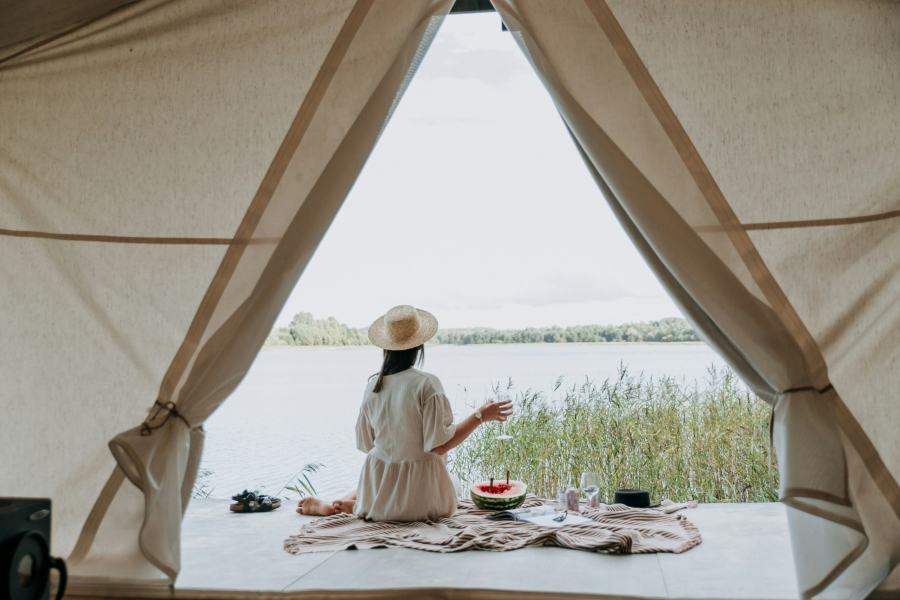

Glamping - the refined, upscale evolution of traditional camping - is rapidly gaining ground as one of the most dynamic forms of travel worldwide, and Greece is now formally embracing the trend. Blending close contact with nature and high-end hospitality standards, glamping caters to travelers who seek authentic outdoor experiences without compromising on comfort, privacy, or quality.
Unlike conventional camping, glamping is defined by fully equipped accommodation units and services that often resemble those of boutique resorts. Once considered a niche international trend, it is increasingly viewed as a strategic opportunity for destinations aiming to diversify their tourism offering. In Greece, where nature, landscape, and outdoor living are central to the travel experience, glamping is now being positioned as a premium product with strong international appeal.
This shift has been reinforced by a recent decision signed by Tourism Minister Olga Kefalogianni and published in the country’s official government gazette. The decision establishes, for the first time, a comprehensive regulatory framework for the operation and classification of luxury glamping sites. It introduces detailed technical and operational standards, as well as a formal star-rating system designed specifically for this category of accommodation.
Under the new rules, all glamping facilities must be classified exclusively as four- or five-star establishments, with five stars representing the highest possible rating. Classification is based not only on compliance with mandatory requirements but also on a points system that evaluates optional criteria, including the quality of infrastructure, level of services, environmental management, equipment, and guest experience. The aim is to ensure consistency, transparency, and internationally recognizable quality standards.
The regulation outlines requirements covering every aspect of a glamping site’s operation, from accommodation layouts and shared spaces to food services, leisure activities, staffing, safety, and sustainability practices. Guests are accommodated in independent units such as luxury tents, wooden bungalows, or cabins, which must be spaced at least ten meters apart to ensure privacy and preserve a sense of immersion in the natural surroundings. Each unit has a clearly defined maximum capacity of up to four adults and two children.
Operational standards are intentionally aligned with those of high-end hotels. Glamping sites are required to provide an organized reception area, with fixed hours or round-the-clock service, along with digital booking and payment options, tourist information, luggage storage, and assistance with transporting luggage to accommodation units.
Inside the units, guests are expected to find hotel-style comforts, including proper beds, private bathrooms with continuous hot water, air conditioning or heating depending on the season, electricity, drinking water, and internet access. The emphasis is on combining outdoor living with the convenience and reliability associated with luxury hospitality.
Accessibility is also a central component of the new framework. A proportion of accommodation units and communal areas must be designed to accommodate guests with disabilities, with safe access routes and adapted facilities. At least five percent of total capacity must be suitable for visitors with reduced mobility, reflecting broader efforts to make tourism infrastructure more inclusive.
Environmental responsibility plays a key role in the regulation. Glamping facilities are required to follow strict standards for cleanliness, waste management, security, and fire safety, while also implementing eco-friendly practices. These include limiting vehicle movement within sites, using natural vegetation for shading, and adopting measures that reduce the environmental footprint of operations.
With this regulatory framework in place, Greece aims to position glamping as a clearly defined, high-quality tourism product that aligns luxury with sustainability. The move signals an effort to compete more effectively in the global market for premium, nature-based travel, while safeguarding standards that international travelers increasingly expect.