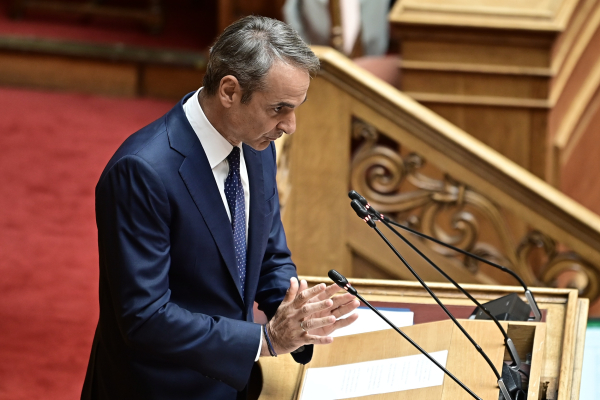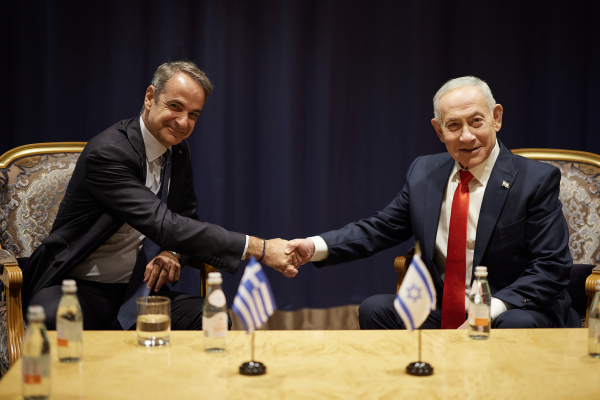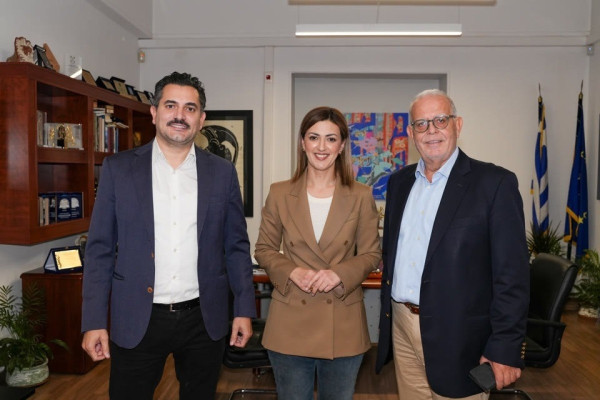
Prime Minister Kyriakos Mitsotakis on Friday has invited representatives of Greece’s protesting farmers to a meeting at his office, as agricultural mobilizations continue across the country. Speaking to the parliamentary group of his governing New Democracy party, Mitsotakis said he would be available on Monday at 5 p.m. to meet any delegation the farmers choose, in an effort to ease tensions.
The prime minister emphasized that government support for the agricultural sector has increased, noting that the primary sector received €3.8 billion this year compared with €3.2 billion last year. At the same time, he argued that social protests must take broader society into account. He also addressed internal party dynamics, underlining that members of parliament are not simply transmitters of public discontent but play an active role in shaping opinion, adding that individual political progress depends on the overall strength of the party.
His remarks came shortly after a briefing to New Democracy lawmakers by Agriculture Minister Kostas Tsiaras on farmer demands and delayed subsidy payments managed by the OPEKEPE agency. The discussion was reportedly tense, but Mitsotakis welcomed the heated exchanges, saying they reflect the functioning of a democratic party in which lawmakers are encouraged to speak openly.
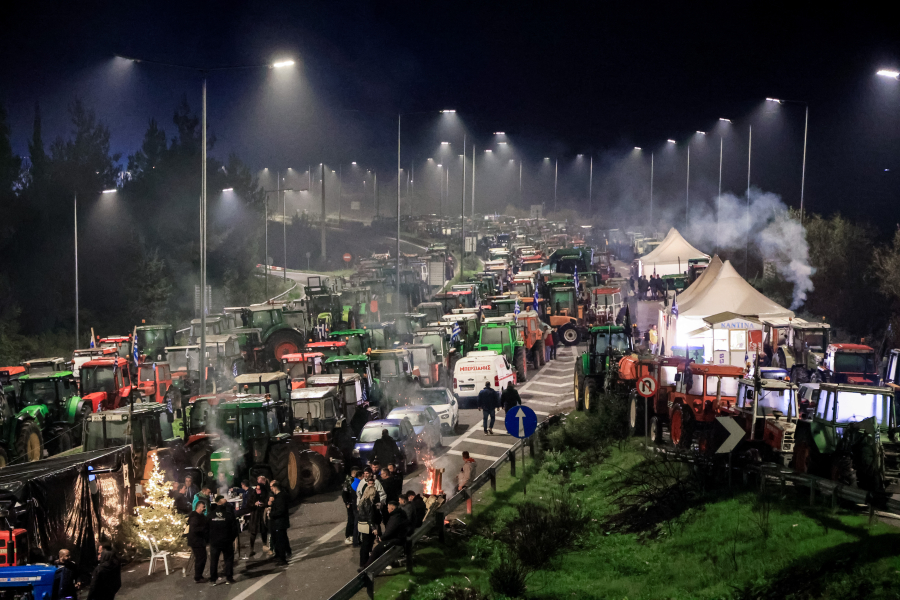
Farmer mobilizations remain widespread. According to organizers, 112 roadblocks have been set up nationwide, with 28 fully active and dozens more partially disrupting traffic. A key coordination meeting is scheduled for Saturday in Nikaia, in central Greece, where farmers are expected to decide on their next steps.
In Larissa, a major agricultural hub, farmers have made clear they do not intend to retreat. On Friday, groups visited the offices of New Democracy lawmakers in the city, throwing straw in a symbolic protest. “We will not move an inch from our roadblocks,” they said, rejecting what they describe as empty promises and warning that responsibility lies with those in power.
Earlier, farmer groups had already issued a firm rejection of the prime minister’s invitation, viewing it as another attempt at de-escalation without concrete commitments. Many insist that dialogue alone is insufficient unless it leads to immediate and tangible solutions.
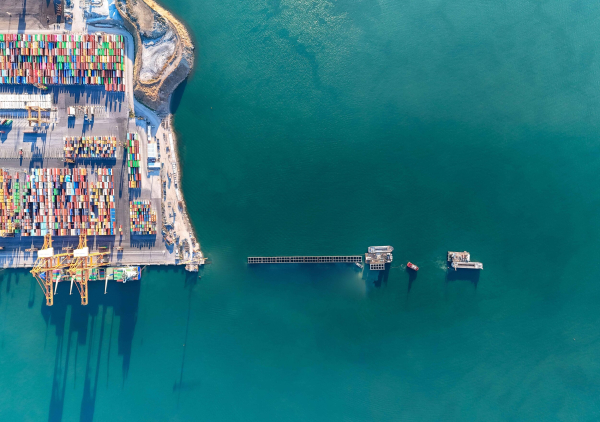
Protests have also taken place in northern Greece. Farmers used tractors and vehicles to symbolically block the commercial gate of the port of Thessaloniki for three hours, explaining that their actions aim to highlight the mounting pressures on agricultural production. Representatives stressed that the mobilizations would continue until what they called “satisfactory solutions” are delivered.
Speaking from the Malgara roadblock near Thessaloniki, Kostas Anestidis, a member of the national farmers’ coordinating committee, said the movement has so far remained peaceful but warned of escalation. “From Monday, by land, sea and air, they will find us in front of them,” he said, criticizing government policies that rely on short-term subsidies rather than structural measures that would allow farmers to earn a dignified living. He described the current moment as a final opportunity to secure the future of the sector.
Farmers’ representatives from Karditsa and other regions echoed calls for unity and persistence, arguing that the dispute is about the future of younger generations. They rejected claims by government officials that farmer demands are unclear, saying their concerns have been repeatedly communicated. Others pointed to strong public support for the protests and urged the government to move beyond rhetoric and deliver concrete results.
From Crete, farmers sent a similar message, saying they are seeking solutions rather than talks and signaling that they plan to intensify, not scale back, their actions. The mobilizations have also drawn expressions of solidarity from beekeepers, trade union members, students and various social groups, underscoring the broader resonance of the farmers’ grievances within Greek society.