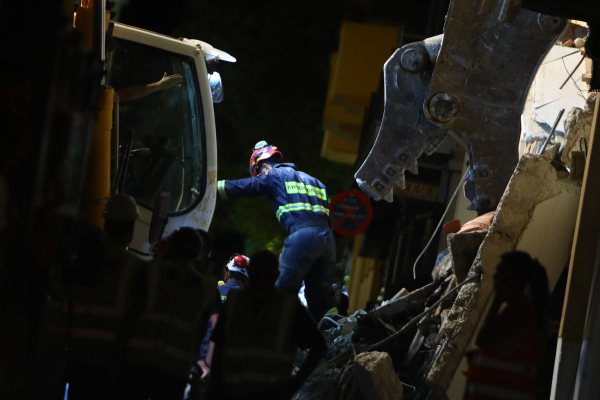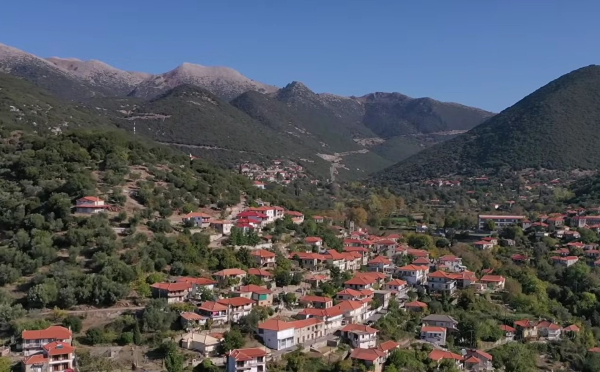

A major fire that erupted in late October at the Hellenic Defence Systems (EAS) complex in Lavrio has drawn urgent attention to a serious environmental hazard that has been left unresolved for nearly a decade. The blaze, which occurred during an improvised attempt by staff to spread lime over contaminated soil in an effort to neutralize explosive residues, exposed significant shortcomings in the facility’s safety protocols. It also provoked strong reactions from the local community, prompting Lavrio’s mayor, Dimitris Loukas, to issue a public ultimatum to the state-owned defense company.
Concerns surrounding the Lavrio site have been mounting for at least seven years. More than 180 tons of explosive materials remain buried beneath the ground, while a further 40 tons are stored in containers that experts describe as highly unsafe. The situation stems from a long-stalled program to destroy anti-personnel mines. In 2016, the private contractor responsible for the project abandoned the site, leaving extensive TNT contamination and offering neither accountability nor a full assessment of the environmental damage.
In the final months of 2024, shortly before stepping down, former EAS CEO Nikos Kostopoulos launched a €43.9 million tender to clean up the site. When a new management team, led by Christoforos Boutsikakis, took over, it deemed the projected cost excessive, cancelled the tender, and ordered a new technical study. That study indicated the need for additional specialized work, leaving the project stalled once again.
While these studies were still pending, the Lavrio factory’s General Directorate proceeded without authorization to apply lime to the contaminated ground, a decision that led directly to the October fire. The incident dramatically underscored the scale of the unresolved threat and increased the pressure on EAS to take decisive action.
After the fire, Boutsikakis appointed a committee to develop a detailed action plan and updated cost assessment. The plan was unanimously approved by the company’s Board of Directors, which agreed to move forward with a negotiated procurement process - without issuing a public tender - for specialized decontamination services and the removal of ten tanks from the former mine-destruction zone. The CEO was also authorized to prepare the required documentation.
Sources indicate that in the coming days, three companies - Polyeco, V Group, and the U.S.-based MuniRem Environmental - will be invited to participate in negotiations. The total cost of the project is now estimated at no more than €25 million, significantly lower than the earlier €43.9 million projection. Around €20 million is expected to cover the removal of the hazardous containers that hold explosive materials, while €5 million will go toward environmental restoration of the site.
The contract is expected to be awarded based on the best balance of technical quality and cost. Management at EAS has emphasized that its priority is not only achieving a more economical solution but ensuring that the cleanup is carried out with the highest level of technical reliability and safety - an imperative given the risks to public safety and the environment in the surrounding region.