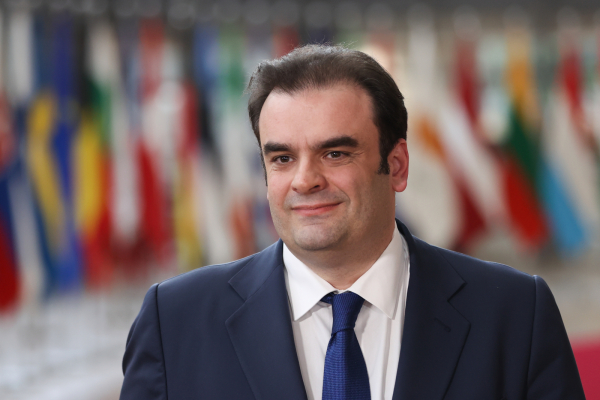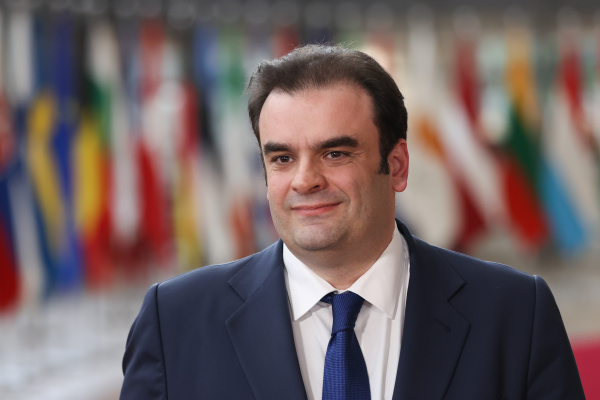
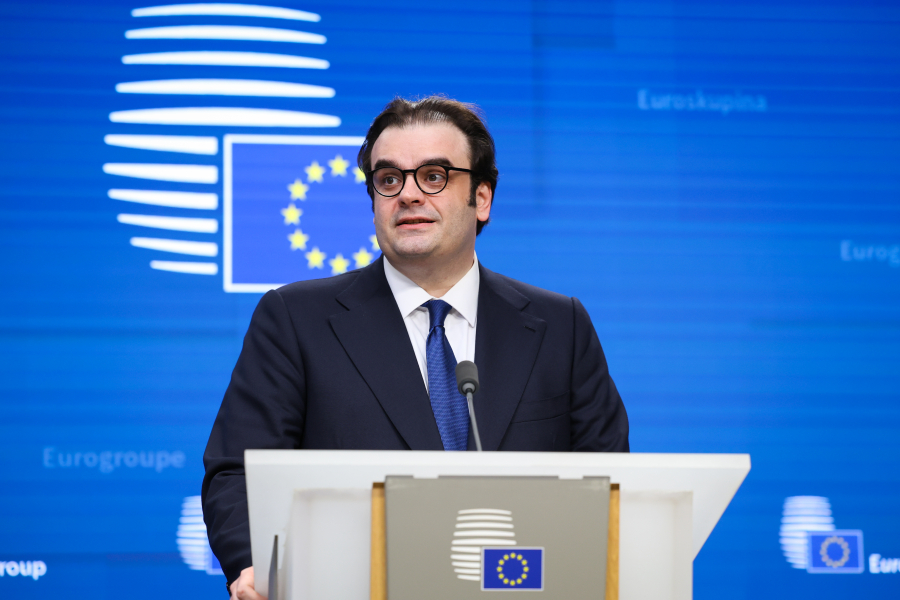

As the newly appointed president of the Eurogroup, the Greek Finance Minister Kyriakos Pierrakakis is setting his sights on revitalizing the debate over the Eurozone’s economic governance. He hopes to build on the strategic vision outlined in Mario Draghi’s influential 2024 report on Europe’s long-term competitiveness. That report highlights the continent’s most pressing challenges: the need to accelerate innovation, the imperative of linking decarbonisation with economic strength, and the urgency of reinforcing Europe’s security and strategic autonomy.
Pierrakakis has been clear that he intends to embed key proposals from the Draghi report into the Eurogroup’s agenda. His priorities include improving macroeconomic coordination, making more effective use of Europe’s financing instruments, and promoting investment in sectors deemed strategically vital. The stakes are high. Europe is facing weakening productivity, a widening technological gap with global competitors, and intensifying geopolitical and geoeconomic pressures—factors that make ambitious, structural reforms increasingly unavoidable.
The Draghi report functions as a detailed roadmap for a reimagined European economic model. It calls for Europe to strengthen its capacity for innovation through larger research investments, more efficient regulation, and closer ties between academia and industry, aiming to narrow the gap with the United States in advanced technologies. It also argues that Europe’s decarbonisation efforts must be tied to a comprehensive investment plan in energy networks, renewables, and clean technologies, so that the green transition becomes a source of competitive advantage rather than a threat to industrial strength. The report further stresses the need to reinforce Europe’s security by reducing strategic dependencies and upgrading the defence industrial base, ensuring technological and supply-chain autonomy in an increasingly unstable world.
Achieving these objectives, the report notes, would require annual investments equivalent to roughly five percent of Europe’s GDP—a scale that demands a significant reorientation of fiscal policy. This would include a renewed focus on productivity, debt sustainability, and the development of new shared European financing mechanisms.
Pierrakakis has signaled his determination to confront the structural weaknesses identified in the Draghi report, including the fragmentation of the European market, the small scale of many European companies compared with global competitors, and the lack of a unified industrial strategy. The report is explicit that the long-standing approach of building “national champions” is no longer adequate for Europe’s economic reality.
Still, in Brussels, a central question looms: can the Eurogroup’s political landscape support such a far-reaching agenda? The Eurogroup operates on consensus, and its discussions reflect a wide spectrum of economic traditions, fiscal philosophies, and national priorities. While some member states are receptive to the idea of a more coordinated European strategy, others remain cautious about expanding common financial tools or transferring additional powers to EU institutions.
For Pierrakakis, the defining challenge will be whether he can forge the consensus needed to transform the Draghi report’s recommendations into actionable European policies. The political ambition is undoubtedly present, but turning that ambition into concrete, binding commitments will test the Eurogroup’s capacity for unity and long-term vision