
The European Union’s shift toward a fully functioning circular economy is progressing at a sluggish pace, according to Special Report 23/2025 by the European Court of Auditors (ECA). Released yesterday, the report highlights Greece as one of the EU’s most troubled cases in waste management. Covering the decade from 2014 to 2024, it portrays a Union that, despite setting ambitious targets and tightening regulations, continues to struggle with decoupling waste generation from economic growth. Within this broader picture, Greece stands out for its persistent structural shortcomings in planning, implementing and financing waste-management policies.
The auditors point out that even though the European Commission has raised the bar on recycling and reducing landfill use, many member states remain far from meeting these goals. Municipal waste—representing roughly 27% of total EU waste—has proven especially difficult to manage, not only because of its complex composition but also because volumes continue to rise in several countries despite prevention initiatives. This stagnation reveals significant gaps in investment, monitoring and incentive systems that might otherwise encourage both citizens and authorities to adopt more responsible waste practices.
Greece’s deficiencies span all major indicators. Landfilling remains high, while recycling rates for both municipal waste and packaging lag well behind EU averages. The country consistently finds itself grouped with Cyprus, Malta and Romania, countries that similarly grapple with chronic delays in project delivery and a lack of crucial infrastructure. Greek municipalities, the report notes, still struggle to implement comprehensive recycling systems, and separate waste collection—essential for producing high-quality recyclable materials—remains insufficiently developed. Although some progress has been made, separate collection does not yet reach the entire population and offers few incentives to motivate broader participation.
According to the ECA, Greece’s national waste-management plans repeatedly underestimate the true infrastructure needs and often fail to clearly outline how necessary projects will be financed. This uncertainty fuels ongoing delays and prevents the timely execution of critical works, even when European funds are readily available. Many co-financed projects across the decade faced delays of up to 80%, leaving some facilities degraded or even unusable despite their potential to relieve pressure on overstretched regions. Cases of cost overruns exceeding 20%, as well as plants operating either far below or well above their designed capacity, further expose the weaknesses in planning and oversight.
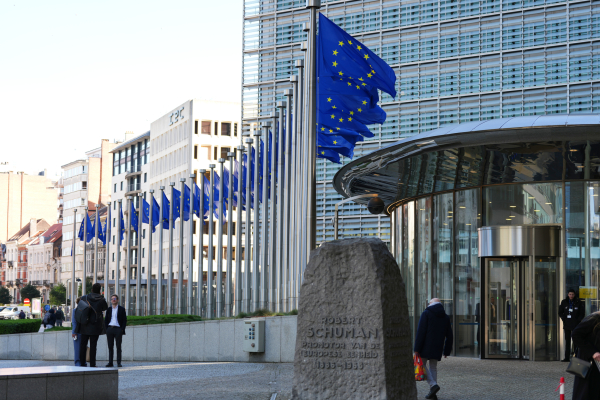
The report also scrutinises the European Commission itself, noting that it has been slow to initiate infringement procedures against member states that missed key targets. In some instances, procedures linked to objectives set for 2008 were launched only in 2024—a delay that auditors argue undermines the effectiveness of the EU’s compliance system. Compounding this, the Commission has not carried out systematic on-the-ground inspections in member states for more than a decade due to staffing shortages. This absence limits both the support and the pressure required to drive national authorities toward the necessary reforms.
The auditors paint a similarly challenging picture of the recycling market more broadly. In several EU countries, existing facilities are few in number or at risk of closure due to rising operating costs and declining demand—issues further aggravated by imports of cheaper recycled and virgin materials from outside the Union. In response to these vulnerabilities, the European Commission has pledged to introduce new legislation in 2026 aimed at strengthening the sector. A more resilient recycling industry, the report argues, will be vital for meeting the EU’s circular-economy goals and advancing the continent’s green transition.