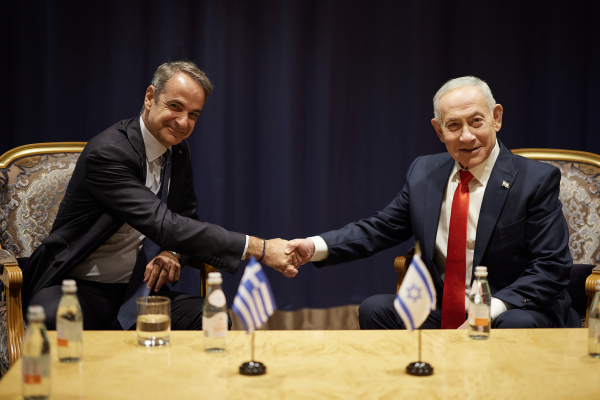

The “3+1” meeting between Greece, Cyprus, Israel and the United States, scheduled for early April 2026 in Washington, is emerging as a decisive moment for the long-delayed electricity interconnection linking the three Eastern Mediterranean countries.
The gathering will determine whether the investment interest expressed by the U.S. and Israel will move beyond the exploratory stage and become a binding commitment. By then, the project’s technical and financial data must be fully updated — a task long overdue.
The Greece–Cyprus–Israel Interconnector, envisioned as a critical energy bridge between Asia and Europe, has been repeatedly derailed by political disputes, competing national interests, and regional tensions. Over the past 16 months, these obstacles have frozen progress on the €1.9 billion project, despite its strategic importance for ending Cyprus’s energy isolation and integrating Eastern Mediterranean power markets with Europe.
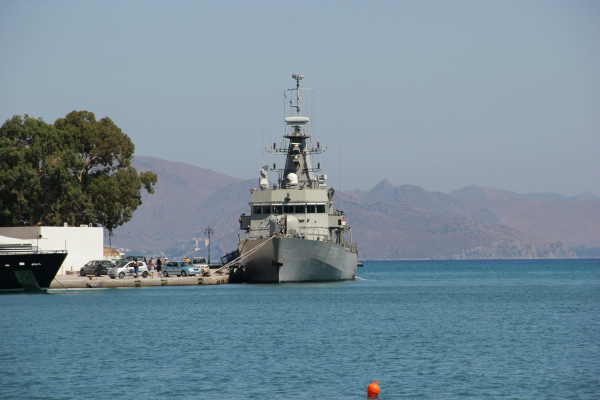
ADMIE, Greece’s electricity transmission operator, first intervened in 2023 to prevent the project’s collapse when its previous promoter faced financial insolvency. But the deeper geopolitical complications only became fully visible in July 2024, after a naval incident near Kasos heightened regional sensitivities and led Cyprus to hesitate over its commitment to join the project’s shareholding structure. That hesitation caused several potential investors — including Abu Dhabi’s TAQA, France’s Meridiam, the Israeli fund Aluma and the U.S. Development Finance Corporation (DFC) — to step back from initial expressions of interest.
Now the project is receiving renewed attention, driven by U.S., Israeli and Gulf-based interest that extends beyond energy infrastructure. These countries increasingly view the Greece–Cyprus link as a key component of the India–Middle East–Europe Corridor (IMEC), the ambitious 4,800-kilometer trade route unveiled at the 2023 G20 summit as a strategic counterweight to China’s Belt and Road Initiative. For Washington in particular, IMEC has become a priority, and the interconnector’s role within it is being reassessed accordingly.
This revived interest was evident in bilateral meetings held during the recent Transatlantic Energy Summit in Athens, which also hosted the first “3+1” gathering in years. U.S. Ambassador Kimberly Gilfoyle said the meeting signaled “where the United States is focusing its energy,” highlighting Washington’s support for major infrastructure projects that enhance regional connectivity and limit the influence of rival powers.
To move forward, however, the project requires an updated feasibility study — the current one dates back to 2016 — and must secure an independent international consultant to deliver it within the next five months. Only then can investors formally evaluate whether they are ready to make binding financial commitments.
Yet a new challenge may be emerging. China holds a 24% stake in ADMIE, the project’s implementing operator, and enjoys enhanced governance rights. Because the GSI is now being framed as part of IMEC — a corridor intended to curb Chinese influence — Beijing’s position in ADMIE risks becoming a political liability. The U.S. DFC, which is exploring participation in the interconnector, functions partly as a mechanism for countering Chinese and Russian penetration in strategic sectors, and its investment decisions must be approved by the U.S. Congress. How Washington’s interest can be reconciled with ADMIE’s existing ownership structure remains unclear.
Diplomatic discussions have already turned to possible ways of limiting Chinese influence, similar to conversations the U.S. has reportedly held with Greece regarding the China-controlled Port of Piraeus. ADMIE also requires fresh capital, which could offer an opportunity to rebalance its shareholder structure. Unless changes occur, China’s presence would extend into both segments of the Greece–Cyprus–Israel interconnection.