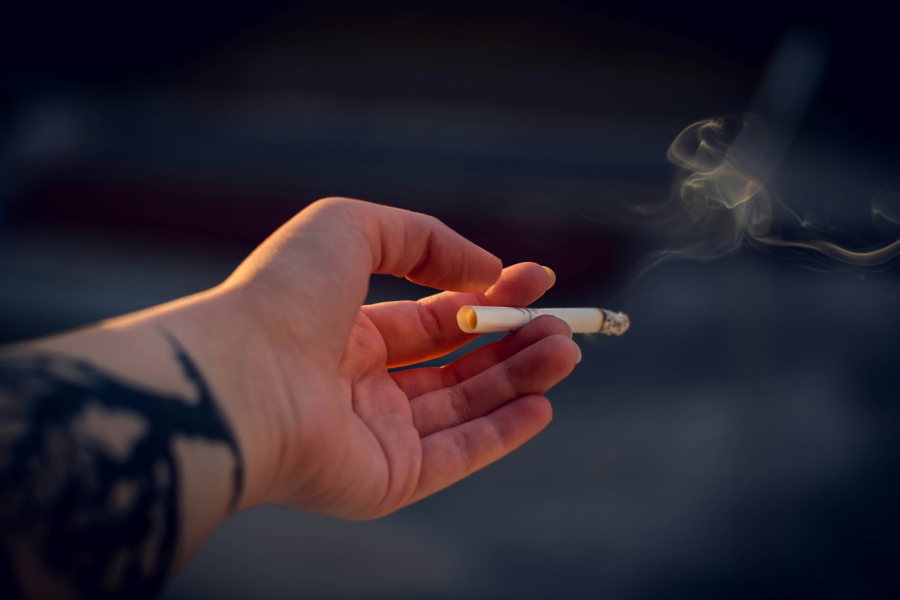

A new framework now under public consultation in Greece outlines how cigarette and tobacco companies will be required to help clean beaches and public spaces of discarded cigarette butts. Under the proposal, a new “collection system” would finance cleanup initiatives run either by municipalities or by dedicated environmental programs, and would also provide free ashtrays and waste bins in public areas.
The environmental group WWF, however, argues that Greece should follow the example of plastic-bag legislation and introduce a direct levy on tobacco products to generate a stable fund for such efforts.
Cigarette filters contain plastic and have been classified as single-use plastics under European and Greek legislation since 2020. Under this framework, Greece should already have a nationwide system in place for managing cigarette waste; the legal deadline was January 2023. Implementation has been delayed, partly because of lengthy negotiations with the tobacco industry, which must design and finance the system under the “polluter pays” principle.
The Hellenic Recycling Agency (EOAN) recently released a draft detailing the specifications for establishing this national collection scheme. The system would be required to demonstrate a measurable reduction in scattered cigarette waste over the coming years. It would map and monitor cigarette litter across various categories of public spaces - ranging from roads and transport hubs to beaches, parks, playgrounds, university campuses, public squares, and outdoor areas of government buildings - and establish a baseline of litter levels within its first six months. It would also be responsible for providing free collection infrastructure in selected locations, while municipalities would retain responsibility for day-to-day cleaning.
A methodology for calculating the cost of collecting, transporting, and processing cigarette waste would be included in the system’s operational plan, and municipalities could then claim reimbursement for these expenses.
The initial reaction from WWF has been critical. The organization argues that the proposal lacks a clear mechanism for distributing funds to local authorities and fails to establish a governance structure that ensures independence, accountability, and impartial oversight. As an alternative, WWF recommends adopting the model used in France and Spain, where a fixed fee is charged per cigarette filter - €0.019 in the Greek proposal, with the possibility of increases if cleanup targets are not met. According to WWF, such a measure could generate between €210 million and €280 million annually, given that roughly 15 billion cigarettes are consumed in Greece each year.
WWF proposes that the resulting revenue be directed to a dedicated Cigarette-Butt Pollution Cleanup Fund and invested in environmental cleanup operations, public education, and innovation. It also calls for an independent governing board with no ties to the tobacco industry, including representatives from EOAN, local government, the scientific community, and environmental organizations.