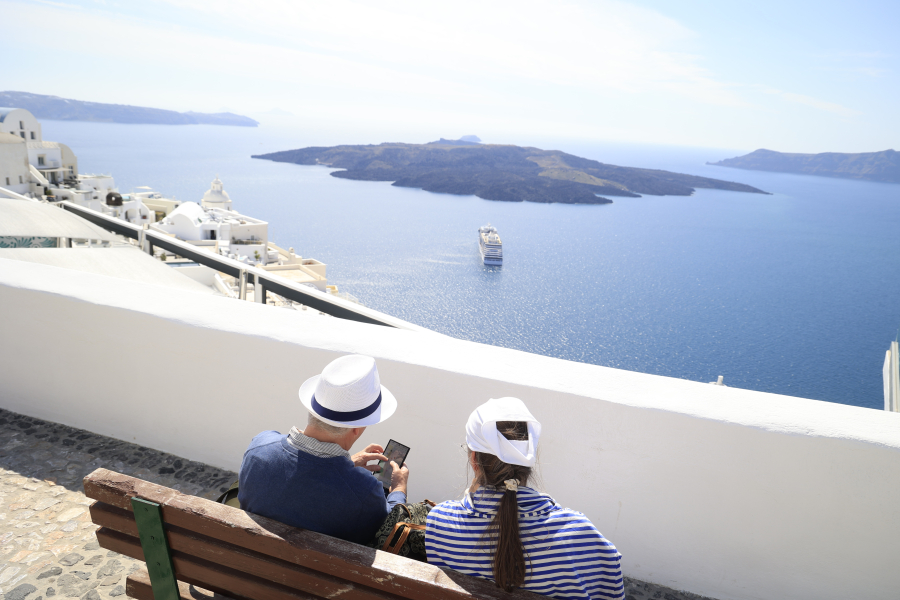

Over the past twelve years, they have managed to double their annual visitor arrivals, underscoring their enduring power in the global travel market.
In 2024, Greece welcomed 36 million tourists, capturing roughly 2% of global arrivals. Of these, 16 million—nearly half—visited the country’s islands, highlighting their central role in shaping the nation’s tourism identity. Back in 2012, island arrivals numbered around eight million, rising to fourteen million in 2019 before reaching sixteen million in 2024.
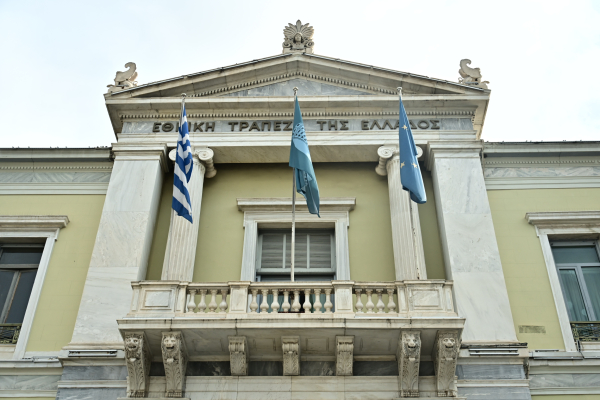
A recent study by the Economic Analysis Department of the National Bank of Greece, titled “Greek Islands,” emphasizes this momentum. It estimates that global tourist arrivals to island destinations reached about 150 million in 2024, with the Mediterranean attracting 40% of them. Greece alone accounts for an impressive 11% of this total, meaning that more than one in ten travelers who choose an island destination anywhere in the world end up in Greece.
Seven Greek islands—including Crete, Rhodes, and Corfu—now rank among the thirty most popular island destinations globally, sharing the stage with world-famous names such as Hawaii, Bali, and Phuket. This growing prominence reflects not only Greece’s natural beauty and hospitality but also its strategic position as a premier destination within the Mediterranean.
The dominance of the Greek islands becomes even clearer when comparing international hotel arrivals across the region. Greece leads its main competitors—Spain, Italy, and France—with 62% of its international arrivals concentrated on its islands. In contrast, the corresponding figures are 30% for Spain, 6% for Italy, and just 2% for France. Even Spain’s Canary Islands, a major tourism hub, account for only 15% of the country’s total arrivals.
However, this impressive growth comes with increasing strain on local infrastructure. According to the same study, the islands will require a significant boost in investment to keep pace with rising demand and to avoid overstretching their resources. Annual investment currently stands at around €2 billion, focused mainly on transport, energy, and water systems. To meet future needs, an additional €1 billion per year will be necessary to accommodate the 50% seasonal increase in population, along with another €0.5 billion annually to address the higher costs and logistical challenges inherent to island economies.
Altogether, the required investment is estimated at €3.5 billion per year, or roughly €35 billion by 2035. This level of commitment will be crucial to sustain growth without exceeding the islands’ environmental and social carrying capacity, while also strengthening their long-term economic foundations.
The hospitality sector mirrors this transformation. The Ionian Islands have recorded the fastest expansion in luxury accommodation over the past decade, with a 119% increase in four- and five-star hotel capacity. The South Aegean follows with a 64% rise, Crete with 56%, and the North Aegean with 50%. As a result, high-end hotels now represent 29% of all accommodation in the North Aegean, 51% in the Ionian Islands, and around two-thirds in both Crete and the South Aegean.