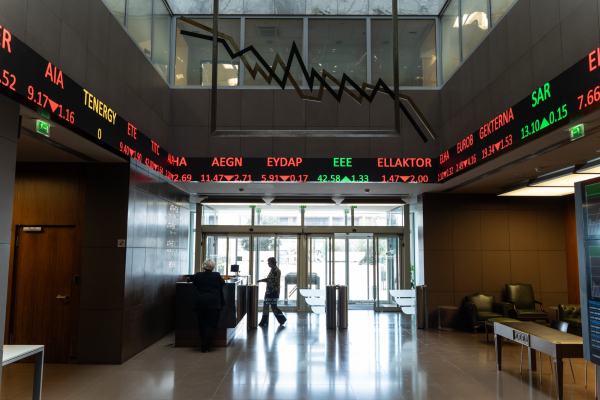


The potential acquisition of the Athens Stock Exchange by the European exchange group Euronext has attracted attention not only in Greece but also among observers of European financial integration. Some members of the Greek government have linked this development to the broader ambitions of the European Union’s Capital Markets Union (CMU), an initiative designed to create a seamless, efficient, and deeply integrated European capital market.
The CMU aims to ensure that investments and capital can move as freely across EU member states as goods and services do within the single market. By addressing the fragmentation that still characterizes Europe’s financial landscape, the CMU aspires to support growth, resilience, and innovation across the continent. However, the idea that a Greek exchange joining a larger European group like Euronext would automatically lead to greater liquidity or integration oversimplifies a far more intricate issue.
One of the most persistent obstacles to a truly unified European capital market is what economists call "home bias." Despite the benefits of international diversification long promoted by Modern Portfolio Theory, both individual and institutional investors across Europe continue to show a strong preference for investing in their home countries. This pattern leads to inefficiencies, higher transaction costs, and limited capital mobility across borders. It also leaves smaller markets — like Greece — especially vulnerable, with fewer opportunities to attract international capital and less liquidity compared to their larger counterparts.
Institutions such as the European Central Bank and the European Commission, as well as recent studies including the Draghi Report, have identified home bias as a fundamental structural challenge. Investors remain wary of entering markets they perceive as unfamiliar, whether due to regulatory, tax, legal, or linguistic differences. They also tend to rely more heavily on local information and have greater confidence in companies and financial instruments based in their own countries.
The Athens Stock Exchange is a clear example of this pattern. It operates largely as a national exchange, with high participation from domestic retail investors and limited involvement from abroad. Greek listed companies often find it difficult to raise funds from international investors, not necessarily because of poor fundamentals, but due to lack of visibility, the small scale of the market, and perceptions of elevated risk. Foreign investors also face practical barriers: entering and operating in the Greek market can be costly and complex.
In this light, potential membership in the Euronext group represents more than just a change of ownership. With a presence in seven European countries, Euronext offers a unified trading and post-trading infrastructure, consistent corporate governance rules, and a consolidated regulatory framework. These shared systems are meant to facilitate the free flow of capital across borders, enhance transparency, and create a more coherent investment environment for all participants. For Greece, becoming part of this ecosystem could increase international exposure for Greek equities and make the market more attractive to foreign capital.
Yet even with harmonized platforms and regulatory alignment, changing investor behavior is not easy. Home bias is not simply a matter of infrastructure or policy; it is rooted in trust, habit, and perception. Building that trust takes time and requires consistent performance, transparency, and proactive outreach to international investors. Smaller markets like Greece must compete with larger and more established financial centers, which already enjoy greater visibility and access to global capital flows.
There are also broader concerns to consider. The acquisition or merger of a national stock exchange into a multinational group raises important questions about independence, regulatory oversight, and the role of smaller markets within a larger framework. These issues have surfaced in previous Euronext integrations, and the outcome often depends on the specifics of the deal, the degree of local involvement, and how effectively the transition is managed.