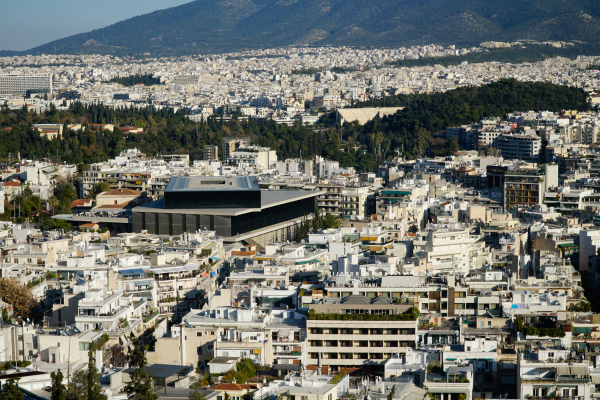
Greece's residential real estate market is undergoing a period of dynamic growth, marked by steadily rising asking prices for both sales and rentals. As traditional hotspots become increasingly expensive, investors—both domestic and international—are starting to explore lesser-known locations offering strong returns and long-term rental potential. Recent data from Spitogatos Insights, presented at this year’s Real Estate Expo in Athens, reveals a number of these emerging areas across the country, where relatively low property prices coincide with growing rental demand—creating ideal conditions for capital appreciation. In the heart of Athens, neighborhoods that were previously overlooked are gaining traction.
Districts such as Patision-Acharnon and Attiki, along with more established but still affordable areas like Kypseli, Exarchia-Neapoli, and Goudi, are now delivering gross rental yields exceeding 5%. These districts attract a diverse mix of tenants, including university students and operators of short-term rental accommodations, making them increasingly attractive for buy-to-let investments. West of the capital, the suburbs are yielding some of the highest returns in the Attica region. Agia Varvara, for example, currently boasts an 8.2% capitalization rate—well above the national average. Aigaleo follows with a 6% yield, while other areas like Nea Filadelfeia, Acharnes, and Kamatero are also showing strong investment potential due to their affordability and consistent rental interest. In contrast, the southern suburbs of Athens—long associated with luxury and seaside living—are seeing lower returns. Areas like Glyfada and Nea Smyrni, despite their desirability, offer yields closer to 3.6%. This is largely due to elevated purchase prices, which compress potential income relative to investment.
Piraeus, the historic port city adjacent to Athens, presents a different picture. Traditional working-class neighborhoods such as Kaminia, Palaia Kokkinia, Tambouria, Agia Sofia, Agios Ioannis Rentis, Keratsini, and Nikaia are emerging as investment-friendly zones. These areas combine low property acquisition costs with steady rental demand, generating yields consistently above 5%. Further afield, Eastern Attica offers pockets of opportunity in areas like Marathon, Koropi, Nea Makri, Artemida, and Spata. Even more distant locales, including Lavrio, Oropos, Kalamos, Megara, Markopoulo, and Keratea, report high returns, largely due to their low entry prices and limited housing supply. In Greece’s second-largest city, Thessaloniki, investors are finding value in districts such as Eleftherio-Kordelio, Ampelokipoi, Stavroupoli, and Menemeni.
These areas benefit from low purchase costs and a rising demand for rental homes. Meanwhile, central neighborhoods like Vardaris and Ano Poli are seeing strong returns, supported by the city’s sizable student population and growing tourism sector. Outside of the major urban hubs, smaller cities across Greece are also drawing attention. Towns such as Didymoteicho, Ptolemaida, Kozani, Karditsa, Agrinio, Orestiada, Veria, and Komotini stand out for their especially high rental yields, particularly on smaller apartments. Other regional centers like Drama, Serres, Lamia, and Xanthi are beginning to attract investor interest thanks to their affordability and evolving rental markets.
Even in the Greek islands—often associated with high prices and limited inventory—there are pockets of opportunity. The islands of Samos and Lesvos (Mytilene), for instance, offer strong rental returns, supported by low property prices and growing tenant demand. In the Peloponnese, areas such as Ilia (particularly the towns of Pyrgos and Amaliada), Sparta, Tripoli, and Aigio are proving to be promising investment destinations, offering a compelling balance of low costs and strong rental income.