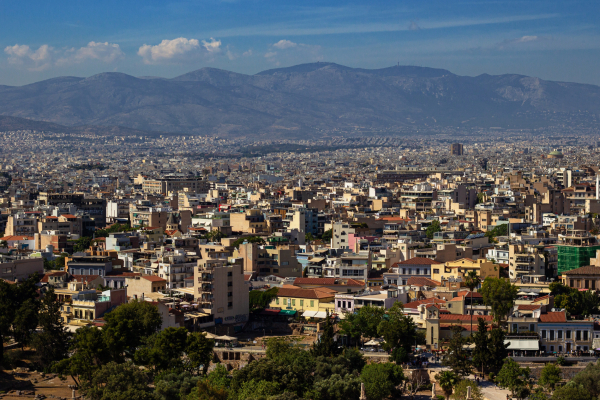
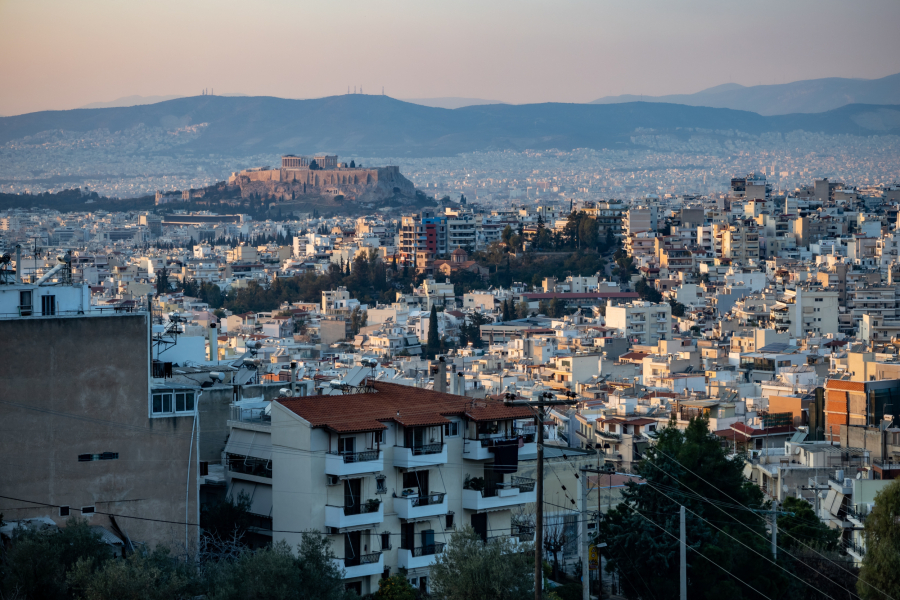
Greece's government is advancing urban-planning proposals that could permit nearly 1.85 million additional square meters of construction across the Athens metropolitan area, raising concerns about infrastructure capacity, flooding and the loss of green space in an already densely developed region.
The proposals, currently under public consultation, would establish zones where developers could use additional building rights across 26 municipal districts in Attica, the region surrounding the Greek capital. The changes are being promoted under the government of Prime Minister Kyriakos Mitsotakis, with Environment Minister Stavros Papastavrou overseeing the planning framework.
At the center of the debate are proposed increases in building-density ratios, which determine how much floor space can be constructed relative to the size of a property.
ΔΙΑΒΑΣΤΕ ΕΠΙΣΗΣ

In Kifisia, an affluent northern Athens suburb known for its residential neighborhoods and greenery, a proposed increase in the building coefficient from 0.50 to 1.00 could potentially double permitted floor space. A 500-square-meter plot that currently allows 250 square meters of construction could accommodate 500 square meters, subject to other planning restrictions.
In nearby Filothei and Psychiko, proposed increases from 0.60 to 0.80 would expand potential construction on similar plots by one-third. More substantial changes are being considered elsewhere.
In Nea Ionia, permitted construction on a 500-square-meter plot could rise from 400 to 700 square meters, a 75% increase. In parts of Holargos, the equivalent figure could increase from 600 to 750 square meters. Industrial areas of Metamorfosi could see building coefficients rise from 1.00 to 1.60.
The proposals could create opportunities for property owners and developers to expand residential and commercial space in a metropolitan area facing persistent housing pressures. But greater density could also place additional demands on roads, parking, water supplies and sewage networks.
Environmental concerns are particularly acute because Athens has experienced increasingly severe heat and flooding risks. Replacing gardens and other permeable surfaces with buildings and pavement can reduce rainwater absorption, potentially worsening runoff during heavy storms. Higher residential density could also increase water consumption and wastewater volumes, particularly during summer.
The proposals remain subject to consultation, and higher building coefficients wouldn't automatically authorize construction without compliance with other applicable rules.