Four words on a Greek government health platform—“Male,” “Female,” “Other” and “Undetermined”—have set off an unusually personal political fight, turning an obscure technical setting into the latest battle over the ideological direction of Greece’s governing conservatives.
The dispute erupted after the conservative newspaper Estia reported that an online platform operated by EOPYY, Greece’s national health-insurance organization, offered patients four choices—“Male,” “Female,” “Other” and “Undetermined”—when using a service for the home delivery of high-cost medicines.
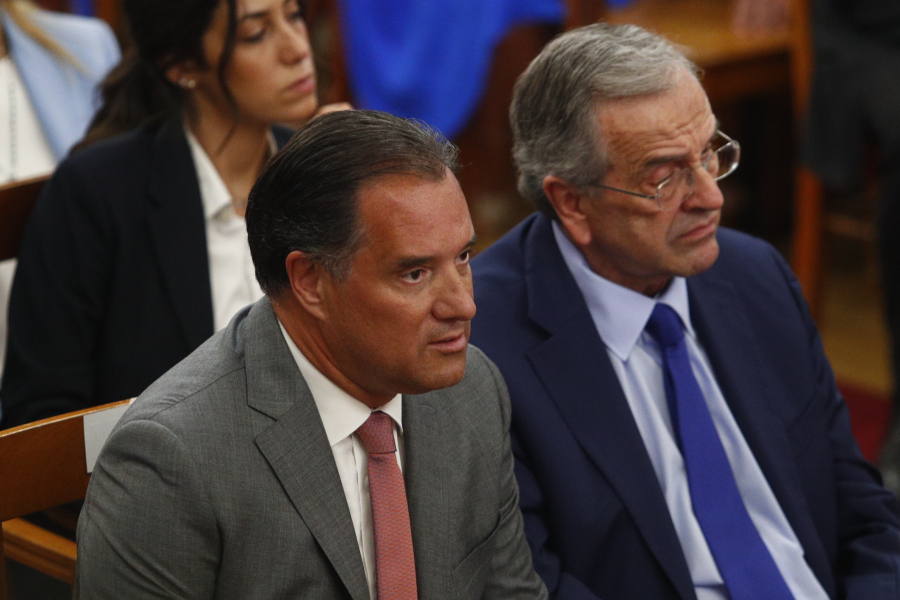
Health Minister Adonis Georgiadis said he hadn’t been aware of the setting and ordered it changed. He said the additional categories weren’t the result of a government policy but had been introduced by the contractor that developed the platform as part of its implementation of the ISO/IEC 5218 standard.
ΔΙΑΒΑΣΤΕ ΕΠΙΣΗΣ


Georgiadis said the field should be limited to biological sex because medical treatment can depend on a patient’s physical characteristics. EOPYY subsequently confirmed the change and said the disputed information wasn’t used in processing patient data for its services.
The technical explanation, however, failed to contain the political fallout.
Former Prime Minister Antonis Samaras, who governed Greece from 2012 to 2015 and previously led the ruling New Democracy party, seized on the episode as evidence that the government had embraced what he called a “woke agenda.”
Samaras argued that such ideas had entered Greece’s public administration and schools and reflected a broader transformation of New Democracy under Mitsotakis. He also linked the controversy to Greece’s demographic crisis, saying a country struggling with low birthrates should be supporting the traditional family rather than redefining it.
Georgiadis responded sharply, accusing opponents of Mitsotakis of turning an easily corrected technical issue into an ideological controversy.
“No, my dear president, a mistake was made, it was corrected—calm down,” Georgiadis wrote, addressing Samaras directly.
The exchange is significant because Samaras has increasingly positioned himself as a critic of Mitsotakis from the conservative right, challenging the government on social issues, migration and foreign policy. Speculation has also persisted in Greek political circles over whether the former premier could support or lead a new political movement.
The dispute drew in Kyriakos Velopoulos, leader of the nationalist Greek Solution party, which is competing for many of the same conservative voters and attacked Samaras over his intervention.
For Georgiadis, the controversy distracted from what he said was the more consequential development: the expansion of EOPYY’s home-delivery program for expensive medicines. He said use of the service had increased 90% in August from a year earlier.
The episode nevertheless illustrates a broader struggle over the future of the Greek right. Mitsotakis has expanded New Democracy toward the political center while retaining much of its traditional conservative electorate. Samaras and parties to its right increasingly argue that the shift has gone too far.