
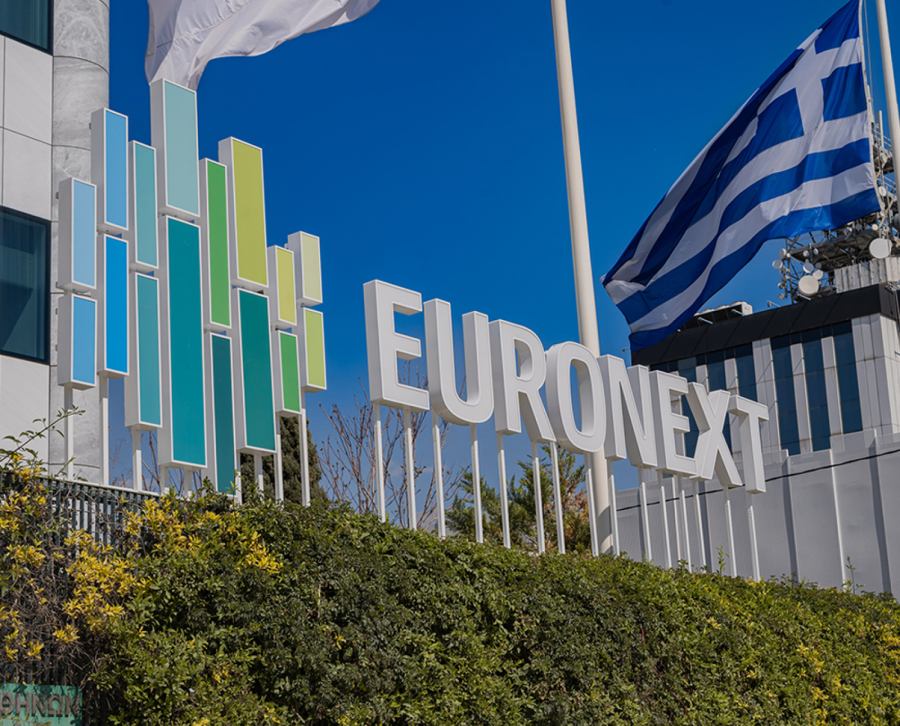
Greece is offering investors in certain publicly traded shipping companies a tax advantage, exempting qualifying share sales from a 0.1% transaction levy as the Athens stock market attracts new listings from the country's powerful maritime industry.
The clarification, issued by Greece's Independent Authority for Public Revenue, or AADE, comes as several shipping companies controlled by prominent Greek shipowners establish a presence on Euronext Athens.
The tax authority's circular, signed by Governor George Pitsilis, was published on Tuesday, the same day that Capital Maritime Finance, associated with shipping magnate Evangelos Marinakis, began trading on the Athens exchange.
ΔΙΑΒΑΣΤΕ ΕΠΙΣΗΣ



The development follows the recent listings of Safe Bulkers, controlled by Polys Hajioannou, and Star Bulk Carriers, led by Petros Pappas.
The exemption could strengthen the appeal of maritime shares by reducing transaction costs for individual investors, institutional funds and other market participants.
Under Greece's standard rules, investors selling listed shares pay a tax equivalent to 0.1% of the transaction's value, regardless of whether the sale generates a profit or loss.
For example, selling €100,000 worth of shares ordinarily triggers a €100 tax. A €1 million transaction carries a €1,000 charge.
Investors selling shares in eligible shipping companies will no longer face that levy.
However, the measure isn't a blanket exemption covering every company operating in the maritime sector.
Under Article 26 of Greek Law 27/1975, the provision applies to Greek and foreign shipowning companies, regardless of the flags flown by their vessels.
It also covers holding companies that directly or indirectly own qualifying shipowners, bareboat charterers or ship-leasing businesses.
For holding companies to qualify, all their investments must fall within the categories specified by the legislation.
Listed companies must provide documentation verifying their business activities and ownership structures.
They must also promptly notify Euronext Athens and the country's central securities depository of material changes that could affect their eligibility.
Importantly, AADE isn't introducing a new tax incentive. The circular clarifies how an existing legal exemption should be applied.
Nor does the authority identify specific listed companies as beneficiaries.
The distinction means investors will need to establish whether individual securities satisfy the statutory requirements.
The clarification arrives as Athens seeks to deepen its capital markets and strengthen ties with Greece's internationally significant shipping industry.
Lower trading costs could encourage activity in eligible maritime stocks, particularly among institutional investors handling large transactions.
For shipping companies considering an Athens listing, the exemption adds another potential attraction to the domestic exchange, although its practical impact will depend on which companies qualify.