
U.S. Secretary of State Marco Rubio paid tribute to ancient Greece’s influence on American democracy and Western civilization during a visit to Athens, before turning from history to present-day geopolitics in talks with Greek Prime Minister Kyriakos Mitsotakis.
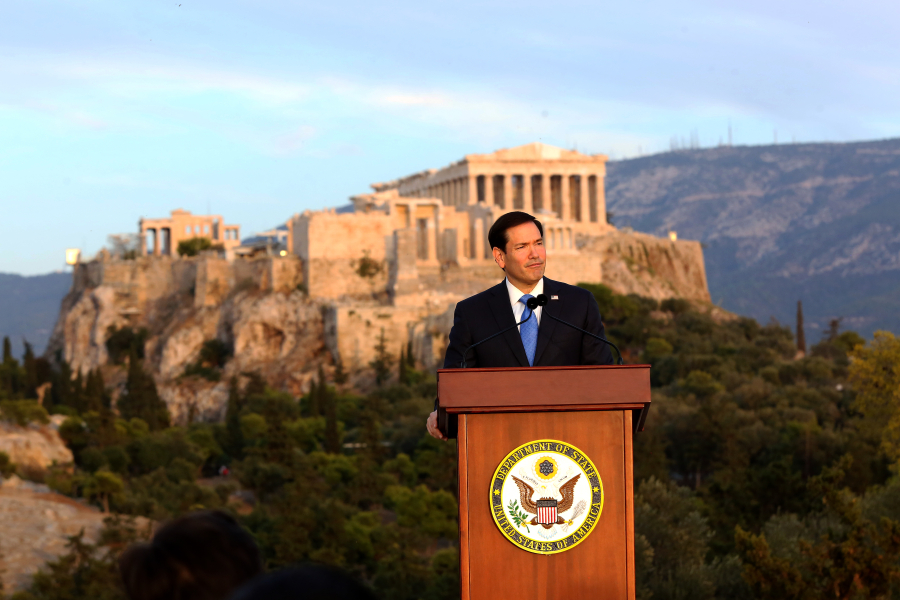
Speaking at the Pnyx, the hill overlooking Athens where citizens assembled in antiquity to exercise direct democracy, Rubio said the U.S. owes Greece a debt that neither the passage of time nor geographic distance can erase.
“The Greeks gave us history itself,” Rubio said, using his speech beneath the Acropolis to trace a line from classical Athens to the institutions, political vocabulary and civic ideals of the modern West.
ΔΙΑΒΑΣΤΕ ΕΠΙΣΗΣ


The setting carried particular symbolism. The Pnyx sits opposite the Acropolis and was the meeting place of the Athenian democratic assembly more than two millennia ago. Rubio said that while the ruins of many ancient civilizations have faded from living memory, the monuments of Athens continue to exercise an unusual hold over the Western imagination.
“The Acropolis is different,” he said.
Rubio recalled the Persian invasion of 480 B.C., when forces under Xerxes captured Athens and burned the sanctuaries of the Acropolis. The Athenians later returned and rebuilt. Decades afterward, under Pericles, they constructed the Parthenon.
“For 25 centuries the Parthenon has stood,” Rubio said, noting that empires had risen and disappeared beneath its shadow.
He then connected that history directly to the creation of the U.S.
Two and a half centuries after the founding of the American republic, Rubio said he had come to Athens as secretary of state to acknowledge “a debt that no passage of time and no geographic distance can ever erase.”
That inheritance, he said, can be seen in Washington’s neoclassical architecture and in the political ideas that influenced America’s founders. Even Philadelphia, where the U.S. Constitution was drafted, carries a Greek name.
Rubio pointed to the founders’ fascination with classical history and singled out Plutarch, the Greek biographer whose accounts of Greek and Roman political figures were widely read by early American statesmen.
“Athens gave us democracy,” Rubio said, while Plato and Aristotle helped give the West its philosophical foundations. Modern political vocabulary—from democracy and tyranny to politics itself—also bears the imprint of ancient Greece.
Yet Rubio argued that the debt goes beyond institutions and language. Classical Greece shaped Western ideas about citizenship, virtue, law and the responsibilities of individuals toward their societies, he said.
“To know them is to know ourselves,” Rubio said.
The history lesson came during a visit with decidedly contemporary strategic implications.
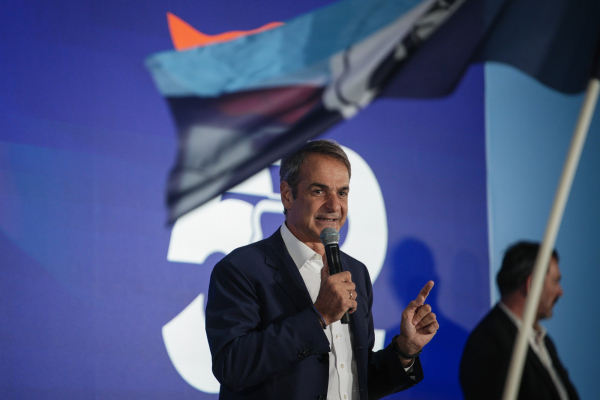
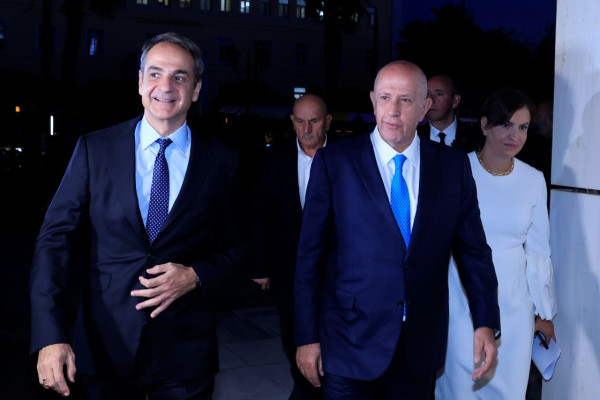
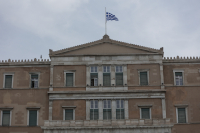
After his Pnyx address, Rubio met Mitsotakis at the Maximos Mansion, the Greek prime minister’s official office, for talks focused on the relationship between Washington and Athens.
Mitsotakis congratulated Rubio on what he called a “very impressive” speech, saying it highlighted both the historical ties between Greece and the U.S. and the broader Western world’s debt to Athens.
The prime minister also sought to connect Greece’s ancient role in the West with its modern geopolitical position.
“Greece is not only a pillar of stability in a troubled region, but also a bridge between Europe, the West, the United States, the Middle East and the Arab world,” Mitsotakis said.
Energy was among the issues highlighted in the bilateral relationship, reflecting Greece’s growing role as an entry point and transit hub for energy supplies into Southeast Europe.
Rubio described Greece as a strong U.S. partner and said Washington wanted to deepen the relationship in ways that would benefit both countries.
His official program in Athens had begun earlier Wednesday with talks with Greek Foreign Minister George Gerapetritis. Rubio also visited the U.S. Embassy in Athens following its renovation and participated in a new round of the U.S.-Greece Strategic Dialogue.