
Most Greeks would prefer a second general election rather than an immediate coalition government if no party secures a parliamentary majority, according to a new opinion poll by Marc, highlighting the country's continued preference for single-party rule despite growing political fragmentation. The survey, conducted for broadcaster ANT1, found that 56.7% of respondents would support holding a second round of elections in the event of a hung parliament, while 39% would favor the formation of a coalition government.
The poll also showed a divided electorate on the timing of the next election. Nearly half of respondents, 49.6%, said they want the vote to be held at the end of the government's four-year term in the spring of 2027, while 44.7% would prefer an early election this autumn.
Among coalition scenarios, the most popular option was an alliance between the center-left PASOK party, the newly formed Greek Left Alliance (ELAS) and smaller parties, backed by 28.7% of respondents. A quarter of those surveyed, 24.8%, said they would prefer another outright majority government led by the center-right New Democracy party.
Support for other coalition arrangements was more limited. A partnership between New Democracy and PASOK was favored by 11.2% of respondents, while 10.1% backed a coalition between New Democracy and smaller right-wing parties.The survey underlined the differing priorities of party supporters. Around eight in ten New Democracy voters said they want the party to govern alone. PASOK supporters were more divided, with 40.8% favoring cooperation with ELAS and 31.3% supporting a coalition with New Democracy.
The poll also examined the preferences of voters who abstained in Greece's 2023 election but say they intend to vote next time. Among this group, the largest share, 17.9%, said they would support Hope for Democracy, a new political movement, followed by 15.8% for ELAS. New Democracy and PASOK attracted only 5.6% and 5.5%, respectively, suggesting that non-voters could disproportionately benefit newer and anti-establishment parties.
Marc also analyzed the voter bases of emerging political formations. ELAS appears to draw heavily from the former electorate of the left-wing Syriza party, attracting 57.5% of its 2023 voters, while also making gains among supporters of other center-left and left-wing parties. Hope for Democracy, meanwhile, draws much of its support from voters who previously backed smaller nationalist and protest parties, including Niki and Greek Solution, while also attracting some former Syriza and PASOK supporters.
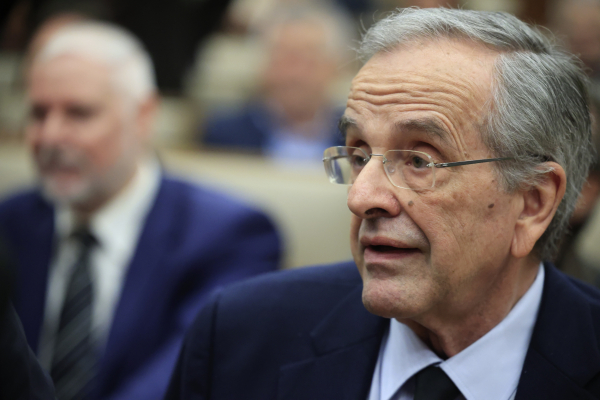
The poll further explored the potential impact of a new party led by former Prime Minister Antonis Samaras. Twenty-nine percent of respondents said Mr. Samaras should establish a new political party, while 60.2% opposed the idea. Some 12.4% of respondents said they could consider voting for a Samaras-led party, although Marc Chief Executive Thomas Gerakis estimated that its direct impact on New Democracy's support could amount to around 1.5 percentage points.