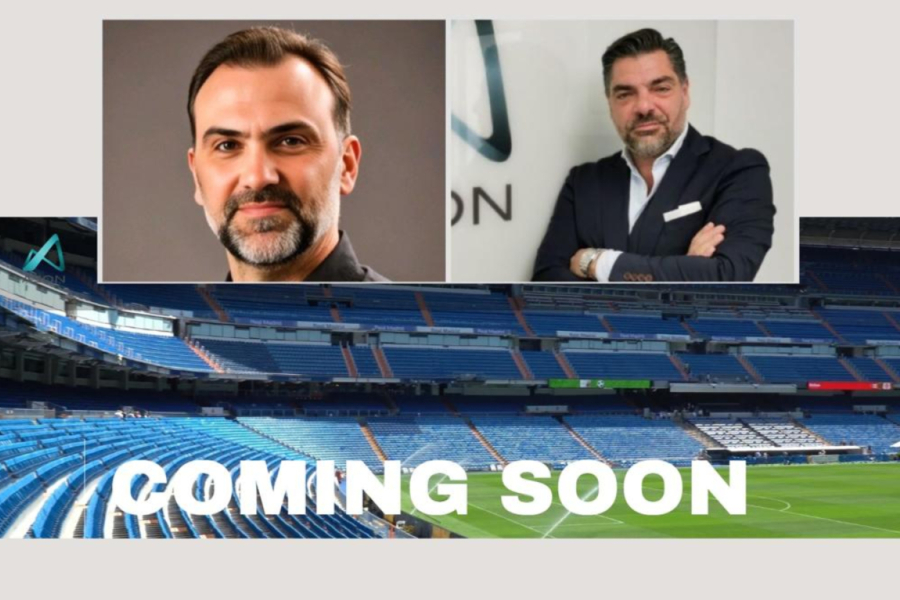
Aeon Acquisition I Corp., a blank-check company aiming to capitalize on Europe’s growing sports and entertainment industry, entered 2026 with ambitions of raising a quarter-billion dollars on Nasdaq. Instead, the company now finds itself racing against time, cutting the size of its proposed listing in half while trying to contain a legal battle that threatened to derail the offering altogether.
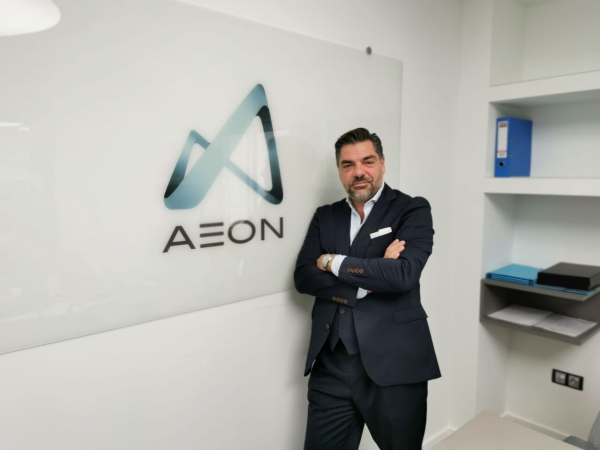
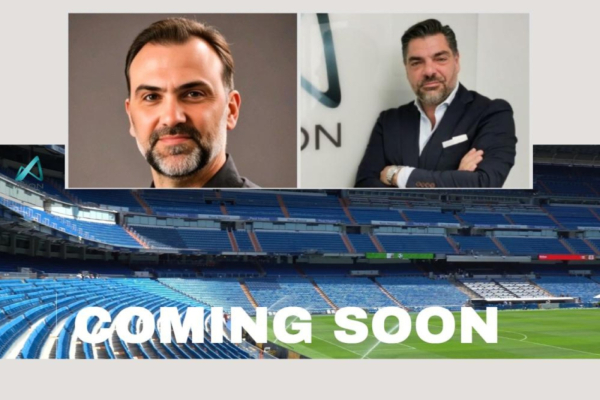
The special purpose acquisition company, founded by financiers Dimitris Mallios and George Panou, is seeking to position itself as an acquisition vehicle targeting professional sports franchises, media assets and sports-entertainment businesses across Europe - a sector that has drawn increasing interest from U.S. investors and private-equity firms in recent years. But the path to Wall Street has become increasingly complicated.
According to an amended prospectus filed with the U.S. Securities and Exchange Commission on May 18, Aeon has reduced the size of its planned initial public offering to $125 million from the $250 million originally envisioned when the company first filed in October 2025.
ΔΙΑΒΑΣΤΕ ΕΠΙΣΗΣ



Under the revised structure, the company plans to offer 12.5 million units priced at $10 each, with underwriters holding the option to purchase an additional 1.875 million units that could increase total proceeds to roughly $144 million. The downsized transaction underscores the mounting pressures facing smaller SPACs as investor appetite for speculative listings remains uneven and financing conditions continue to tighten across capital markets.
Aeon’s IPO process has already undergone multiple revisions. The company first filed its registration statement with the SEC in October 2025 before receiving regulatory clearance in January. Subsequent amendments followed in February and April, culminating in the latest revised filing in May. While the company says the offering is expected to launch as soon as practicable after the prospectus becomes effective, no pricing date or Nasdaq listing schedule has been announced.
Like many SPACs, Aeon is built around a relatively narrow window to complete a deal. The company will initially have 12 months after the IPO to execute a merger or acquisition, with the ability to extend the deadline by two additional three-month periods if the sponsor injects further capital into the trust account holding investor proceeds.
If no transaction is completed within that timeframe, the company would be forced to liquidate and return investor funds.
The revised filing also highlights governance and dilution risks often associated with SPAC structures. Aeon Acquisition Partners I LLC, the sponsor entity behind the vehicle, acquired more than 6.1 million founder shares for only $25,000, according to the filing. Such structures can significantly dilute public shareholders following a business combination.
Yet the greater threat to Aeon’s IPO may lie outside the traditional risks outlined in SPAC prospectuses. For months, the company has been overshadowed by a legal dispute involving Chardan Capital Markets, the New York-based investment bank that previously worked with entities linked to Mallios’ broader business network.
The conflict stems from financing agreements signed in 2023 and 2024 involving companies connected to the Aeon ecosystem, including The Aeon Group and Geneships Acquisition Corp. Chardan argued it was owed compensation exceeding $15 million for advisory and financing services already provided under those arrangements.
The dispute escalated sharply in February when Chardan initiated arbitration proceedings against Aeon Acquisition I Corp., Mallios, The Aeon Group and Geneships Acquisition Corp.
The timing posed a potentially existential threat to the IPO. A prolonged arbitration battle - particularly one involving multimillion-dollar claims - risked alarming prospective investors and complicating the company’s efforts to secure institutional support for the listing. Aeon responded by seeking relief in New York State Supreme Court in an attempt to halt the arbitration proceedings. At the same time, Mallios and The Aeon Group committed to assuming potential liabilities in order to shield the SPAC itself and future shareholders from direct exposure.
The standoff ultimately ended in a settlement reached in late March involving all parties, including D. Boral Capital, another investment bank participating in the offering. Under the agreement, Chardan will serve as lead underwriter for the IPO while D. Boral Capital will act as co-bookrunner. The firms also agreed to split equally all economics tied to the transaction, including underwriting fees and future cooperation rights. But the settlement came with a critical condition that now looms over the entire deal.
The agreement remains valid only if Aeon successfully completes its IPO by Aug. 14, 2026, unless all parties agree to extend the deadline. Should the listing fail to close by then, the settlement automatically collapses and arbitration proceedings resume, reviving Chardan’s claims.
That provision has effectively transformed Aug. 14 into the real deadline facing the company - and explains the urgency surrounding the revised SEC filing and accelerated IPO preparations. The situation leaves Aeon confronting an uncomfortable contradiction: a company attempting to raise hundreds of millions of dollars to invest in the future of professional sports and entertainment has yet to fully stabilize its own financial and legal foundations.