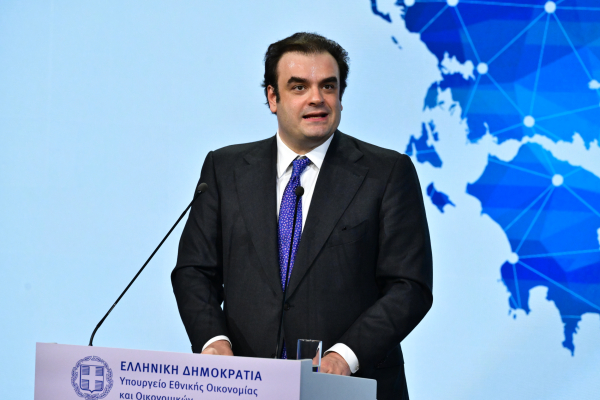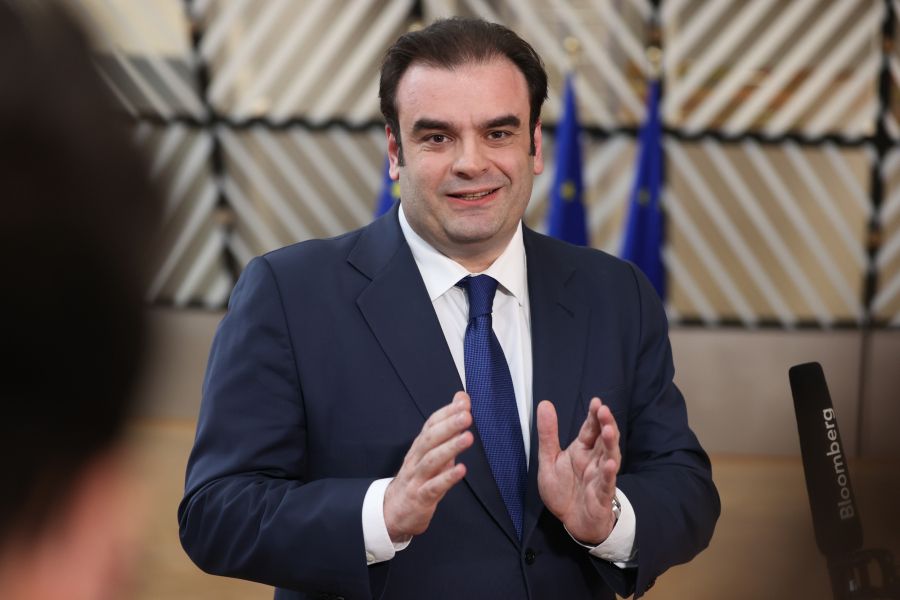
Greek Finance Minister and Eurogroup President Kyriakos Pierrakakis is entering a week of intensive international diplomacy, with a series of high-profile meetings alongside some of the world’s leading economic and political figures as geopolitical tensions and global economic uncertainty continue to rise.
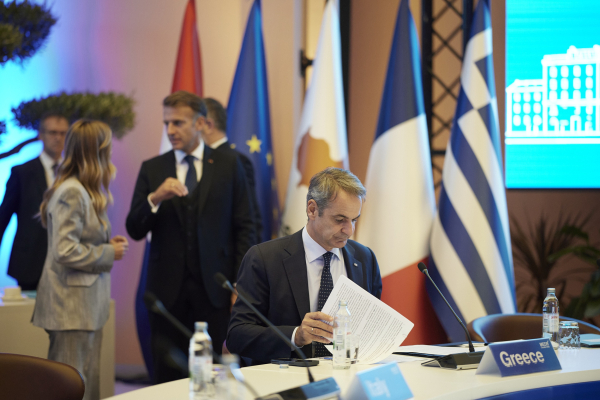
The first stop is Costa Navarino, the luxury resort in southern Greece, where a closed-door summit is being held this weekend bringing together senior policymakers and financial leaders from Europe, the United States and the Middle East. The gathering, organized in cooperation with the Atlantic Council, is expected to focus on the rapidly shifting geopolitical and economic environment.
Among those attending are European Central Bank President Christine Lagarde, International Monetary Fund Managing Director Kristalina Georgieva and Italian Prime Minister Giorgia Meloni, highlighting the international weight of the discussions.
Pierrakakis will then travel to Paris to take part in the G7 meeting of finance ministers and central bank governors on May 18-19. The summit is expected to focus on the impact of the Middle East crisis on the global economy, support for Ukraine and broader concerns over persistent global economic imbalances.
Ahead of the meeting, Pierrakakis warned that the escalating crisis in the Middle East has once again demonstrated how exposed interconnected economies remain to external shocks. He stressed that the current challenges facing the global economy require coordinated international responses rather than isolated national strategies.
The Greek minister also emphasized the importance of safeguarding maritime trade routes, particularly the Strait of Hormuz, arguing that any disruption could trigger wider economic repercussions through higher energy costs and renewed pressure on inflation and global growth.
While noting the resilience shown by European economies during the recent energy crisis, Pierrakakis said economic pressures are likely to continue even if geopolitical tensions ease in the near term.
He also called for deeper international cooperation to address structural macroeconomic imbalances and argued that Europe’s push to strengthen and integrate its capital markets could help attract investment, improve competitiveness and support more sustainable long-term growth across the continent.