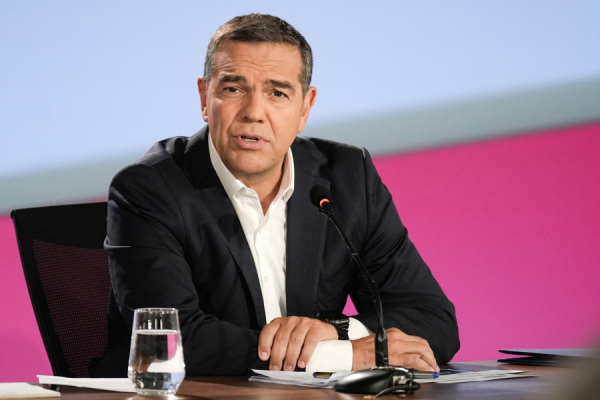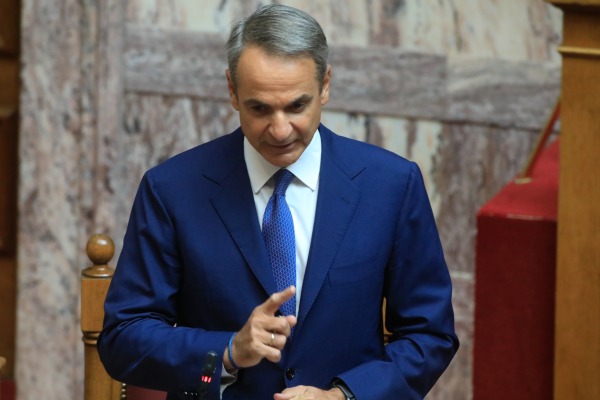
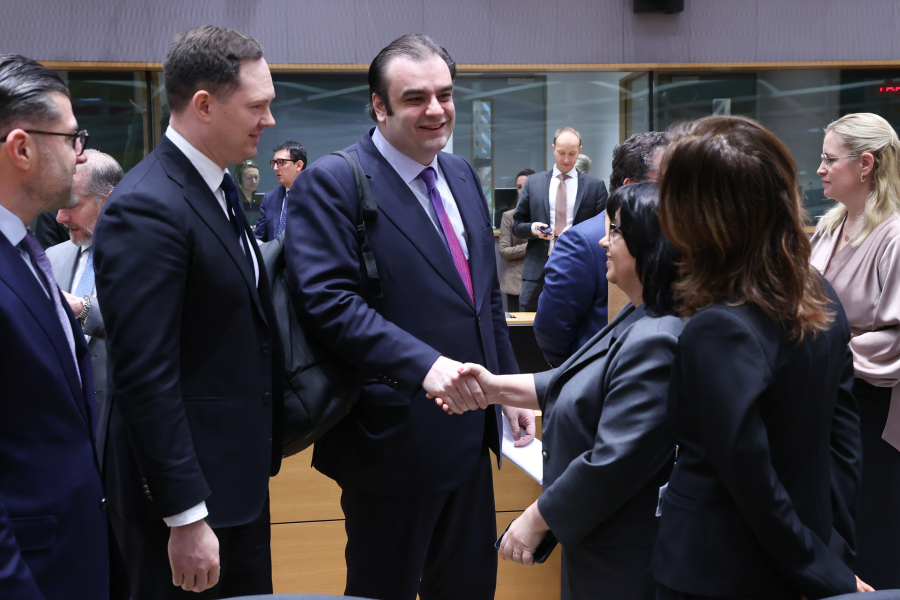

At a time of strained relations between Europe and the United States, escalating geopolitical tensions and heightened volatility in global markets, the challenges confronting economic policymakers are becoming ever more complex. This context also shapes the agenda of Kyriakos Pierrakakis, Greece’s Minister of National Economy and Finance and current President of the Eurogroup.
In an interview broadcast on Tuesday on the main evening newscast of Greece’s public broadcaster ERTNews, Pierrakakis outlined his priorities following the first meetings held under his chairmanship of the Eurogroup and the EU’s Economic and Financial Affairs Council (Ecofin). He also commented on recent international developments, including the situation surrounding Greenland, as well as on the prospects for further tax reductions in Greece.
On international affairs, Pierrakakis stressed that Europe’s position must remain firmly anchored in international law, with full respect for sovereignty and territorial integrity. While underscoring the importance of keeping channels of dialogue open, he emphasized that unity and close coordination among European countries are essential amid heightened geopolitical uncertainty.
Referring to his first Eurogroup meeting, Pierrakakis highlighted the swift decision-making process that led to the nomination of Croatian central banker Boris Vujčić for the post of Vice-President of the European Central Bank. He described the rapid conclusion of the process as a positive sign, arguing that appointments and staffing decisions within European institutions should be handled more efficiently to enhance their overall effectiveness.
Looking ahead, the Greek minister placed particular emphasis on advancing the EU’s Savings and Investments Union and accelerating work on the digital euro. He identified these initiatives as core priorities, noting that his objective in the coming months will be to improve coordination within the Eurogroup so that decisions are implemented more quickly and produce tangible results for European economies.
Turning to domestic economic policy, Pierrakakis addressed the possibility of additional tax cuts in Greece. He said that any new measures would be announced at the Thessaloniki International Fair in 2026, the country’s traditional platform for presenting key economic policy directions. He noted that Greece is currently implementing what he described as the largest package of tax reductions since the restoration of democracy in 1974, reaffirming the government’s commitment to easing the tax burden further.
At the same time, he cautioned that fiscal decisions must be grounded in realism. According to Pierrakakis, the available fiscal space for the coming year is estimated at €800 million, stressing that policy initiatives advance only “when the time is right and conditions are mature.”