
As Europe accelerates investment in liquefied natural gas infrastructure to shore up energy security, Greece has moved to clarify a thorny question for terminal operators: what happens, for tax purposes, when gas must be burned off for safety.
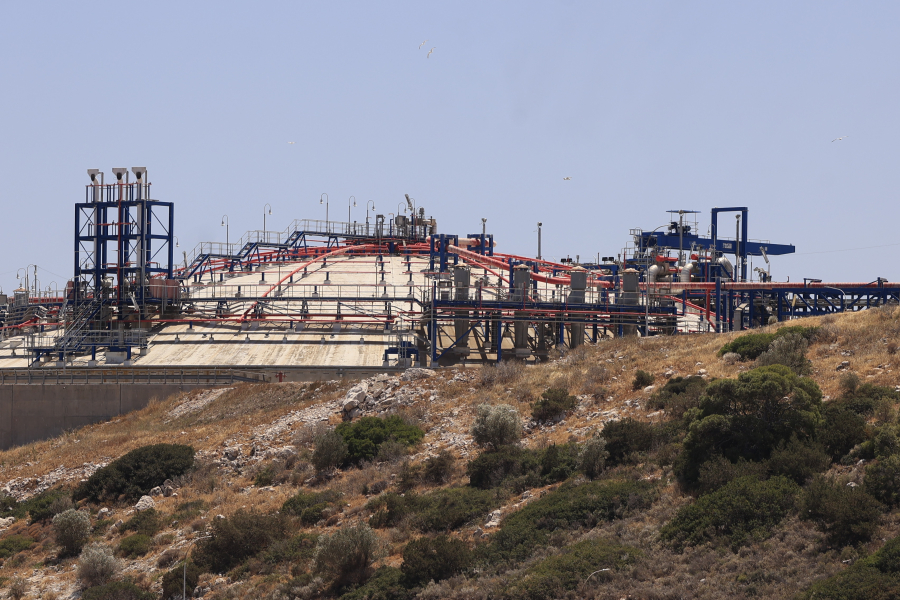
In new guidance, the Independent Authority for Public Revenue set out rules governing the treatment of LNG that is flared at import terminals—an operational necessity in certain conditions but, until now, a gray area in customs law. The move is aimed at providing certainty for a fast-growing segment of the region’s energy system, including facilities such as the Alexandroupolis FSRU.
Flaring typically occurs when liquefied natural gas stored at a terminal cannot be further processed or used, whether due to pressure constraints, technical limitations or lack of storage capacity. Rather than risk system integrity, operators release and burn the excess gas. The practice is standard across the LNG industry but has posed regulatory questions, particularly when the fuel has not yet entered the market.
Greek authorities have now determined that such cases should be treated as the “destruction of goods” under both the National Customs Code and the Union Customs Code. That classification carries a crucial consequence: no customs duty is owed, provided the gas remains under temporary storage and has not been cleared for free circulation or assigned to another customs regime.
The clarification removes a potential financial burden for terminal operators, who had faced uncertainty over whether unavoidable losses could trigger tax liabilities. Industry executives say the guidance aligns regulatory treatment with operational reality, where safety protocols leave little room for discretion.
At the same time, the tax authority has tightened oversight requirements to guard against abuse. Companies must log all flared quantities in their inventory systems and support those entries with detailed technical data, including readings from flow meters and boil-off gas monitoring systems linked to automated control platforms.
Operators are also required to file internal incident reports explaining why flaring occurred, from system pressure imbalances to equipment constraints. These reports must correspond to inventory records, creating a documented trail that regulators can audit.
The approach reflects a broader effort across Europe to reconcile the rapid build-out of LNG capacity with existing regulatory frameworks. As countries expand import terminals to reduce dependence on pipeline gas, ensuring that rules keep pace with operational realities has become an increasing priority.