

A new opinion poll conducted by Prorata indicates that New Democracy, Greece’s ruling conservative party, maintains a strong lead in the country’s political landscape. The survey, carried out between April 22 and 28, 2026, among a sample of 1,100 respondents, places New Democracy at 24.5% in raw voting intention, well ahead of its nearest rival, PASOK, which trails at 11%. Smaller parties follow at some distance, including Greek Solution, the Communist Party of Greece, Course of Freedom, SYRIZA, Voice of Reason, and MeRA25, all polling in single digits.
The poll also explores hypothetical political scenarios, including the potential formation of new parties led by prominent public figures. Around 10% of respondents say they would definitely support a new political movement headed by Alexis Tsipras, who previously served as prime minister, while the broader potential appeal of such a party could reach as high as 24%. A separate hypothetical party led by Maria Karystianou appears to have a smaller but still notable base, with 6% expressing firm support and a potential reach of up to 22%.
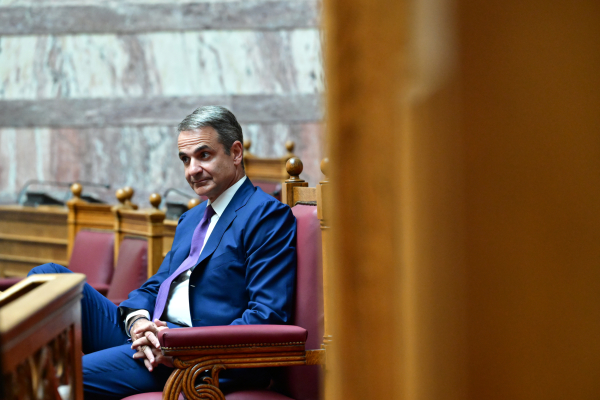
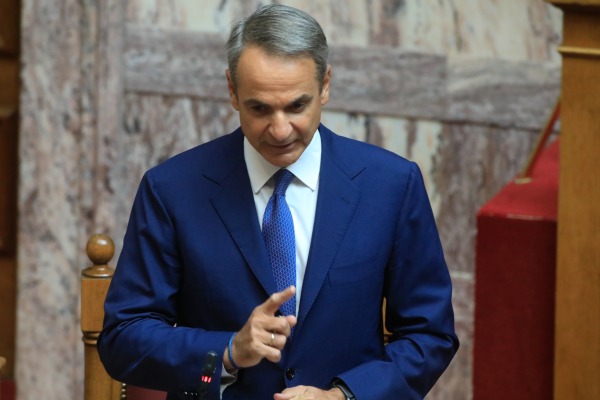
Public confidence in political leadership remains limited. More than one-third of respondents say they do not trust any of the current political leaders to serve as prime minister, highlighting a broader sense of disillusionment with the political class. Among those who do express a preference, current Prime Minister Kyriakos Mitsotakis leads with 27%, while Nikos Androulakis, leader of PASOK, and Kyriakos Velopoulos, head of Greek Solution, follow at a considerable distance. Zoe Konstantopoulou, leader of Course of Freedom, also registers a smaller share of support.
When it comes to potential government formations, public opinion is fragmented, reflecting the likelihood that coalition-building could be necessary in future elections. The most common preference is for a coalition between center-left and left-wing parties, though a significant portion of respondents reject all proposed options. Other scenarios, such as a broad unity government or a partnership between New Democracy and PASOK, attract more limited support, while a coalition among right-leaning parties appears least favored. These preferences vary significantly depending on voters’ existing political affiliations.
The survey underscores that economic concerns dominate the public agenda. The rising cost of living is overwhelmingly identified as the country’s most pressing issue, cited by roughly four out of five respondents. Concerns about the functioning of the justice system, corruption, and transparency follow at a distance, alongside issues such as low wages, working conditions, healthcare, and crime.
Finally, the poll examines public perceptions of responsibility in the case involving OPEKEPE, the state agency responsible for agricultural subsidies. A majority of respondents attribute primary responsibility to the current New Democracy government, while others point to long-standing structural weaknesses within the Greek state. Smaller shares of respondents place the blame on the agency’s administration or on private actors involved. As with other findings, opinions differ markedly along political lines, with government supporters more likely to emphasize systemic issues and opposition voters more inclined to hold the government directly accountable.