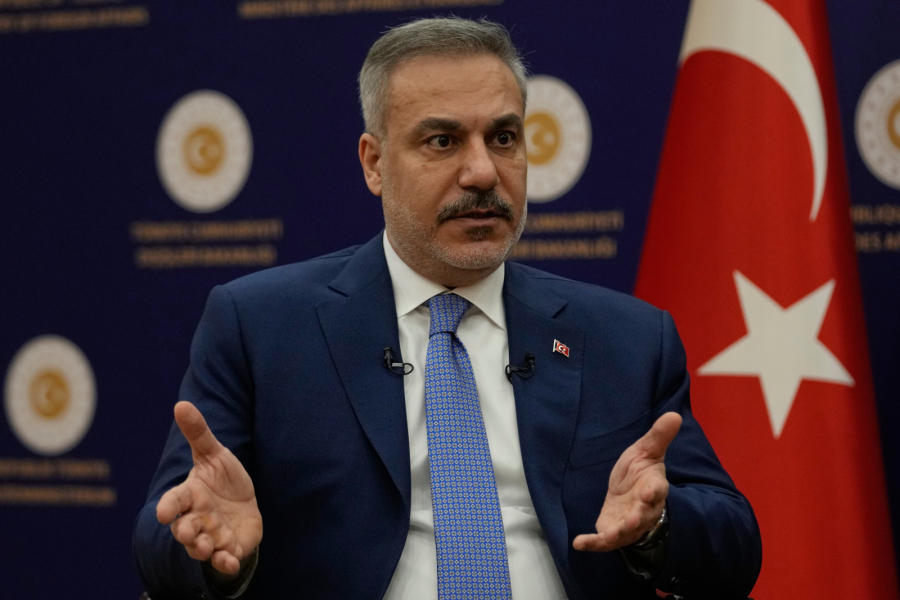
Turkish Foreign Minister Hakan Fidan on Sunday sharply criticized Greece and Cyprus for deepening cooperation with Israel, warning that emerging regional partnerships in the Eastern Mediterranean risk aggravating instability at a time of heightened tensions across the Middle East.
Speaking to Anadolu, Fidan said trilateral and multilateral frameworks involving Greece, Cyprus, and Israel were increasing distrust rather than contributing to regional de-escalation. “Their cooperation does not bring more trust; it brings more distrust. It brings more problems and war,” he said, in remarks likely to further strain already delicate relations between Turkey and its eastern Mediterranean neighbors.
Fidan also suggested that Israel may seek to redefine Turkey as a principal regional adversary in the aftermath of its confrontation with Iran, arguing that the Israeli government “cannot survive without an enemy.” He called instead for a broader regional security architecture rooted in mutual respect for sovereignty and territorial integrity throughout the Middle East.
The Turkish foreign minister’s comments come amid mounting geopolitical friction across the region, including concerns over maritime security and energy routes. Addressing the strategic importance of the Strait of Hormuz, Fidan warned against military efforts to secure international shipping lanes, arguing that force would complicate rather than resolve the crisis. He urged diplomacy as the only viable means of preserving freedom of navigation through the critical waterway.
Athens responded swiftly, rejecting Ankara’s criticism and reiterating that Greek foreign policy is determined independently. In a statement, the Greek Foreign Ministry said Greece “accepts no instructions and owes explanations to no one,” emphasizing that its bilateral and trilateral partnerships with Israel and Cyprus are peaceful in nature and not directed against third countries. The ministry added that Greece—an EU and NATO member—has consistently pursued policies aimed at regional stability, good-neighborly relations, and peace, accusing critics of distorting the purpose of its regional partnerships during a period of acute instability.