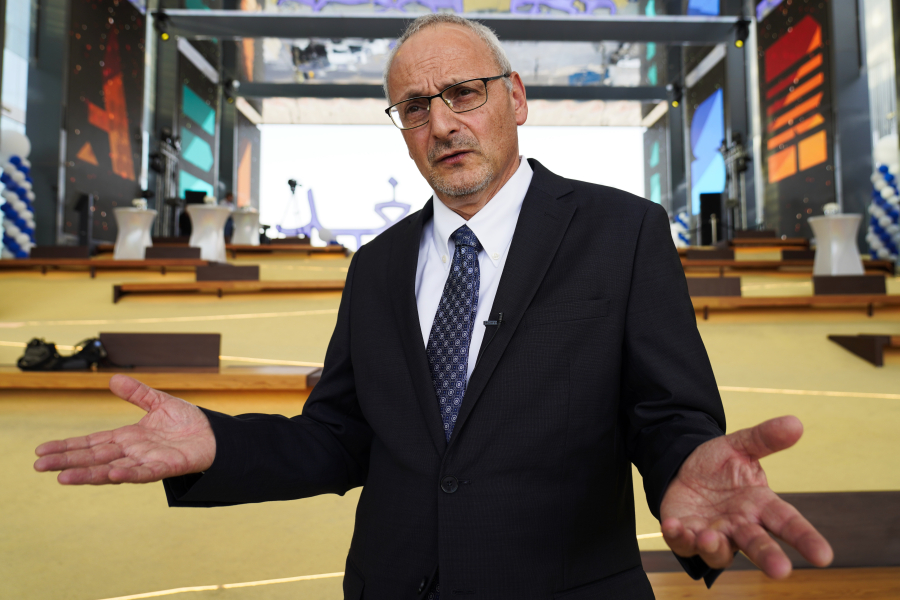

Amid rapidly escalating developments in the Middle East and growing international concern about the risk of broader regional destabilization, Israel’s ambassador to Greece, Noam Katz, spoke to Dnews about the rationale, objectives and limits of the ongoing U.S.–Israeli operation against Iran.
In the interview, Katz portrays the operation as a targeted and time-limited military action aimed primarily at neutralizing what Israel considers an immediate nuclear and ballistic threat from Iran. He argues that the campaign also seeks to prevent the construction of new underground facilities linked to Iran’s strategic programs and to weaken the structures that, according to Israel, support terrorist activity across the region.
A central theme of the ambassador’s remarks is the distinction between the Iranian regime and Iranian society. “We are fighting the Iranian terrorist regime, not the Iranian people,” Katz said, stressing that the operations target the state’s repressive apparatus and those responsible for internal repression and external aggression. The Iranian population, he noted, has itself suffered the consequences of the regime’s policies for decades.
Katz also highlighted the importance of close coordination between Israel, the United States and other international partners, arguing that such cooperation is crucial in limiting the risk of wider regional escalation. At the same time, he expressed skepticism about the effectiveness of diplomacy while Iran retains what he described as significant strategic capabilities.
According to the ambassador, the military campaign is progressing “rapidly and decisively,” with strikes targeting strategic infrastructure across Iran. He said that recent operations have significantly degraded Iran’s ballistic missile capabilities, strategic infrastructure, naval assets and command-and-control systems, as well as elements of the regime responsible for suppressing domestic dissent.
Katz said Israel and its allies would consider the operation successful if Iran’s nuclear and ballistic missile capabilities are neutralized, the development of new underground facilities is prevented and the regime’s ability to finance, train and mobilize regional proxy forces is substantially weakened. Ultimately, he said, Israel seeks to eliminate what it views as an existential threat and create conditions in which Iran no longer poses such a danger to Israel or to other countries in the region.
Responding to concerns that the conflict could become prolonged and destabilize the wider Middle East, Katz said Israeli leaders intend the operation to be “short and decisive.” He argued that failure to act now would have allowed Iran’s strategic capabilities to be moved underground, making them far more difficult to eliminate.
He also warned Iran’s regional allies against becoming involved in the conflict, although he said Hezbollah had already attacked Israel. The Israeli military, he added, is responding forcefully. Despite these developments, Katz said close coordination between Israel, the United States and other partners remains key to preventing broader escalation.
The ambassador also accused Iran of targeting civilians not only in Israel but also in other countries that are not directly involved in the operation. Such actions, he argued, demonstrate why the international community cannot allow the Iranian regime to acquire military nuclear capabilities or expand its strategic reach.
On the possibility of a diplomatic exit, Katz said the conflict could end if Iran’s leadership halted what he described as its aggressive policies and accepted strict limitations on its nuclear and ballistic programs. However, he expressed doubt that the current Iranian leadership would be willing to do so, arguing that past diplomatic efforts had failed because they did not produce meaningful results.
He maintained that achieving military objectives is a necessary precondition for any lasting political settlement. Once the threat is removed, he suggested, new opportunities could emerge for stability and cooperation in the region.
In the longer term, Katz said Israel hopes to strengthen what he described as a “pragmatic and moderate axis” in the Middle East. He pointed to the Abraham Accords as an example of the type of diplomatic initiatives that could expand in the future and potentially support broader regional cooperation projects. Addressing concerns about the risks of regime change, Katz said the future political system of Iran should ultimately be determined by the Iranian people themselves. He argued that weakening the current leadership could create the conditions for Iranians to shape their own future.
The ambassador said Israel has “enormous respect” for the Iranian population and believes many Iranians oppose their government. He also referred to demonstrations by Iranian expatriates around the world, including in Athens, which he said expressed support for efforts to weaken the current regime. Looking ahead, Katz said diplomacy could play a far more effective role once the immediate threat has been removed. In his view, the combination of military pressure and renewed diplomatic engagement could eventually open the door to further peace agreements and a more stable regional order.
“Our vision,” he concluded, “is a Middle East in which countries choose progress, development and cooperation instead of conflict.”