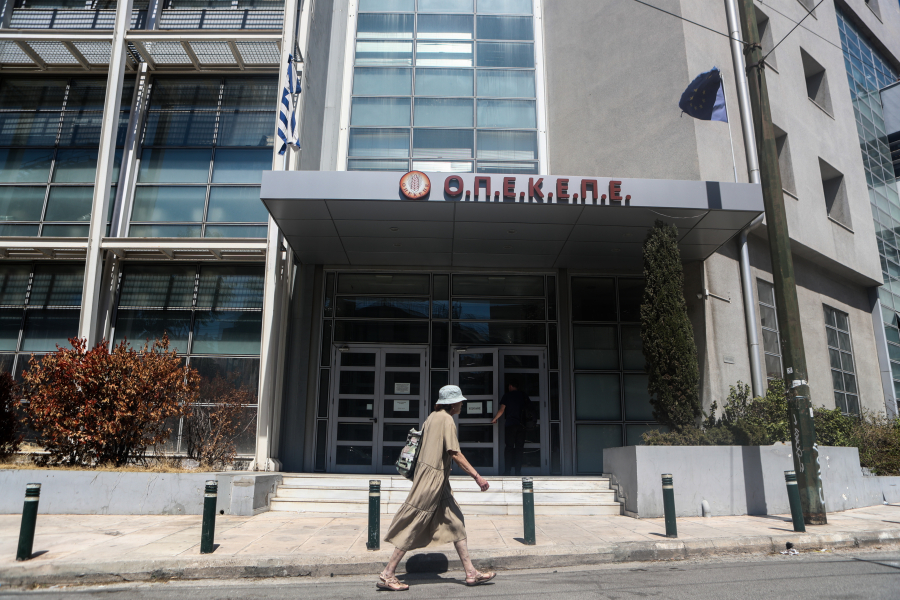

The investigation, led by Greece's Directorate for Combating Organized Crime, has so far resulted in charges against 1.151 individuals, with more than 90 arrests and 17 suspects placed in pretrial detention. Authorities estimate the damage to public finances exceeds €17 million, although officials caution that the final figure could rise as investigations continue.
The operation, codenamed "Harvest," has exposed what investigators describe as a highly organized and long-running system of fraud targeting subsidies distributed through OPEKEPE, Greece's agency responsible for administering agricultural payments under the European Union's Common Agricultural Policy.
According to police files, the schemes were not the work of isolated farmers exploiting loopholes. Instead, investigators say they uncovered structured criminal organizations operating across Greece, from Crete and the Aegean islands to Macedonia and Thrace, with some networks allegedly active since at least 2018.
The case comes as Greece faces growing scrutiny over the management of agricultural subsidies, an issue that has attracted the attention of both national prosecutors and the European Public Prosecutor's Office (EPPO), which is responsible for investigating crimes affecting the EU's financial interests.
Investigators say the fraud schemes relied on a combination of forged ownership records, fictitious land leases, inflated livestock declarations and, in some instances, insider assistance from individuals linked to agricultural application centers that act as intermediaries between farmers and OPEKEPE.
One of the most common methods involved identifying undeclared farmland eligible for subsidy payments. Criminal groups allegedly registered these plots under the names of associates or relatives, falsely claiming ownership or leasing rights before submitting subsidy applications. The land registrations were then removed from tax records in an effort to conceal the fraud.
In other cases, suspects allegedly exaggerated the size of livestock herds to increase payments linked to grazing land. Investigators also uncovered networks that allegedly used fake invoices and counterfeit seed-certification labels to create the appearance of legitimate agricultural activity.
The geographical reach of the operation has underscored the scale of the problem. One criminal organization operated in Crete and the island of Samos, while another, involving nearly 300 individuals, was active in northern Greece. A separate network with 404 defendants allegedly maintained operations stretching from Macedonia to Athens, Santorini, Epirus and Crete.
Greek officials argue that the findings challenge the perception that subsidy abuse is limited to small-scale irregularities or politically connected beneficiaries. Instead, they say the investigations reveal the involvement of organized criminal groups with defined hierarchies, specialized roles and sophisticated methods designed to exploit weaknesses in the subsidy system.
Authorities stress that the crackdown is part of a broader effort that predates the recent political controversy surrounding OPEKEPE. Judicial and police sources say approximately 70 separate investigations into agricultural subsidy fraud have been launched since 2010, involving both individuals and corporate entities.