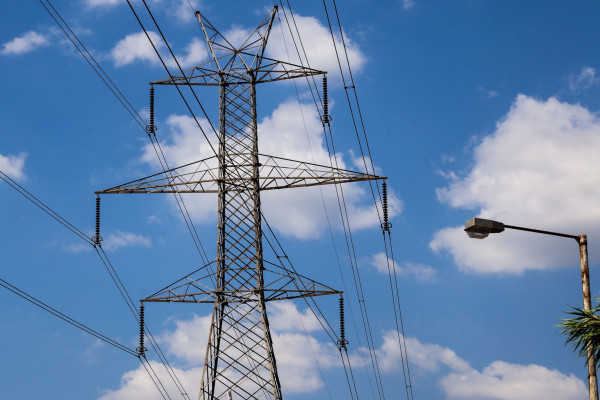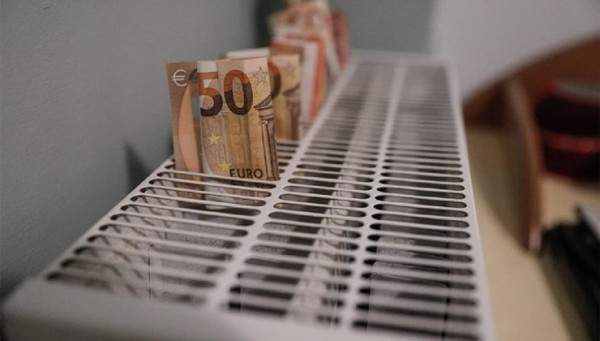


Electricity bills in Greece are expected to rise for both households and businesses in the coming months, as recent increases in wholesale natural gas prices have not yet been fully reflected in the country’s electricity market. Energy analysts say it is only a matter of time before these higher costs are passed on to consumers through higher tariffs.
Wholesale electricity prices rose significantly in March, already creating upward pressure on variable electricity tariffs for April, with even stronger increases expected in May when the higher cost of natural gas is fully incorporated into electricity generation costs. The wholesale price of electricity per megawatt-hour in March was approximately 19% higher than in February, a development that signals likely increases in tariffs linked to wholesale market prices.
A key factor in how prices will evolve is the pricing policy of Greece’s main power utility, the Public Power Corporation (PPC), which plays a dominant role in the electricity supply market. If the company keeps its tariffs around 15 to 16 cents per kilowatt-hour, the government may avoid introducing electricity subsidies in April. However, in the following months, new support measures are considered likely, even if international energy prices begin to fall.
The impact of higher natural gas prices has not yet fully appeared in the domestic electricity market because gas imports are priced based on the average price of the previous month. This means that the higher prices recorded in March will affect electricity production costs in April and will mainly be reflected in electricity tariffs set in May. Increased electricity generation from renewable energy sources is expected to help limit the scale of price increases.
At the same time, consumers are seeing fewer options for low-cost fixed electricity tariffs, as energy providers are gradually withdrawing cheaper fixed-price plans due to ongoing uncertainty in energy markets. New fixed tariffs expected to be introduced in the coming months will likely be more expensive, with estimated prices ranging between 13 and 15 cents per kilowatt-hour, compared with roughly 10 cents per kilowatt-hour that consumers were paying until recently.