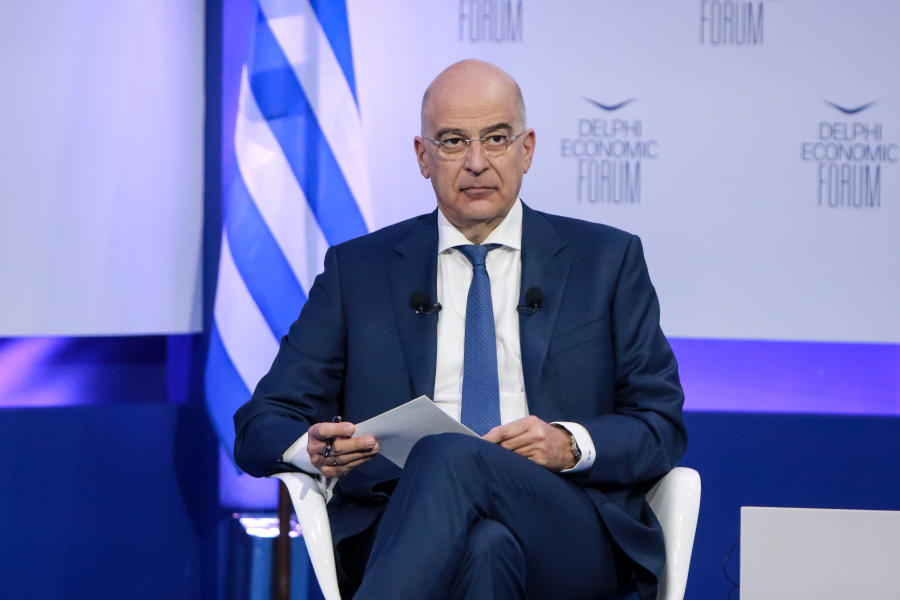

Greek Defence Minister Nikos Dendias has called for a fundamental change in how the country’s judicial leadership is selected, arguing that it should be elected rather than appointed by the government of the day. His remarks come ahead of an expected debate on constitutional revision and reflect broader concerns about institutional trust in Greece.
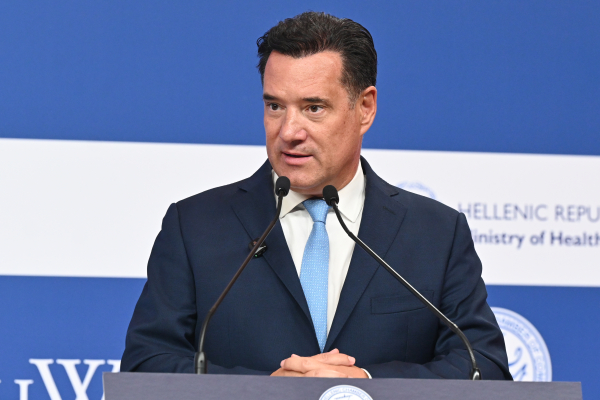
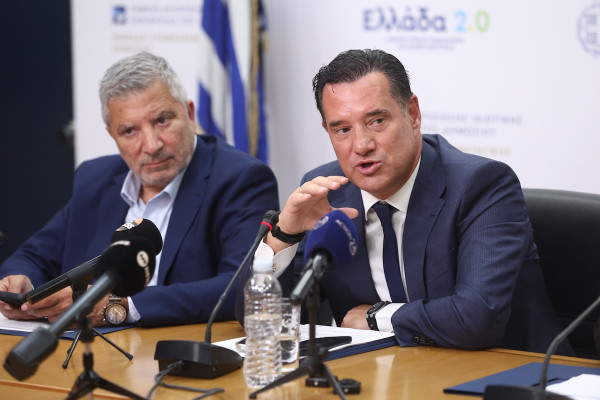
Speaking on Sunday at a ceremony honoring Ioannis Kapodistrias, Greece’s first governor after independence, Dendias framed his intervention as part of a wider discussion on the strength and credibility of democratic institutions. He represented Prime Minister Kyriakos Mitsotakis at the unveiling of a statue of Kapodistrias and the renaming of a central square in the southern Athens municipality of Elliniko–Argyroupoli.
“In the coming days or weeks, a discussion on constitutional revision will begin,” Dendias said. “Can we really continue to defend the idea that the leadership of the judiciary should be chosen by whichever government happens to be in power? Who does not see the crisis of credibility facing institutions in Greek society?” His comments are notable in a country where the appointment of senior judges by the executive has long been a point of political and public debate.
Addressing an audience that included political figures and diplomats, Dendias placed his argument in a historical context intended to resonate beyond Greece. He stressed that the modern Greek state was not simply the result of military victory during the War of Independence, but of difficult state-building efforts led by Kapodistrias in the late 1820s. Without his leadership, Dendias argued, even the early borders and basic institutions of Greece would not have taken shape as they did.
Referring to a 1976 speech by prominent Greek intellectual and statesman Konstantinos Tsatsos, Dendias recalled the observation that while later leaders expanded Greece’s territorial ambitions, Kapodistrias effectively created the Greek state itself. He drew a parallel between that era and the present, noting that Greece is approaching 200 years since the establishment of its modern state and still faces unresolved questions about institutional resilience.
Dendias emphasized that rebuilding trust in public institutions must transcend party politics. He described Kapodistrias as the most significant political figure of modern Greek history, arguing that his legacy remains underappreciated, despite renewed public interest sparked by a recent biographical film.
Turning briefly to defence policy, Dendias noted that Greece’s armed forces, founded in part by Kapodistrias, remain central to national security in a region marked by ongoing tensions. While their contribution is widely respected, he acknowledged the need for continued reform to ensure professionalism and effectiveness.
Concluding his speech, Dendias argued that Greece should look to best practices from advanced democracies while also drawing inspiration from historical figures who embodied institutional integrity. Kapodistrias, he said, remains a powerful example of enlightened governance—one whose lessons are still relevant for Greece’s constitutional future.