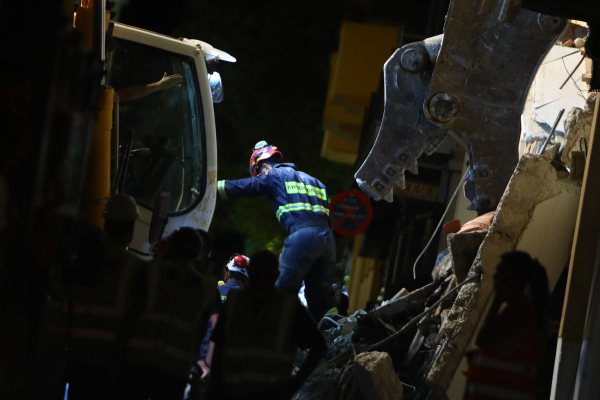
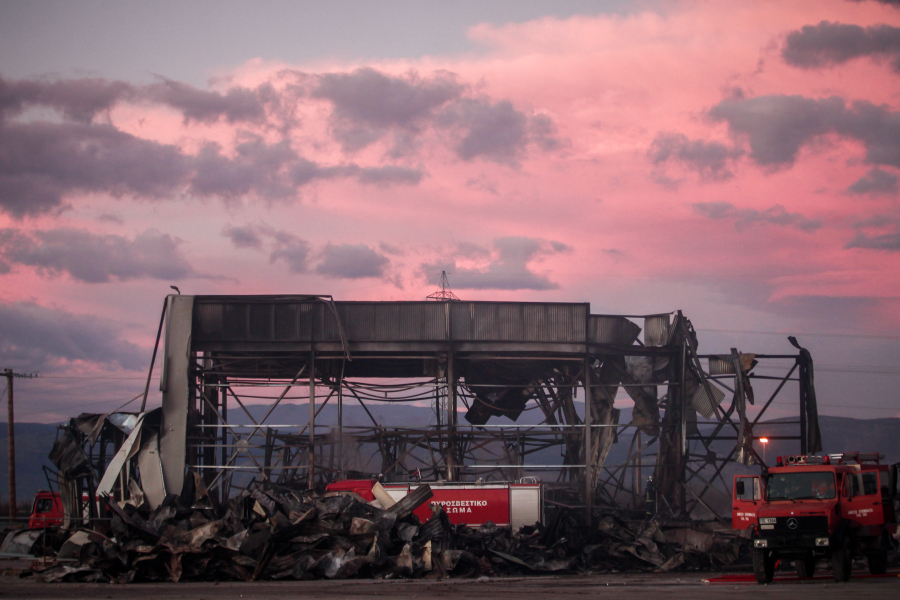

Rapid developments are unfolding in Greece following a deadly explosion and fire at the Violanta biscuit factory in the central city of Trikala, an industrial accident that has killed five women and triggered a wide-ranging judicial and administrative investigation.
The blast occurred in the early hours of Monday, January 26, 2026, during the night shift, after what authorities now believe was a long-term propane gas leak. The incident has raised serious concerns about workplace safety, regulatory oversight, and the permitting history of the facility.
Greek prosecutors in Trikala have issued an expanded order for a full investigation, assigning the case to the Fire Service’s Arson Crimes Investigation Directorate, a specialized national unit responsible for examining major fires and explosions. The unit is expected to deliver a detailed report clarifying both the technical causes of the disaster and any potential institutional failures that may have contributed to it.
The investigation is not limited to the company itself. Authorities are examining the role of all public bodies involved in granting construction and operating permits for the factory over the years, including urban planning departments, regional development services, and fire safety authorities.
New reporting by the news outlet Dnews has brought additional political attention to the case. Documents published by the outlet show that the factory’s operating license was based on technical studies signed in 2007 by Dimitris Papastergiou, an electrical engineer who is now Greece’s Minister of Digital Governance. The studies covered fire protection systems, electrical installations, heating, and fuel gas infrastructure. At the time, Papastergiou was working as a private-sector engineer, years before entering politics.
According to municipal officials in Trikala, the original building permit issued in 2007 makes no reference to a basement area, despite later indications that underground spaces may have existed or been used. Since then, seven additional permits were reportedly issued, bringing the total to eight, yet questions remain over whether underground facilities were ever formally declared or approved. Local authorities say they are now reviewing all files related to electromechanical installations and underground structures to determine whether the documentation accurately reflected the factory’s actual layout.
Papastergiou has publicly acknowledged that the 2007 studies bear his signature, stressing that his involvement was limited to an early phase of the factory’s development.
In a public statement, he said the studies were approved following on-site inspections by the Fire Service and regional industrial authorities, and that subsequent expansions of the facility were handled by other engineers after he was elected to public office. He described the tragedy as deeply personal for the local community and expressed support for the ongoing judicial investigation, stating that the causes must be fully understood to prevent similar incidents in the future.
Further scrutiny followed a separate report by the investigative outlet Documento, which claims that Papastergiou also signed a new technical study submitted in 2011 to regional authorities, enabling the factory to continue operating after additional modifications. Fire Service investigators are now examining that documentation as part of the broader inquiry.
On the technical side, investigators are focusing on the propane supply system that fed the factory’s production lines. Specialized teams are preparing to excavate underground pipelines connecting two above-ground propane tanks to the production area. These pipes will be removed and sent for laboratory analysis to determine where and how they were damaged. Preliminary information suggests the leak may have persisted for months before the explosion.
The factory owner has reportedly told investigators that roadworks and asphalt resurfacing were carried out in the area several months before the blast, raising the possibility that heavy vehicle traffic may have stressed or damaged underground pipelines buried at a shallow depth. Experts will also examine whether corrosion, material fatigue, or faulty connections played a role.
Soil samples and other materials from the site will be sent to Greece’s State General Chemical Laboratory to determine the volume of propane released. According to officials, detection instruments used at the scene registered extremely high concentrations of gas, suggesting a substantial and prolonged leak.
Due to ongoing safety risks from residual propane, investigative work at the site has been temporarily suspended. Access to the area remains restricted and requires authorization from prosecutors.
A particularly sensitive aspect of the investigation concerns discrepancies between submitted fire safety plans and the actual fuel storage infrastructure. According to early findings, recent fire protection plans did not list the two above-ground propane tanks serving the newer section of the factory, while instead referencing additional underground tanks near older facilities. Although those underground tanks had reportedly been installed, they were not yet connected at the time of the explosion.
Investigators have seized all permitting and operational files related to the factory from regional authorities and are now examining whether legal procedures were followed at every stage of the plant’s operation. Prosecutors have made clear that responsibility will be assigned wherever failures are identified, whether at the corporate or institutional level.