
The governing party is polling at 22.3%, giving it a 12.2-percentage-point advantage over its nearest rival. In a notable development, the small opposition party Plefsi Eleftherias has surged into second place with 10.1%, while the contest for third position has tightened, with PASOK and the right-wing Greek Solution tied at 9.7%.
The survey, broadcast by the OPEN television network, also highlights deep public concern about the country’s preparedness for extreme weather. An overwhelming 87.3% of respondents believe Greece is insufficiently protected against severe weather phenomena, reflecting widespread anxiety following recent climate-related disasters.
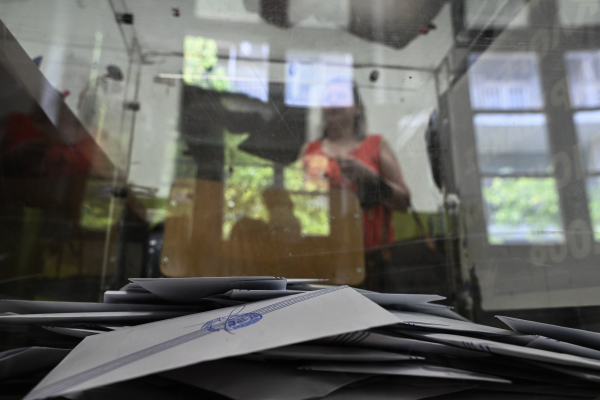
In terms of voting intention, New Democracy has edged up slightly since November, gaining 0.3 percentage points. Plefsi Eleftherias records the most significant increase, jumping by 3.1 points. By contrast, PASOK posts modest losses, while Greek Solution strengthens its position, bringing the two parties level. The Communist Party of Greece polls at 6%, while SYRIZA, once the main opposition force, falls to 3.5%. Nearly a quarter of voters, 23.6%, remain undecided.
When votes are redistributed to account for undecided respondents, New Democracy rises to 29.2%, with Plefsi Eleftherias at 13.2%. PASOK and Greek Solution follow at 12.7% each, ahead of the Communist Party at 7.9% and SYRIZA at 4.6%. Smaller parties and other political formations collectively account for 7.4%.
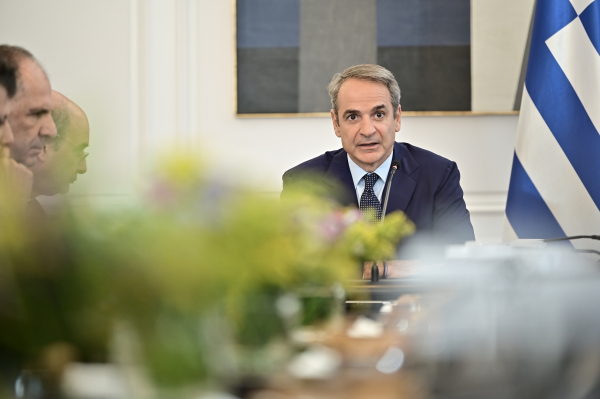
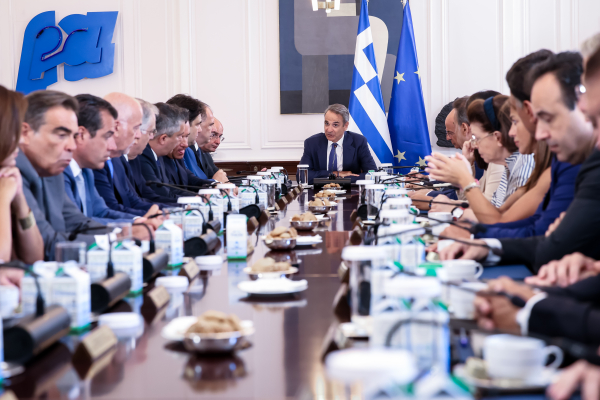
Asked who is most suitable to serve as prime minister, Prime Minister Kyriakos Mitsotakis leads with 23.2%. Zoe Konstantopoulou, leader of Plefsi Eleftherias, climbs to second place with 10.7%, overtaking Greek Solution leader Kyriakos Velopoulos at 7.7%. Significantly, more than one in four respondents, 28.4%, say that none of the current political leaders is suitable for the role.
The poll also measures public attitudes toward Maria Karystianou, a public figure whose interventions have sparked political debate, particularly on social issues. Nearly 70% of respondents disagree with her call for public consultation on abortion, while just under 20% agree. A large majority, almost 80%, support keeping Greece’s current abortion laws unchanged, and only a small minority favor a ban. Overall views of Karystianou are divided, with negative opinions slightly outweighing positive ones. Most respondents believe her calls for justice stem from personal moral convictions rather than political ambition, although a sizeable minority sees political motives.
When asked which political force could unite voters to the left of New Democracy and credibly challenge the governing party, a plurality of respondents point to a potential party led by Karystianou. Fewer believe such a role could be played by a new party under former prime minister Alexis Tsipras, or by PASOK under its current leadership. Roughly one third of voters say they might consider supporting a Karystianou-led party, while a clear majority say they would not.
Support for a hypothetical new party led by Alexis Tsipras appears limited. Only one in five respondents say they would vote for it, while nearly three quarters rule it out.
Beyond party politics, the survey underscores the issues most likely to shape voter behavior. Economic security and stability top the list of voting criteria, followed closely by economic growth and the functioning of justice. The cost of living emerges as the country’s most pressing problem by a wide margin, ahead of low income levels and concerns about the rule of law.
Overall, the findings point to a fragmented political scene, growing voter volatility, and deep public unease over economic pressures, institutional trust, and the state’s ability to protect citizens from increasingly severe weather events.