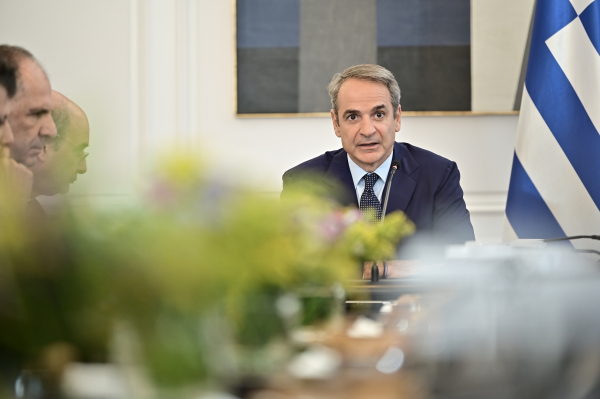
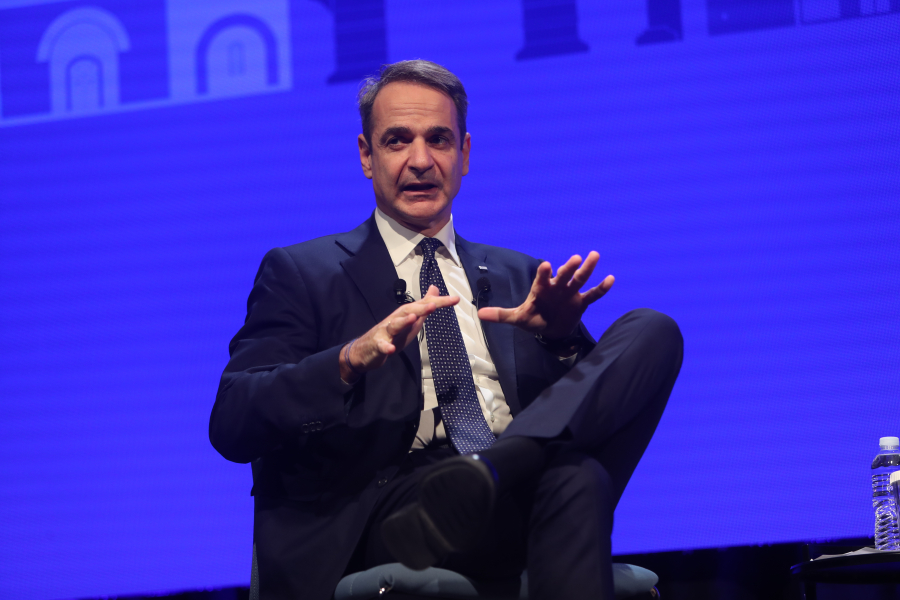

Speaking on Thursday upon his arrival at an extraordinary European Union summit focused on Greenland, Mitsotakis said that Greece — along with the vast majority of EU member states — has serious legal reservations about the structure of the proposed Peace Council for Gaza. According to the Greek prime minister, as the initiative has been presented by the United States, it goes well beyond the scope of United Nations Resolution 2803, raising concerns about institutional overlap and legal authority.
Despite these objections, Mitsotakis said Greece would advocate a compromise approach. He proposed that the 13 countries invited to take part in the Peace Council agree to participate only in discussions related to the next phase of the Gaza peace process, and only for the limited period required to advance those efforts. He described this as a pragmatic solution that would allow European involvement in Gaza’s stabilization without undermining the role of the United Nations.
Mitsotakis underlined that Greece has demonstrated sustained interest in developments in the Eastern Mediterranean and the Middle East, while remaining firmly opposed to the creation of new international bodies that could operate in competition with the UN. Any engagement, he said, must reinforce — not weaken — existing multilateral frameworks.
Commenting on the extraordinary summit itself, Mitsotakis said the decision to convene EU leaders reflected the seriousness of recent developments in transatlantic relations. He acknowledged that tensions had escalated in recent weeks following public statements by Trump, but welcomed more conciliatory remarks made by the former US president a day earlier, suggesting they opened the door to de-escalation.
On Greenland, Mitsotakis said the European Union had presented a largely unified front in support of Denmark and Greenland, emphasizing that issues concerning the island extend beyond Danish domestic affairs. He acknowledged what he described as legitimate US concerns over Arctic security, but argued these should be addressed through dialogue and within the framework of existing agreements between Washington and Copenhagen.
Asked informally by journalists, Mitsotakis said the extraordinary nature of the summit itself illustrated the level of strain that has emerged between Europe and the United States. He welcomed Trump’s comments delivered in Davos, expressing cautious optimism that a balanced compromise could be reached — one that fully respects the sovereignty of Denmark and Greenland while preserving the broader transatlantic partnership.
Mitsotakis concluded by reaffirming his strong support for close cooperation between Europe and the United States. While acknowledging the challenges facing the relationship, he said he believed that unity, firmness and constructive engagement could still lead to a mutually acceptable outcome.