
The rapidly deteriorating security situation in the Middle East and the growing geopolitical uncertainty in global energy markets have, in theory, strengthened the strategic importance of Europe’s Vertical Gas Corridor as an alternative and potentially safer LNG supply route into the continent. In practice, however, the same crisis that elevates its geopolitical relevance is also putting its economic and operational viability under serious pressure.
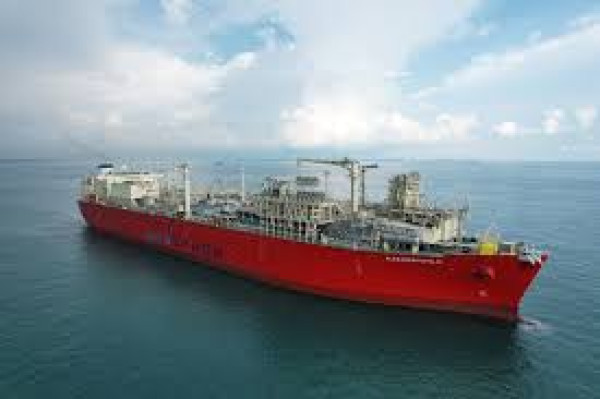
The instability affecting key maritime routes—most notably the Strait of Hormuz—has already pushed up insurance premiums and freight rates for LNG carriers. Shipping companies are facing higher risk exposure, longer transit times and increasing operational costs throughout the supply chain. Inevitably, these pressures translate into higher delivered LNG prices for Europe. As costs rise, the competitiveness of LNG—particularly cargoes originating from the United States—becomes increasingly constrained. Under such circumstances, securing stable, long-term supply flows becomes even more critical in order to reduce exposure to the volatility of spot LNG markets.
This reality means that the future of the Vertical Corridor depends not only on the availability of gas volumes but, above all, on the total delivered cost of LNG reaching European markets. Shipping costs play a decisive role in that calculation, and their recent volatility raises questions about whether the corridor can evolve from a largely political and strategic concept into a fully functioning energy artery for Central and Eastern Europe.
Financial considerations further complicate the picture. Infrastructure projects associated with the Vertical Corridor are capital-intensive while offering relatively modest returns. As a result, they rely heavily on long-term contractual frameworks—particularly take-or-pay and ship-or-pay agreements—to secure financing and enable final investment decisions. Yet the current geopolitical environment, characterized by heightened uncertainty and market volatility, makes it far more difficult for buyers and suppliers to commit to such long-term obligations.
At the same time, the countries along the corridor—both transit states and end-users—have access to alternative and often cheaper sources of natural gas. This reality intensifies competition among supply routes, particularly on the basis of cost and flexibility. If the cost of transporting LNG continues to rise as a result of instability in the Middle East, the Vertical Corridor could become less attractive compared with competing supply options unless there is a significant shift in market conditions.
The geopolitical crisis involving the United States, Israel and Iran has therefore highlighted a deeper structural issue: the Vertical Corridor is, in many respects, a project dependent on exceptional circumstances. The absence of clear and binding political backing at the European Union level, combined with the uncertainty surrounding the energy transition and the long-term outlook for natural gas demand beyond 2035, remains a major challenge for its development.
Ultimately, the corridor’s long-term viability will depend on demand. The central question is whether the targeted markets—Ukraine, the Balkans and countries across Central and Eastern Europe—will maintain sufficient and sustainable gas consumption over a time horizon of 15 to 25 years to support long-term supply and transport contracts. The current need to replace Russian gas, which has driven much of the recent infrastructure planning in the region, may prove temporary. If the expansion of renewable energy, electrified heating systems and energy efficiency accelerates after 2030, gas demand could decline more rapidly than anticipated.
Another major uncertainty concerns Europe’s industrial gas consumption. It remains unclear whether industrial demand will recover in the coming years or whether it will remain structurally lower due to persistently high energy prices, deindustrialization trends or the relocation of energy-intensive industries outside the European Union. A prolonged contraction in industrial demand would significantly weaken the base-load consumption required to justify large-scale gas infrastructure investments.
European climate policy adds another layer of uncertainty. The tightening of the EU Emissions Trading System, increasingly ambitious decarbonization targets and the growing promotion of alternative fuels such as biomethane and hydrogen could reduce the role of natural gas more quickly than anticipated. If this happens, infrastructure investments designed to operate for several decades could face shrinking utilization rates much sooner than expected.
In this context, the Vertical Corridor stands at the intersection of geopolitics, market economics and the energy transition. While geopolitical tensions may temporarily reinforce its strategic appeal, long-term success will ultimately depend on whether the economic fundamentals—cost competitiveness, stable demand and political support—can sustain the project in a rapidly evolving European energy landscape.