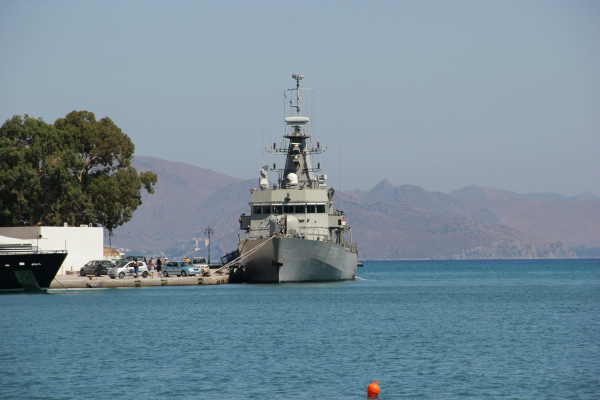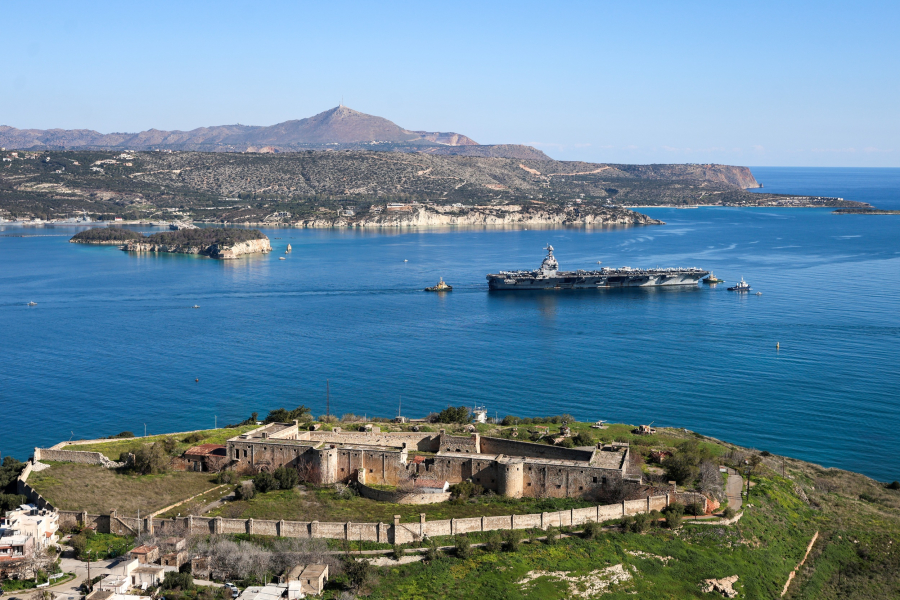

The United States maintains a significant military presence in Greece, rooted in a relationship that dates back to the early years of the Cold War. While multiple American bases once operated across the country, today there is officially only one fully recognized U.S. military base on Greek territory: Souda Bay, located on the island of Crete.
U.S.–Greek military cooperation began in 1947, when the U.S. Air Force was installed at the former Hellinikon Airport near Athens. This marked the start of an expanded American presence that was later formalized through a bilateral agreement signed in October 1953, one year after Greece joined NATO. Under that agreement, Washington was granted broad authority to establish and operate military facilities in Greece, including bases at Hellinikon, Nea Makri, Souda Bay, and Heraklion. The agreement also allowed U.S. forces to move freely within the country and granted them extraterritorial legal status.
Over time, most of these installations were shut down, and their activities were consolidated at Souda Bay, which has evolved into a strategic «super-base». Today, Souda is the only American facility governed by the Greek–U.S. base agreement that entered into force in 1990 and remains active through annual renewals.
Souda Bay’s importance lies in Crete’s geographic position at the crossroads of Europe, the Middle East, and North Africa. The base serves as a key support hub for U.S. naval and air operations across the Eastern Mediterranean and is operationally linked to British military bases in Cyprus, further strengthening NATO’s regional posture.
In recent years, the scope of U.S. operations in Greece has expanded under the Mutual Defense Cooperation Agreement (MDCA). This framework has transformed American facilities from simple logistical or refueling points into advanced operational centers. As a result, U.S. forces now maintain a permanent presence beyond Souda Bay at three additional strategic locations: Larissa, Volos, and Alexandroupoli, in northern and central Greece.
These sites are used to support modern military assets, including unmanned aerial vehicles, combat helicopters, and naval units. Surveillance and early-warning capabilities are further enhanced by NATO AWACS aircraft stationed at the base of Aktio in western Greece. Together, these installations allow the United States and its NATO allies to project power and maintain oversight across the Mediterranean basin and into the Middle East.