
At a moment of heightened political stakes, PASOK–Movement for Change, Greece’s official opposition and second-largest party, is heading toward its March 27–29 congress seeking to redefine its role within an increasingly fluid and fragmented party system.
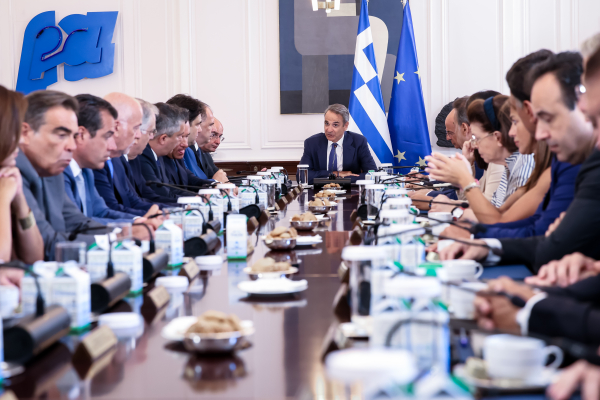
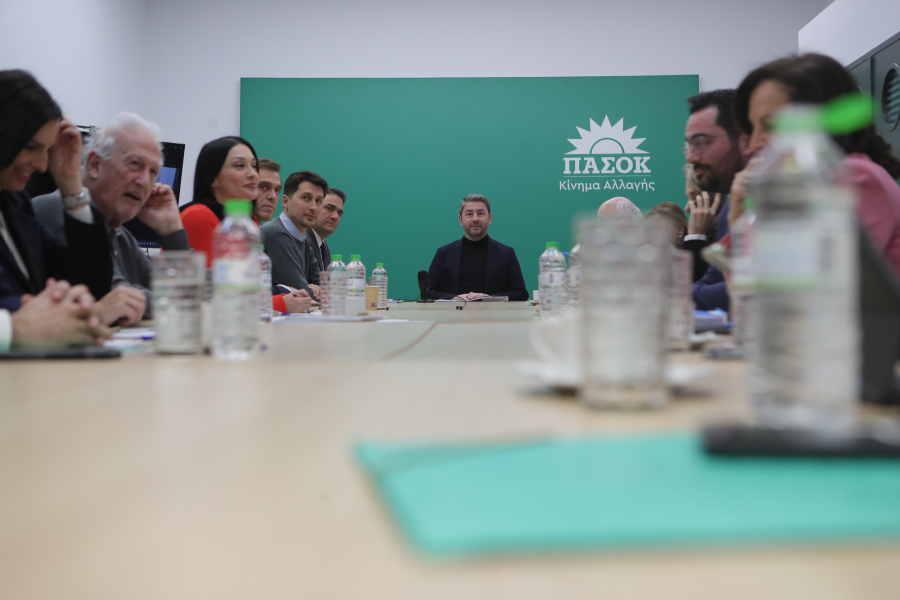
Speaking at a pre-congress meeting this week, party leader Nikos Androulakis made clear that consolidating PASOK’s political comeback and positioning it as a credible alternative to government will require a decisive shift away from inward-looking debates and toward a more direct engagement with society.In a deliberately direct intervention, he warned party officials against what he described as excessive introspection.
Internal disagreements and procedural debates, he argued, may matter to party insiders but do little to connect with voters. What concerns the public, he said, are concrete policy challenges: infrastructure and ports, energy, education and healthcare. For Androulakis, the success of the congress will depend on whether PASOK can convincingly speak to these issues and present itself as a credible alternative in a changing political landscape.
He stressed that the congress would be open and institutionally grounded, presenting it as a platform for broadening the centre-left without blurring PASOK’s political identity. Drawing implicit contrasts with rival parties, Androulakis argued that PASOK’s recent recovery from years of marginalisation had been achieved through persistence rather than political dilution. At a time when Greece’s party system is marked by volatility, new political formations and the re-emergence of familiar figures, he said PASOK now has the space to pursue a more assertive strategy of political expansion.
Central to that strategy is dialogue. Androulakis announced that the congress will include structured discussions on major national and institutional questions, including constitutional reform, with invitations extended to other progressive parties. The aim, he said, is not vague consensus-building but identifying areas of convergence that could translate into concrete political initiatives in the period ahead.
Yet the pre-congress meeting also revealed unease within the party. Athens mayor Haris Doukas delivered a pointed critique of PASOK’s current trajectory, warning that the party’s strategy had failed to deliver electoral momentum and that the goal of political leadership was drifting further away. He called for a clear strategic reset, insisting that PASOK must explicitly commit to progressive governance and rule out any future cooperation with the conservative New Democracy.
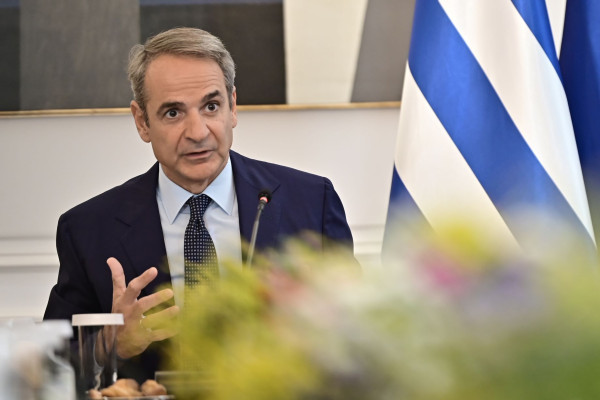
Placing his intervention in a broader context of international instability and domestic dissatisfaction, Doukas criticised the government of Prime Minister Kyriakos Mitsotakis, accusing it of weakening institutions and deepening social insecurity. Unless progressive forces offer a coherent and credible alternative, he warned, political uncertainty could fuel populism. For Doukas, the March congress should mark a decisive turning point, clarifying PASOK’s political direction and restoring its claim to leadership of the centre-left.