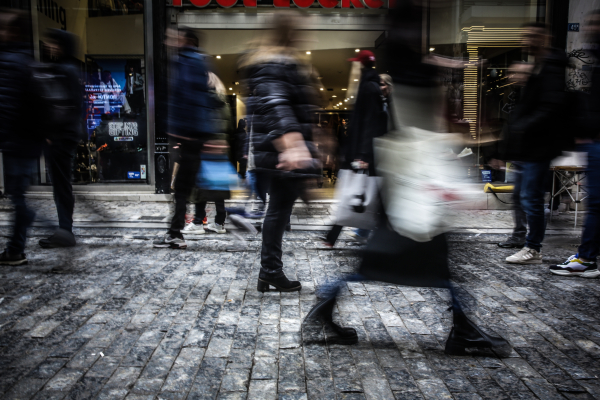
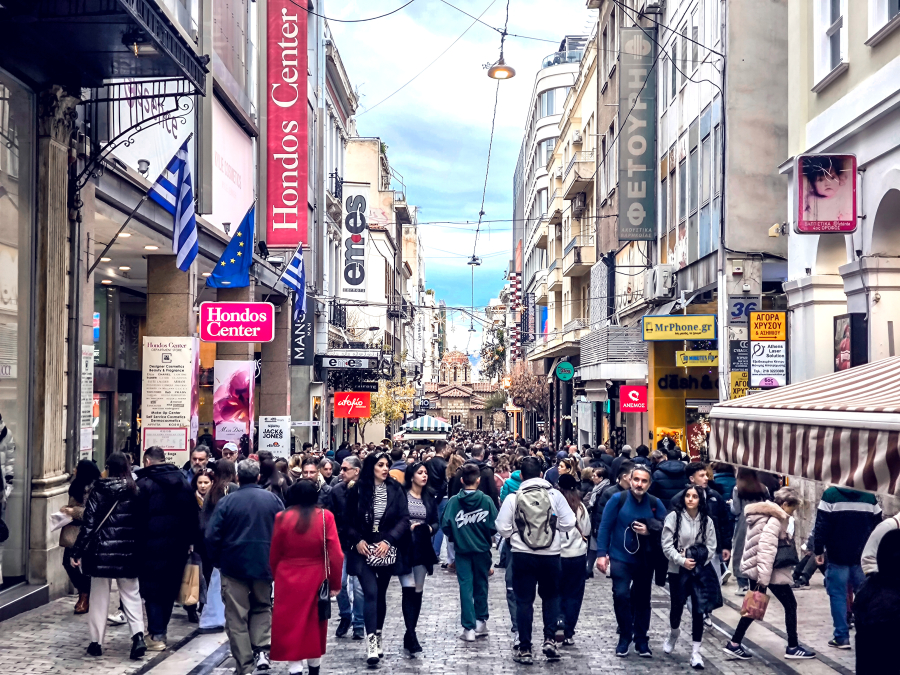

Greek retail businesses ended the 2025 holiday season on a weak note, with four in ten companies reporting a drop in turnover of up to 20%, according to a survey by the Hellenic Confederation of Commerce and Entrepreneurship (ESEE). The findings highlight subdued consumer demand and growing pressure on the sector, as retailers brace for a challenging start to 2026.
The survey shows that more than half of retail businesses recorded lower sales compared with the previous year, while roughly one third saw sales stagnate. Performance varied by sector, with food retailers faring noticeably better than businesses selling non-essential goods. Despite the traditionally strong festive period, lower-than-expected sales failed to compensate for losses accumulated earlier in the year.
Stavros Kafounis, president of ESEE, said the results reflect both weaker sales and limited in-store traffic during the holidays. He noted that retailers’ assessments of overall turnover for 2025 remain pessimistic, while expectations for the upcoming winter sales season are equally restrained. As a result, many businesses are postponing investment plans and new hires.
Among companies that reported declining sales, nearly half saw their turnover fall by up to 10%, while around one third experienced losses between 11% and 20%. In total, more than four in ten businesses in the sample recorded a decline of up to 20% during the festive period. Store footfall also remained under pressure, with a significant share of retailers expressing only moderate or low satisfaction with customer traffic.
The timing of consumer spending also appears to have shifted. Whereas the pre-Christmas period traditionally generates the highest sales volumes, a large proportion of retailers reported that demand peaked between Christmas and New Year’s Day, a pattern also observed last year. Anticipating a cautious season, many businesses limited their stock orders, with a substantial number purchasing the same or smaller volumes of goods compared with 2024.
Faced with shrinking real disposable income, rising operating costs and persistent uncertainty, a large share of retailers resorted to discounts and promotions in an effort to stimulate demand. Price reductions of between 11% and 20% were common during the holiday period. Consumer preferences were almost evenly split between lower-priced and higher-priced products, underlining a cautious but selective spending behaviour.
The survey also points to a continued shift away from cash transactions, reflecting Greece’s accelerating digitalisation in recent years. Cash was the dominant payment method in only a small minority of businesses, as electronic payments increasingly became the norm.
Looking beyond the holidays, nearly half of retailers expect total sales for 2025 to decline, while only a small fraction reported growth. Expectations for the 2026 winter sales season remain subdued, with most businesses forecasting low to moderate performance. Retailers identify rising operating expenses, heavy financial and tax obligations, reduced consumer spending and higher supplier costs as their main challenges, alongside growing competition from large international e-commerce platforms.